Thailand
Thailand Yacht Charter Guide
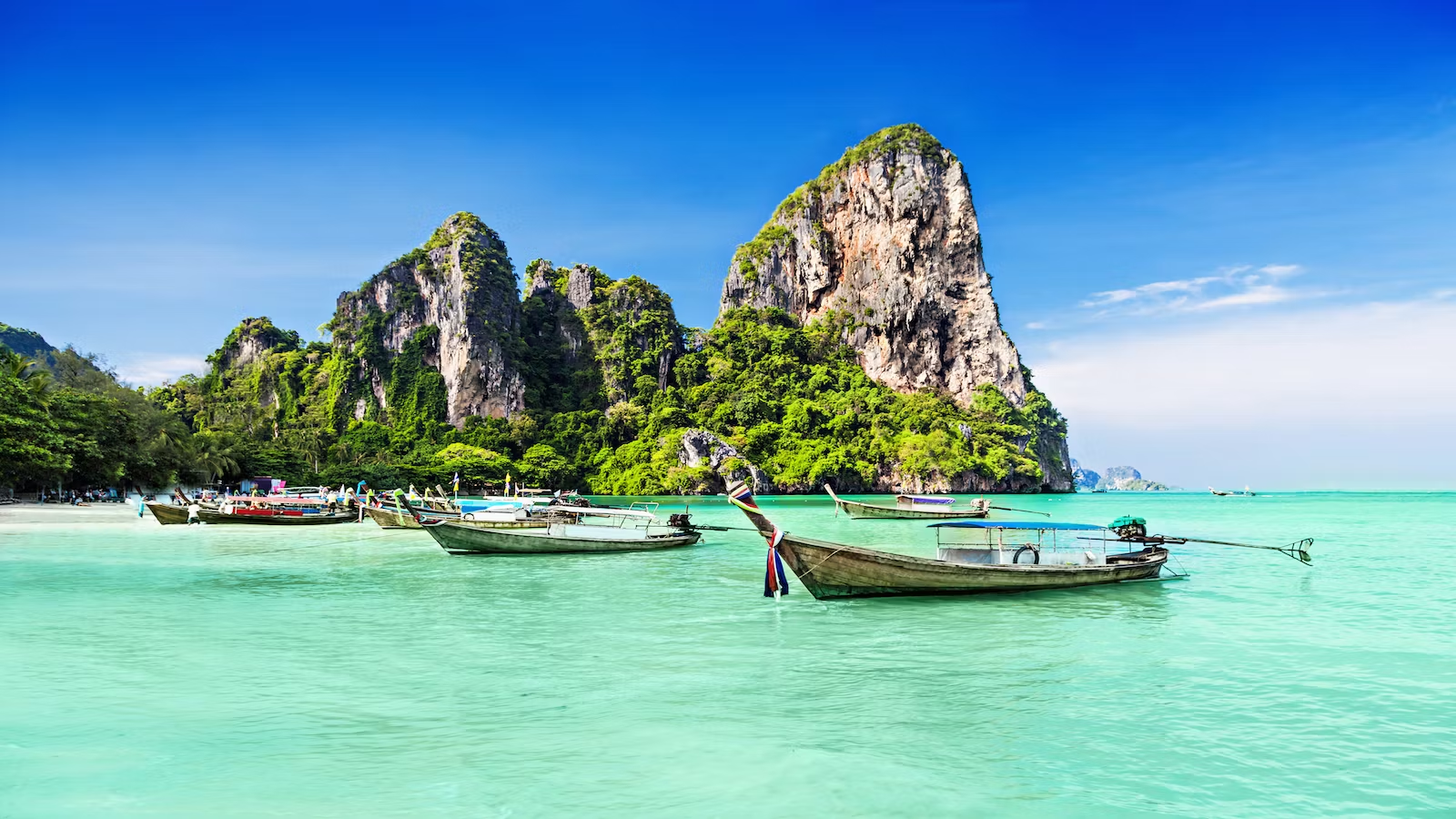
Embark on an unforgettable journey in the magical islands of Thailand, where crystal clear waters of the Andaman Sea promise a fascinating exploration of its colorful fish, corals and marine life. From the warm hospitality of the Thai people to the captivating scenery of each island, your yacht charter is an opportunity to experience the best of this tropical paradise. With its rich cultural history and captivating landscapes, it's no surprise why the islands are nicknamed "The Land of the Smiles". Whether it's diving, snorkeling or sailing, Thailand is home to some of the world's most beautiful waters, providing the perfect backdrop for your luxury yacht charter.
Whether you're an experienced diver or a novice looking to try out a new hobby, Thailand's variety of dive sites offer something for everyone. From the world-renowned Similan and Surin Islands to the vibrant culture of Phuket, Thailand offers a plethora of experiences to divers of all levels. From witnessing the otherworldly grace of whale sharks and manta rays in the islands of Koh Phi Phi and Koh Haato, to exploring shipwrecks, caverns, and deep drop-offs of the crystal clear blue waters, the abundance of life in the region is unrivaled. On land, visitors can immerse themselves in the bustling culture of Phuket, with its vibrant food scene, Buddhist temples, and lively night markets.
Explore Phuket
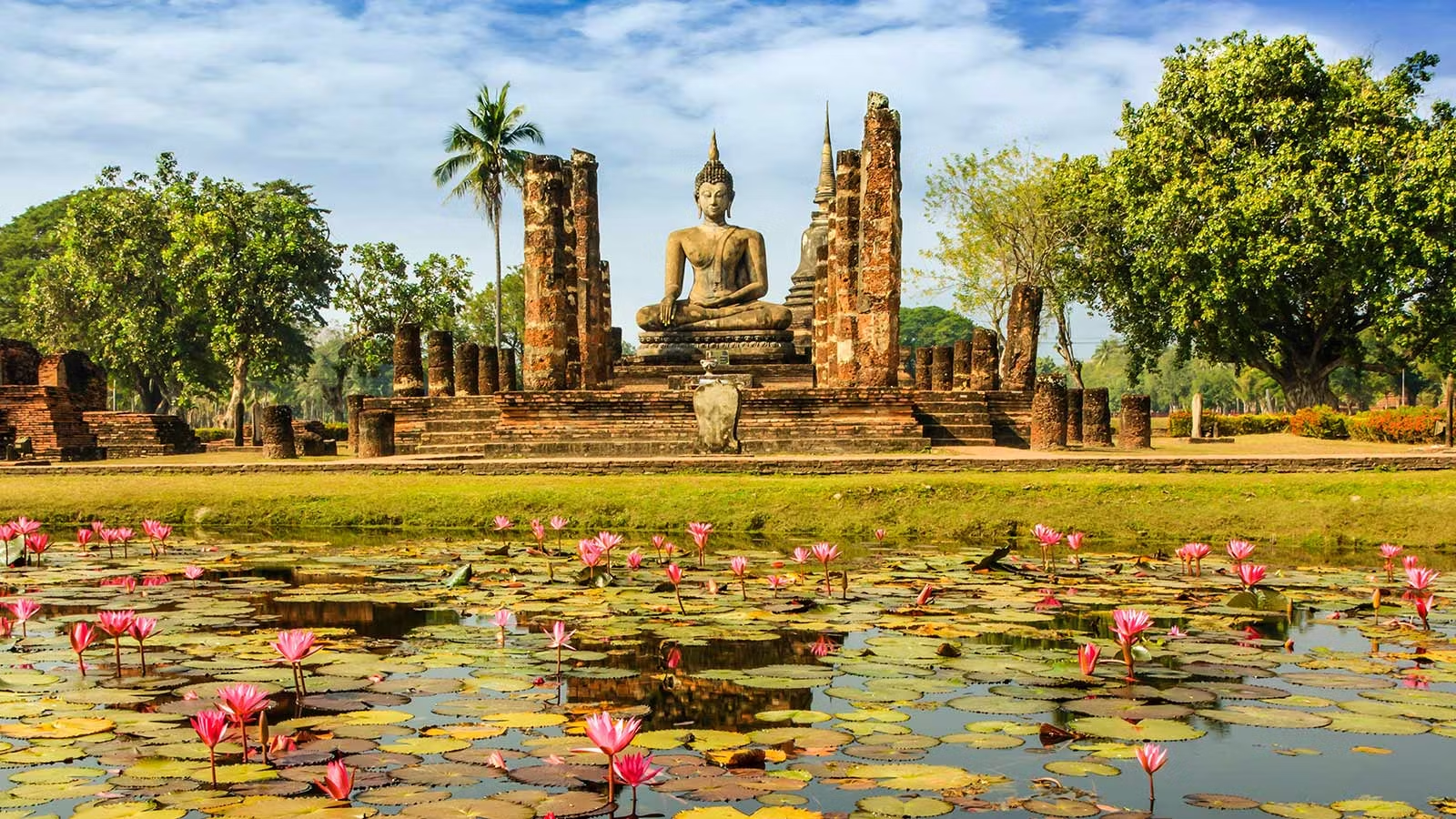
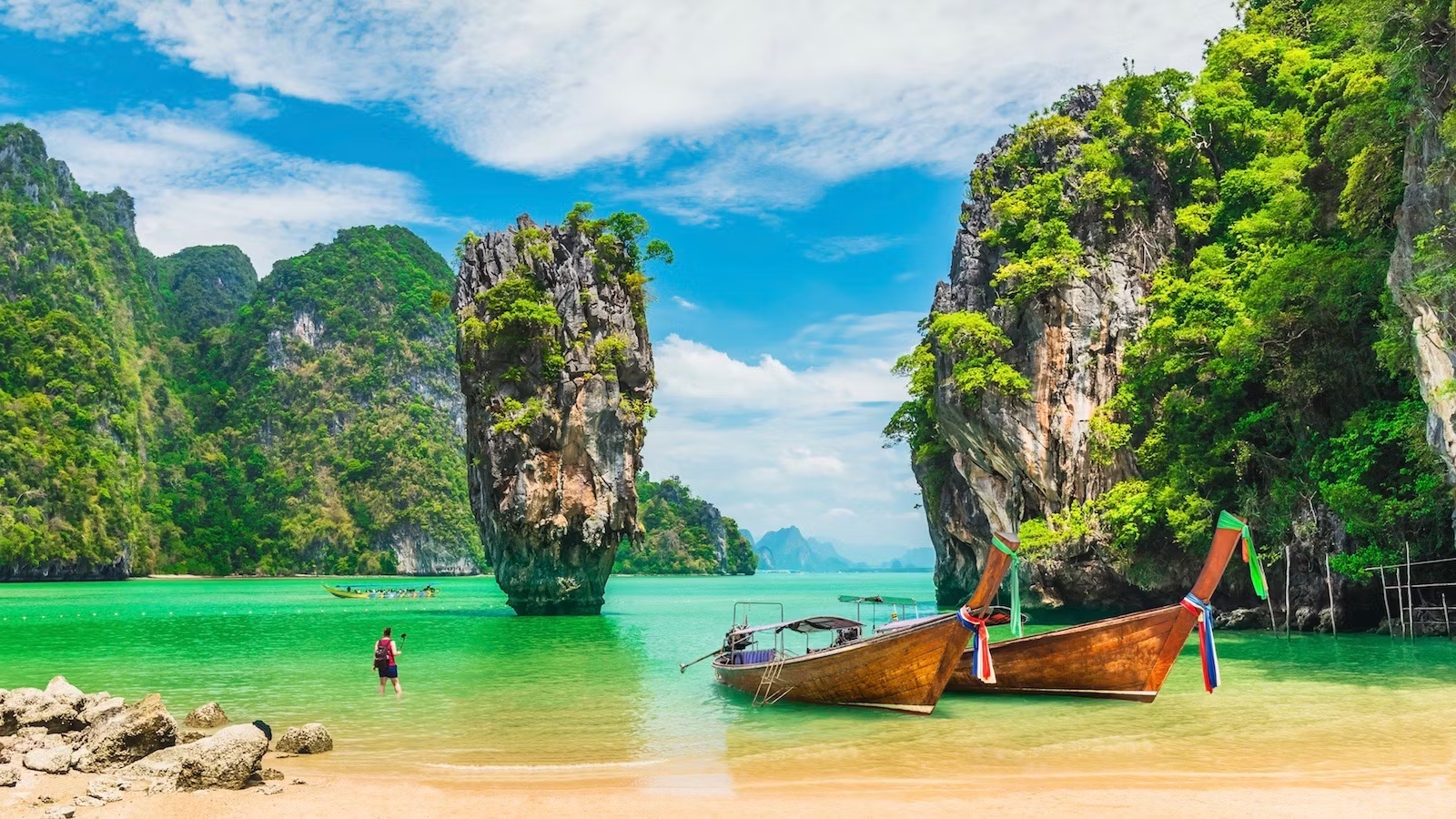
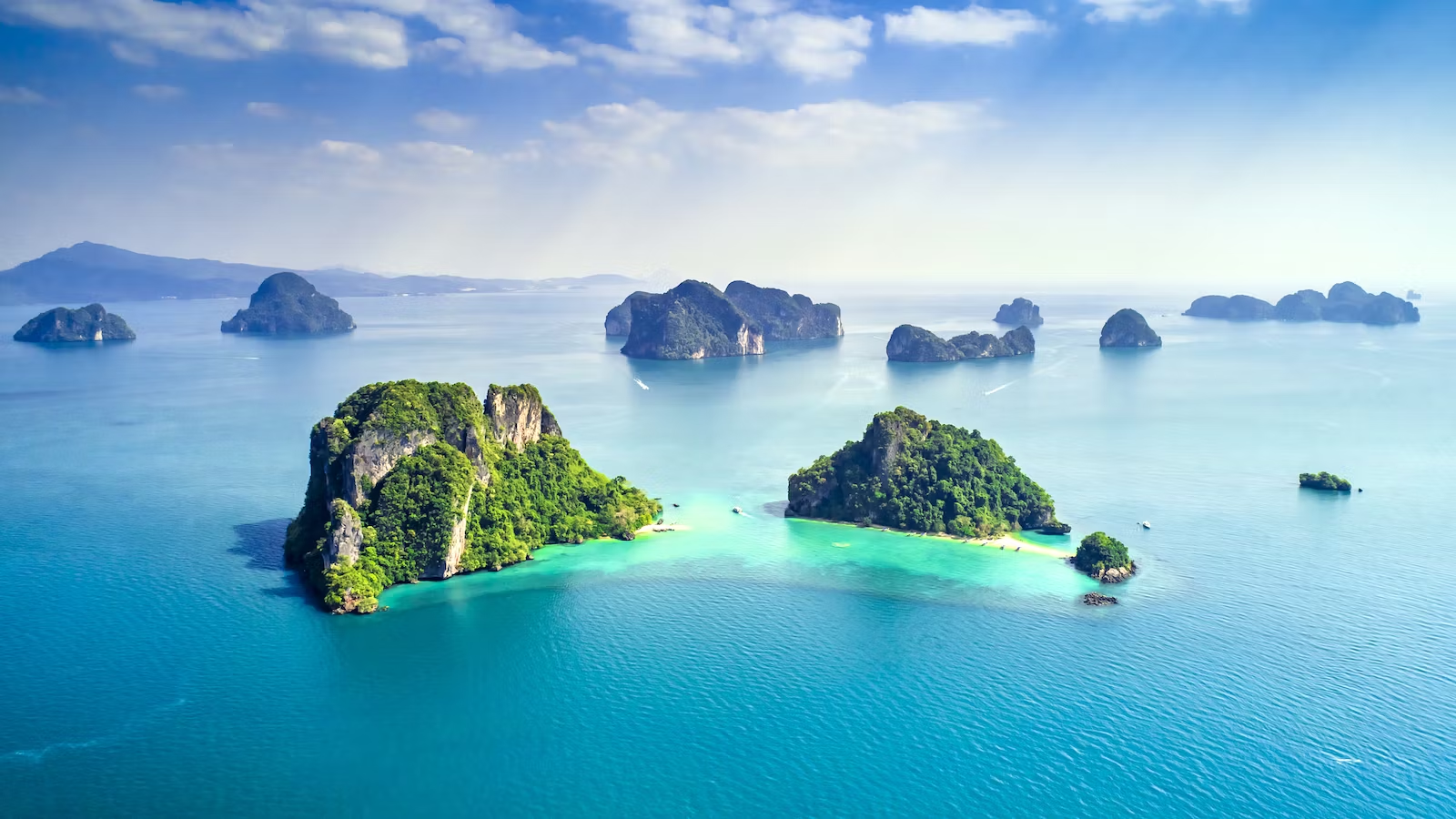
A visit to Phuket, Thailand is an absolute must, as it boasts some of the country's most stunning beaches. To begin your charter, be sure to explore the bustling Ranong day market in Phuket Town, located in the area's historical commercial district. While in the area, don't miss out on visiting Wat Chalong Temple, the most important of the island's 29 Buddhist temples. Cruise to Phang Nga Bay, and admire the monolithic limestone karst islets and its emerald-green waters. A trip wouldn't be complete without a stop at the iconic James Bond Island, seen in the movie "The Man with the Golden Gun," and a visit to the one-of-a-kind fishing village of Koh Panyi. This village, populated by 360 families, is built upon stilts and is a must-see.
Head to the breathtaking Krabi province and explore its 52 islands surrounded by vibrant coral reefs and powdery white-sand beaches. Anchor off of Ko Phi Phi Don for its renowned snorkeling, diving, and rock climbing. Spend the day relaxing on one of the island's stunning beaches and spend the evening exploring its nightclubs and watching a captivating fire show at Carlitos. With no roads on the island, take your yacht to the secluded Hat Yo beach at the southern tip and soak up the sun on its powdery white sand. For your next destination, visit Ko Lanta Yai and go horseback riding beneath the island's umbrella trees. Afterward, grab a plate of spicy seafood at the waterfront in Ban Sala Dan.
Find more about Luxury Yacht Charter in Phuket here.
Explore Ao Maya
Head back to Phi Phi Don's smaller sis, marked by towering cliffs. Explore the wonder of Ao Maya, a breathtaking lagoon surrounded by 100-meter cliffs on three sides, which famously served as the setting for the movie 'The Beach.' From November to April, its crystal waters are ideal for snorkeling and spotting vibrant, colorful fish among its coral reef. Cruise to Nai Harn, home to the Royal Phuket Yacht Club, and take a tour of its model boat room, followed by an exquisite dining experience. Venture north to Katong beach for an indulgent Thai spa treatment at one of its luxurious resorts, then make your way back to Patong Bay and take a stroll along its long, inlaid mosaic street, complete with boutiques.
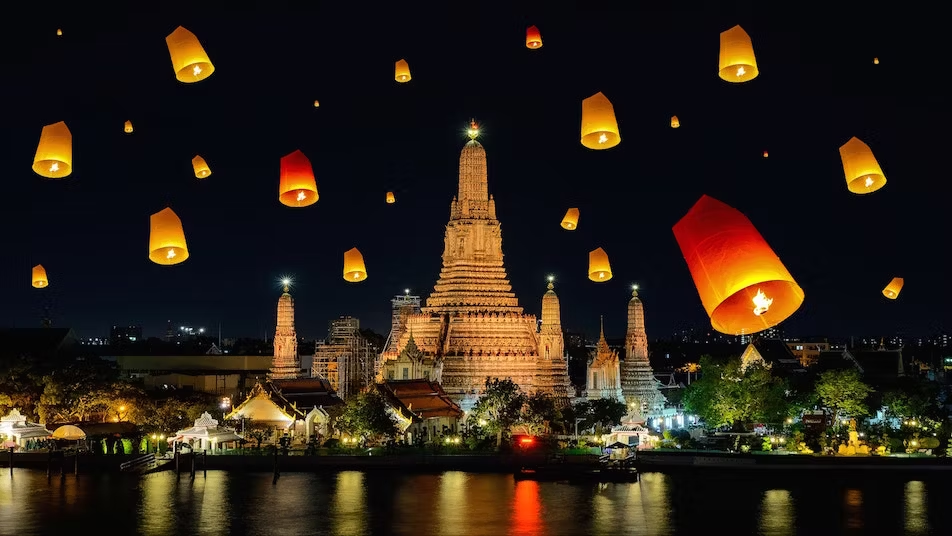
Come November, Thailand visitors are invited to take part in the centuries-old tradition of Loi Krathong. As part of the celebration, those in attendance will light their own “floating lanterns” and watch as they soar into the night sky.
Best Time To Visit: For those looking to travel to Southeast Asia, the ideal time to do so is between October and April, when guests can avoid the rainy seasons. Of course, due to the region's vast size, climates can differ from one destination to the next.
Key Cruising Areas: Phuket is a must-see destination for any traveler to Thailand, and a perfect place to begin a yacht charter. Here, you can sail among the hundreds of islands that dot the South Andaman Sea and discover the vibrant marine life that lies beneath the waves. Snorkelers and divers will want to make sure to add The Similan Islands to their list of places to visit, as this archipelago has been named one of the best diving spots in the world.
Don’t Miss: Take a tender or drop anchor by Khao Phing Kan, the iconic rock formations and islands immortalized in the James Bond film. Paddle your way by kayak around the area and drink in the breathtaking scenery.
Best Spots for Wining and Dining: Phuket, Thailand's gourmet food scene is flourishing, with Pru leading the charge as the city's first restaurant to be awarded a Michelin star. The restaurant serves up fresh, creative dishes crafted from sustainably sourced and organically grown Thai ingredients, harvested straight from their very own farm.
Best Local Dish: Thai food is a unique culinary experience, its fragrant aromas and fresh flavors providing a sensory delight. Popular dishes such as Mu Hong (slow-braised pork belly with pepper and garlic), Kaeng Pu Bai Cha Plu (fresh crab meat in coconut milk), and Mee Hokkien Noodles (chicken in a dark soy sauce) are all based on either noodles or rice.
Local Culture: Experience the captivating culture of Thailand with a visit to its many awe-inspiring temples and historic sites. From the Tha Hua Phuket History Museum to the countless Buddhist-influenced temples sprinkled throughout the country,the vibrant colors and rich heritage of this beautiful destination will remain unforgettable.
Best Beach: As you set sail through the hundreds of Thai islands, you will find unspoiled and untouched beaches with no other person in sight. Each person who visits Thailand will find a private paradise to enjoy. The twin islands of Koh Yao Yai and Koh Yao Noi are stunning off-the-beaten-track beaches that are just a short yacht charter from the hustle and bustle of Phuket.
IYC recommends: Just 55 kilometers from the Thai mainland lies the Surin Islands National Park, a stunning collection of five isles. Divers will thrill at the remarkable underwater life that awaits exploration. For an especially easy snorkeling experience, head to the secluded island of Ko Tachai. To truly get a sense of the surroundings, take a dive at Koh Tachai Plateau, the most renowned of the Surin Islands. Here, you'll find hard corals and boulders waiting to be discovered.
More To Explore

Thai food has earned its global reputation for being bold, colourful, and deeply satisfying. But within Thailand itself, it’s more than just cuisine; culinary traditions are tied in with everyday life. Every meal is a balancing act of sweet, sour, salty, and spicy.Whether you’re walking through the neon-lit street stalls of Bangkok or wandering through Chiang Mai’s morning markets, every area of Thailand offers a chance to sample flavours that have been perfected over generations. Here are 10 local Thai dishes that you won’t want to miss when in Thailand:

Thailand's history is reflected throughout its diverse landscapes and culture, from the hills of Chiang Mai in the north, down to the island-dotted waters of Phang Nga Bay in the south.The country's landmarks, including ancient ruins, sacred temples, and living cultural heritage, offer a glimpse into Thailand's rich past. Here are the top ten landmarks and historical sites not to miss when visiting, the “Land of Smiles”:
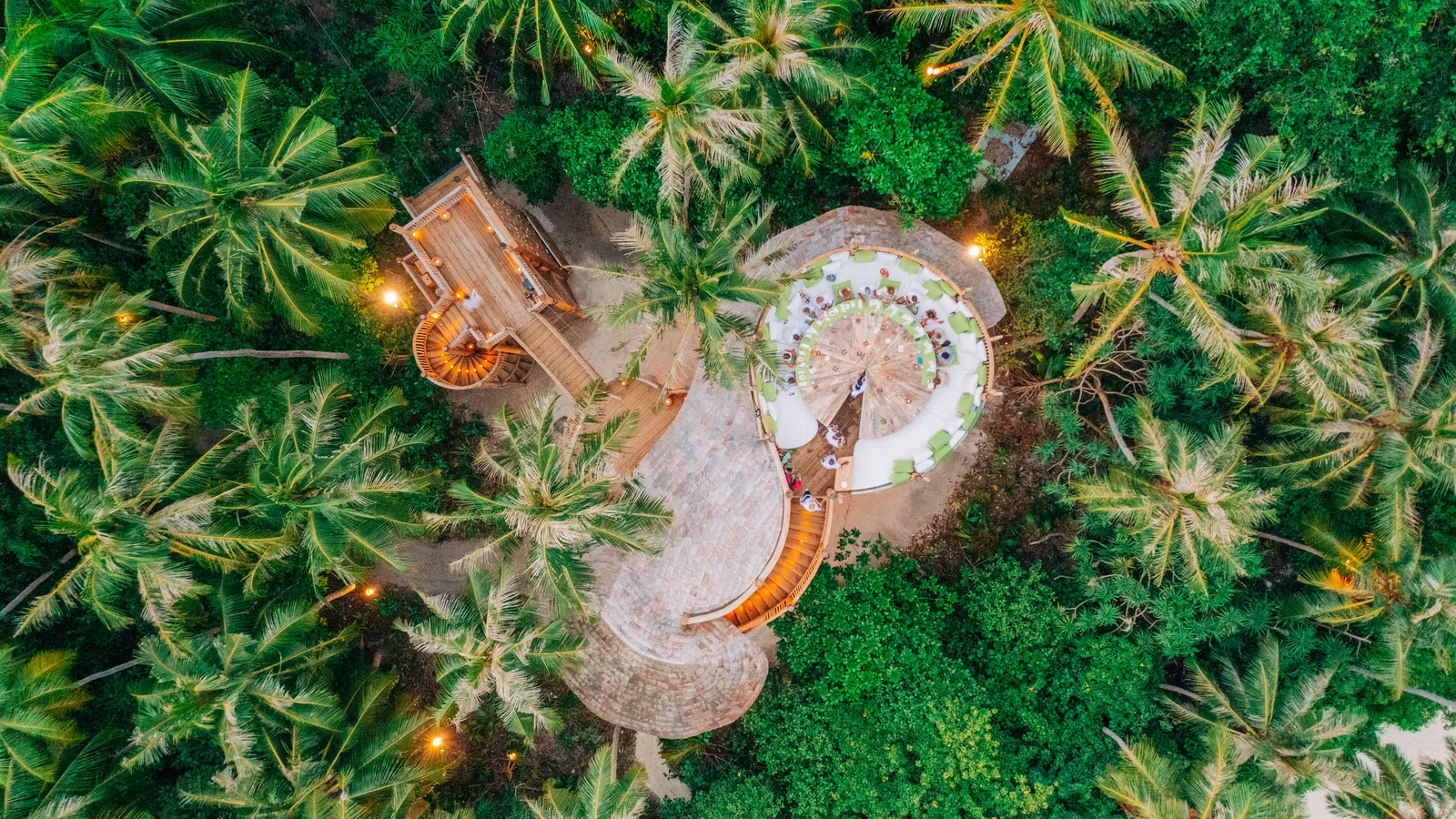
Soneva’s barefoot resorts offer enriching escapes and rare experiences.Since launching in 1995, Soneva has pioneered an entirely new style of responsible luxury travel. It has shown how sustainability and indulgence can go hand-in-hand, from dedicated organic gardens and Eco Centro waste-to-wealth centres at the heart of each resort, to working with independent non-governmental organisation Soneva Namoona to eliminate single-use plastic and introduce sustainable waste management across the Maldives – run in partnership with marine plastic foundation Common Seas.

With its turquoise waters, lush islands, and rich, colorful culture, Thailand is more than a stunning yachting location, it’s a playground for families with children of all ages and ideal for a family yacht charter.From secluded beaches to interactive cultural experiences, Thailand offers a whole host of activities that will engage young yacht guests while providing adults with the luxury and comfort of a superyacht. Here’s how to make the most of a family-friendly charter in the Land of Smiles:
FREQUENTLY ASKED QUESTIONS
The best time to charter a yacht in Thailand depends on which coastline you plan to explore, but for most classic itineraries along the Andaman Sea (including Phuket, Phang Nga Bay, and the Phi Phi Islands), the ideal window runs from November through April. This period marks the dry season on Thailand’s west coast, bringing calm seas, clear skies, and consistent temperatures between 82°F and 90°F (28°C to 32°C). Conditions are especially favorable from December to February, when humidity is lower, visibility is excellent, and cruising between destinations such as Phuket, Phang Nga Bay, and the Phi Phi Islands is particularly smooth.
From May to October, the southwest monsoon brings increased rainfall and more unsettled sea conditions to the Andaman coast, which can affect route planning. That said, Thailand offers year-round charter potential. The Gulf of Thailand, including Koh Samui and Koh Tao, follows a different weather pattern, with its best cruising conditions typically falling between January and September. This seasonal contrast allows for flexible itinerary design across the region, depending on your timing.
Sea temperatures remain warm throughout the year, averaging around 82°F to 86°F (28°C to 30°C), making swimming, snorkeling, and watersports consistently enjoyable. Phuket also serves as a key gateway for yacht charters in Thailand, offering modern marina infrastructure and access to some of Southeast Asia’s most distinctive cruising grounds.
For those considering yacht charters in Thailand or exploring Southeast Asia yacht routes, timing your trip to align with regional weather patterns ensures the most comfortable experience on the water. For tailored itineraries and current yacht availability, IYC’s expert consultants would be happy to assist you.
Yacht charter rates in Thailand vary based on several factors, including the yacht’s type, size, age, number of guests, and onboard amenities. Weekly base rates for crewed luxury motor yachts typically start at around €25,000 for smaller yachts and can exceed €350,000 for the most premium superyachts.
Another key consideration is the seasonal rate structure. High season rates apply from December through April, when conditions are at their best across the Andaman Sea (including Phuket, Phang Nga Bay, and the Phi Phi Islands). Lower rates are typically available from May to November, although this period coincides with the southwest monsoon, which may influence cruising conditions.
Charterers should also budget for expenses beyond the base charter fee. An Advance Provisioning Allowance (APA) of 25–40% of the charter cost is typically required at the beginning of the charter to cover variable expenses such as fuel, food, beverages, mooring fees, and onshore services. Any unused portion of the APA is refunded at the end of the charter.
The VAT rate on Thailand yacht charters is approximately 7%, depending on the yacht’s registration and cruising itinerary. The final rate is applied to the base charter fee and paid in advance.
Crew gratuity is not included in the charter fee but is customary, typically 10–20% of the base rate, offered at the guest’s discretion.
Thailand offers a diverse range of yacht charter destinations, with cruising itineraries typically centered around two distinct regions: the Andaman Sea on the west coast and the Gulf of Thailand to the east. Each presents a different character, allowing for tailored routes based on season, cruising style, and guest preferences.
Most yacht charters in Thailand begin in Phuket, the country’s primary yachting hub, where modern marinas such as Yacht Haven and Ao Po provide seamless access to the Andaman cruising grounds. From here, guests can explore Phang Nga Bay, renowned for its limestone formations and calm, protected waters, before continuing to the Phi Phi Islands. These islands combine clear turquoise seas with lively beach scenes, while nearby Krabi offers a more relaxed atmosphere, with hidden coves and access to quieter islands like Koh Lanta.
For those seeking more remote experiences, the Similan and Surin Islands lie further offshore and are considered some of the region’s most pristine marine environments. As protected national parks, they offer exceptional snorkeling and diving, though access is regulated and carefully managed. Distances between these destinations are relatively short, often just a few hours under way, which allows for flexible day-to-day cruising and a balanced pace between exploration and time at anchor.
On the opposite side of the peninsula, the Gulf of Thailand presents an alternative itinerary. Koh Samui serves as a central point, known for its luxury resorts and developed infrastructure, while Koh Phangan and Koh Tao provide a mix of vibrant nightlife and excellent diving conditions. This region is particularly appealing during the European summer months, when sea conditions are more favorable than on the Andaman coast.
Across both regions, Thailand blends natural scenery with cultural depth. Guests can visit traditional fishing villages, explore Buddhist temples, and experience local cuisine ashore, all within a single itinerary. The result is a highly varied charter experience, where each destination feels distinct yet easily connected by short cruising distances.
For tailored itinerary planning across Thailand’s island groups and access to our fleet of motor yachts, IYC’s expert consultants would be happy to assist you.
Thailand offers a well-rounded selection of charter yachts, suited to a range of cruising styles across Southeast Asia. Motor yachts are the most popular choice, particularly for itineraries through the Andaman Sea, where distances between destinations such as Phuket, Phang Nga Bay, and the Similan Islands benefit from speed, range, and onboard comfort. From sleek planing yachts to larger superyachts, these yachts are designed to maximize both efficiency and onboard living space.
For those who prefer a more traditional connection to the sea, sailing yachts provide a quieter, wind-driven experience shaped by seasonal breezes, particularly during the northeast monsoon period from November to April. Catamarans are also widely favored in Thailand. Their wide beam, shallow draft, and expansive deck areas make them especially well-suited to the region’s sheltered bays and shallow anchorages, offering a relaxed and stable platform for families or longer stays at anchor.
Across IYC’s fleet of yachts, all charters are fully crewed, with a professional Captain and crew managing every aspect of the journey, from navigation to personalized service on board. Most yachts accommodate up to 12 guests, with a variety of layouts and styles available to match different preferences, whether that leans toward performance, space, or a balance of both.
The charter fee for a yacht charter in Thailand covers the essential components of your experience, including the yacht itself, a full-time professional crew, insurance, and standard onboard equipment for navigation, safety, and guest comfort. This forms the foundation of your time on board, ensuring a seamless and well-supported journey through destinations such as Phuket, Phang Nga Bay, and the Andaman Sea.
Operational expenses are not included in the base rate and are instead managed through an Advance Provisioning Allowance (APA). Typically set at 25–40% of the charter fee, the APA is paid prior to embarkation and is used to cover fuel, food and beverages, marina fees, port charges, and any tailored arrangements made during your charter. The Captain oversees all spending and provides a full accounting at the end of the charter, with any unused funds returned to the client.
A 7% VAT may apply depending on the yacht’s registration and itinerary structure. Crew gratuity is not included in the charter fee or APA and is given at the guest’s discretion, with 10–20% of the base rate considered standard for excellent service.
The APA, or Advance Provisioning Allowance, is a key component of the yacht charter process. It is a fund paid in advance of your charter, typically equal to 25–40% of the base charter fee, and is used to cover all operational expenses incurred during your trip. This includes fuel, food and beverages, marina fees, port taxes, transfers, and any special arrangements made to tailor your experience.
The APA is held onboard and managed by the yacht’s Captain, who ensures all provisioning and logistics are carried out efficiently and in line with your preferences. Prior to boarding, guests complete a preference sheet, noting dietary requests, beverage selections, activity interests, and more, which guides how the APA is allocated. Every expenditure is documented, and at the end of the charter, a full accounting is provided. Any unspent funds are refunded, while any overages are settled directly with the client.
As an example: if your weekly charter fee is $100,000, an APA of approximately $25,000 to $40,000 would be requested in advance. These funds might be used for cruising fuel, provisioning of meals and drinks, berthing fees, and third-party services such as private transfers or curated onshore excursions.
This system allows for complete flexibility, ensuring that the charter experience can be adjusted in real time, whether you decide to cruise further than originally planned or make spontaneous arrangements along the way. APA funds must be received before embarkation, typically via bank transfer alongside the final balance payment.
The minimum duration for a yacht charter in Thailand is typically seven days, which remains the standard format for most fully crewed yachts. Weekly charters allow for a well-paced itinerary, giving you time to explore highlights such as Phang Nga Bay, the Phi Phi Islands, and the surrounding Andaman Sea without feeling rushed. Charter rates are generally structured on a weekly basis, reflecting both operational planning and crew scheduling.
At the same time, Thailand offers more flexibility than many Mediterranean destinations. Shorter charters of three to five days can often be arranged, particularly outside peak periods or when there are gaps between longer bookings. Thanks to the relatively short cruising distances between anchorages, even a shorter itinerary can include multiple stops, from limestone karsts and sheltered lagoons to vibrant beach destinations.
For those looking to explore further afield, extended charters of ten days or more are well suited to Thailand’s cruising geography. This allows access to more remote island groups such as the Similan or Surin Islands, where the experience becomes more secluded and nature-focused.
Embarkation times are usually scheduled around 12:00 pm, with disembarkation at the same hour on the final day. This ensures the crew has sufficient time to prepare the yacht to the highest standards before your arrival.
Thailand currently offers a smooth, well-established travel environment for international yacht charter guests. Entry is straightforward, with visa-free access granted to many nationalities for short stays, and no health-related restrictions in place. This ease of access, combined with strong international air connections through Bangkok, Phuket, and Krabi, makes arrival into key yachting regions such as the Andaman coast both efficient and reliable.
On the ground, infrastructure is well developed in the country’s primary charter hubs. Phuket, in particular, serves as the center of Thailand’s yachting scene, with full-service marinas, experienced crews, and high-quality provisioning readily available. English is widely spoken across these areas, which simplifies logistics both on land and throughout your time on board.
Thailand uses the Thai baht (฿) for all local transactions. While credit cards are accepted in established venues and marinas, it is advisable to carry cash when visiting smaller islands or local markets. Healthcare standards are high in major centers, especially in Bangkok and Phuket, where internationally recognized hospitals provide excellent medical support if needed.
Thailand enjoys a tropical climate that supports year-round yacht cruising, with warm temperatures, calm seas, and seasonal variations between its two primary charter regions. Daytime temperatures typically range from 77°F to 95°F (25°C to 35°C), while sea temperatures remain consistently warm at around 82°F to 86°F (28°C to 30°C), creating excellent conditions for swimming and watersports throughout the year.
The country’s weather is shaped by three main seasons. The dry season, from November to April, is considered the prime time for yacht charters in Thailand, particularly along the Andaman coast, including Phuket, Phang Nga Bay, and Krabi. During these months, guests can expect clear skies, low humidity, and calm cruising conditions. From March to May, temperatures rise further, marking the hot season, which is especially appealing for those seeking uninterrupted sunshine.
The monsoon season runs from May to October on the Andaman side, bringing higher humidity and intermittent rainfall. Showers are often brief and occur in the afternoon or evening, allowing for continued cruising between weather windows. In contrast, the Gulf of Thailand, including Koh Samui and Koh Tao, follows a slightly different pattern, with more favorable conditions from January through September and peak rainfall typically arriving later in the year, around October and November.
Thailand uses the Thai baht (฿) as its official currency, and all transactions throughout the country, from major cities to remote island destinations, are conducted in baht. For guests embarking on yacht charters in Thailand, this applies to everyday expenses such as provisioning, marina fees, fuel, and onshore experiences.
While international credit cards are widely accepted in established marinas, luxury resorts, and upscale restaurants in key cruising areas such as Phuket and Koh Samui, cash remains important. Smaller islands, local markets, and traditional beachside venues often operate on a cash basis, so it is advisable to carry a reasonable amount of baht during your itinerary.
ATMs are easily accessible in main ports and tourist centers, making it convenient to withdraw local currency as needed. Currency exchange services are also available at airports and banks, with competitive rates offered at licensed exchange counters. It is worth noting that the Thai baht is not commonly exchanged outside the country, so most conversions are handled upon arrival.
For yacht charters in Thailand, onboard expenses managed through the Advance Provisioning Allowance are typically calculated in local currency, allowing for smooth coordination of logistics and guest preferences throughout the journey.
Thailand operates on a 220V / 50Hz electrical system and uses a combination of plug types, most commonly Type A, B, and C. European-style two-pin plugs are often compatible, though not universally, so a travel adapter is recommended for consistent use. Guests traveling from the U.S. or other 110V regions should check whether their devices support dual voltage. Most modern electronics, including phones, laptops, and cameras, are designed for global use and will only require an adapter rather than a converter.
Power infrastructure is reliable in key charter destinations such as Phuket, Koh Samui, and the Andaman cruising region. In more remote islands or quieter anchorages, occasional fluctuations may occur, but these are typically short-lived and rarely impact the overall experience.
For those enjoying yacht charters in Thailand, electrical compatibility is rarely a concern. IYC’s fleet of motor yachts and sailing yachts is well-equipped for international guests, with onboard generators, universal sockets, and USB charging points ensuring seamless access to power both at anchor and underway. When docked, yachts typically connect to shore power, while generators maintain a steady supply when cruising or anchored.
As a precaution, a universal adapter with built-in surge protection is advisable, particularly for high-value or sensitive devices. If you are traveling with specialized equipment or medical devices, IYC’s expert consultants can confirm compatibility with your selected yacht in advance, ensuring a smooth and well-prepared charter experience.
Thailand offers reliable mobile connectivity across its main yachting regions, making it easy to stay connected throughout your charter. In established cruising hubs such as Phuket, Phang Nga Bay, and Koh Samui, 4G coverage is consistent, with 5G networks continuing to expand in key urban and resort areas. Major providers including AIS, TrueMove H, and DTAC offer flexible prepaid SIM and eSIM options, which are often the most practical solution for international visitors. While signal strength remains strong along the coast and in populated islands, it may be more limited in remote anchorages, particularly when cruising deeper into national park areas.
On board, most yachts within IYC's fleet of motor yachts and sailing yachts are equipped with Wi-Fi systems that rely on local networks or satellite connections. This ensures dependable access for day-to-day communication, though speeds can vary depending on your location and distance from shore. Many marinas and high-end beach venues also provide reliable Wi-Fi, offering additional connectivity when docked or ashore.
Drone use in Thailand is permitted but carefully regulated. Any drone equipped with a camera or transmission system must be registered with both the Civil Aviation Authority of Thailand and the National Broadcasting and Telecommunications Commission prior to use. Flying is strictly prohibited near airports, military installations, and royal sites, and additional permissions are required for national parks and protected coastal areas, which are common features of popular yacht charter routes in Thailand.
Thailand offers a well-supported and comfortable environment for yacht charters, with strong healthcare infrastructure and experienced crews ensuring a high standard of onboard safety. In key cruising regions such as Phuket and Koh Samui, guests have access to internationally accredited hospitals and clinics, many with English-speaking staff. Emergency services are reliable, and Captains are well-versed in coordinating medical assistance if needed.
The tropical climate is an important consideration. Temperatures typically range from 82 to 95°F (28 to 35°C) throughout the year, with strong sun exposure even outside peak hours. Sunscreen, light clothing, and consistent hydration are essential, particularly when spending extended time on deck or enjoying watersports. The surrounding waters, especially across the Andaman Sea yacht charter routes, are warm and inviting during the main cruising season from November to April, making swimming directly from the yacht both safe and enjoyable.
Food quality and hygiene standards are high across Thailand’s established marinas and resort areas. On board, experienced chefs source fresh local ingredients, from seafood to tropical produce, and can accommodate a wide range of dietary preferences. Bottled and filtered water is standard, as tap water is not typically consumed.
In more natural settings, particularly near mangroves or quiet island anchorages, mosquitoes can be present, most noticeably around sunset. Simple precautions such as repellent and appropriate clothing are usually sufficient to maintain comfort. Beyond these considerations, Thailand is also known for its wellness culture. Guests can incorporate spa treatments, traditional Thai massage, and holistic therapies into their itinerary, especially when cruising between destinations such as Phuket, Krabi, and Koh Samui.