Bahamas Yacht Charter Guide
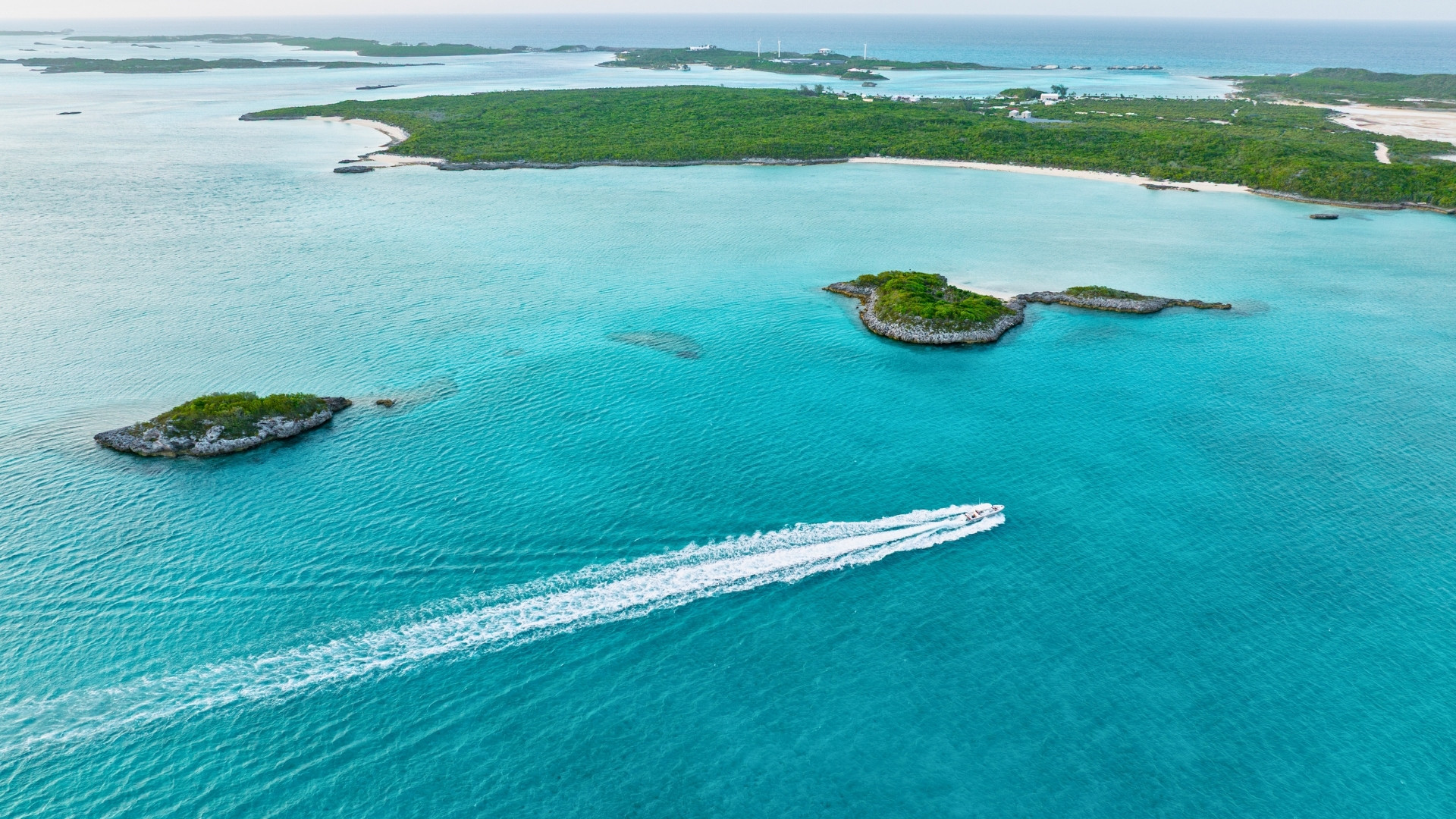
Scattered across the Atlantic are 700 islands and cays that make up the archipelago of the Bahamas. With endless island-hopping possibilities during a yacht charter, most trips begin in Nassau, where world-class marinas, luxury facilities, and easy international connections await. From here, head to the rest of the Exuma chain, with idyllic sandbars and a vibrant underwater world. Or, begin at Marsh Harbour in the Abacos, a selection of islands full of secluded and uninhabited cays ready for exploring. Snorkelling and diving, beach and colonial town wandering, and relaxing under Bahamian rays are all popular activities. The island's name traces back to Christopher Columbus's first arrival in 1492, describing the area as 'Baja mar,' or the 'shallow sea,' a fitting nod to the calm, inviting waters that make the Bahamas ideal for yachts today with a shallow draft.

Best Time To Visit: December to April, the peak cruising season, offers the most favourable conditions, with warm temperatures, steady winds, and lower humidity.
Key Cruising Areas: Choose from the island chains of Exumas, Abacos, and Bimini, and visit other islands like New Providence, Eleuthera, Andros, and Grand Bahama.
Don't Miss: The wild inhabitants; swim with nurse sharks at Compass Cay, feed swimming pigs at Big Major Cay, spot endangered iguanas on Allen's Cay, and snorkel with tropical fish at Andros Barrier Reef.
Best Spots For Wining And Dining: Head to Graycliff Restaurant for a fine dining experience in Nassau, serving up Bahamian-influenced cuisine and washed down with glasses from an award-winning wine cellar.

Best Local Dish: A Bahamian staple found throughout the islands is conch; enjoy it deep-fried as fritters or in a salad, washed down with a Kalik beer.
Local Culture: Get involved in a Junkanoo festival during a visit in December or January. Or take a food and history tour in Nassau to sample local cuisine and learn about the traditions.
Best Beach: With endless white sandy beaches to visit, for something different, why not visit the unique Pink Sands Beach on Harbour Island, known for its pink-hued beauty.
IYC Recommends: Explore the uninhabited Exumas' sandbars, snorkel in clear waters, relax on idyllic beaches, experience a private picnic, and even swim with the famous pigs.
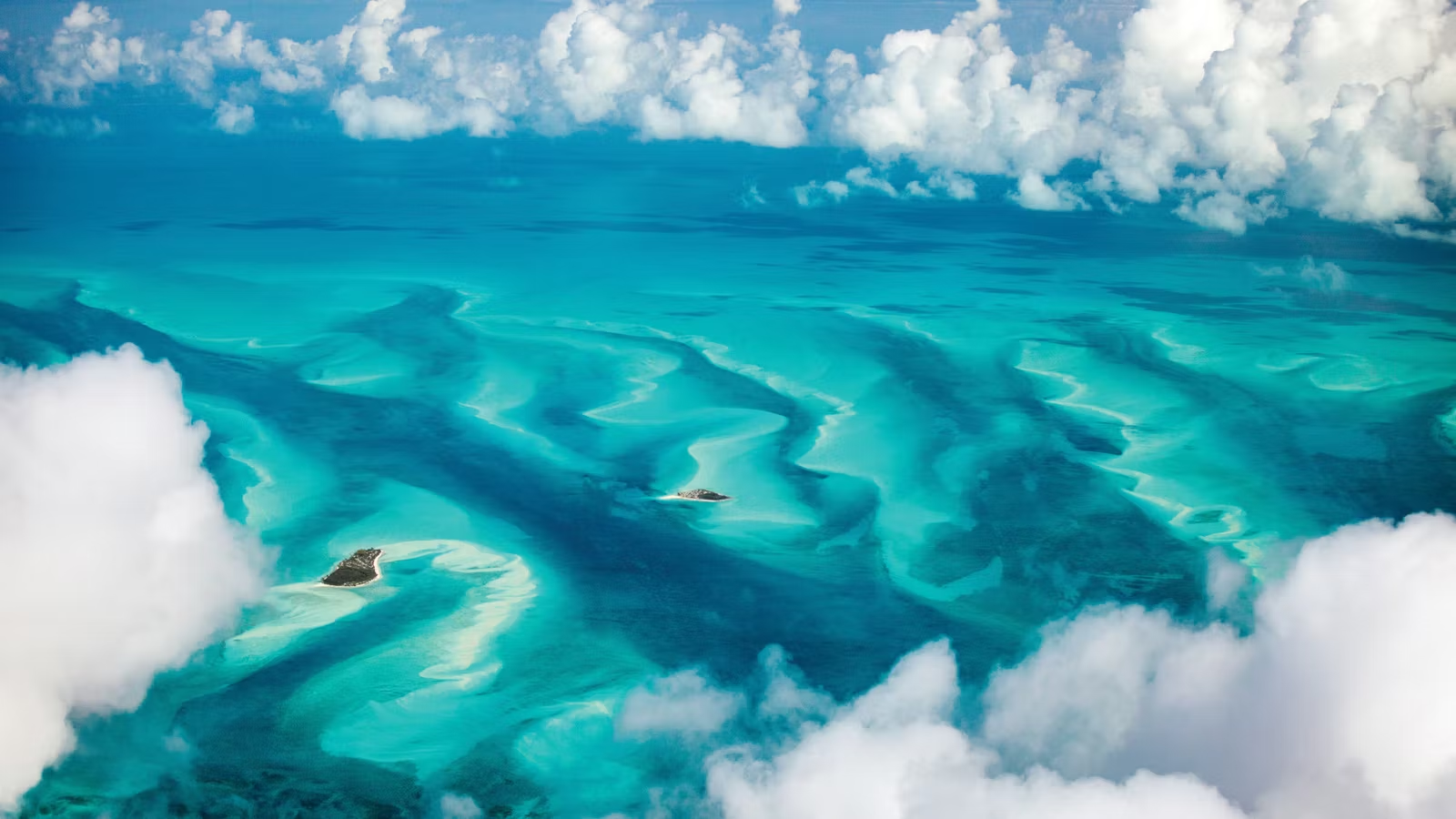
When planning a visit to the stunning Bahamas, most people have heard of highlights including the famous pig beach of Big Major Cay, and the otherworldly beauty of Pink Sands beach on Harbour Island but that is not all the Bahamas has to offer, with a veritable treasure trove of undiscovered beaches, unique geological features and wildlife encounters to enjoy, far from the crowds. Here is IYC’s list of the best secret spots in this beautiful island group.

The Exuma in the Bahamas form a nearly continuous chain stretching over 90 miles, from Beacon Cay in the north to the islands of Great and Little Exuma in the south. Featuring more than 365 cays, this area is arguably one of the most breathtaking cruising grounds in the Western Hemisphere, offering some of the world’s most stunning anchorages and harbors. Villages are sparse, predominantly small, charming, and rustic. The locals are known for being friendly and hospitable. The cays differ in size, yet almost all offer beautiful beaches and cozy anchorages. While some cays are flat and barren, others, such as Highborne Cay, have rolling hills covered with lush vegetation and small trees. The scenery is spectacular, and the vibrant hues of the clear waters are beyond words.A two-week itinerary is perfect for thoroughly exploring the Exumas and all they have to offer, yet it's also possible to enjoy the beauty of this region on a one-week charter or even a shorter trip.

For divers, the Bahamas has always held its top spot on must-dive lists. Thanks to the archipelago's balmy waters, year-round sunshine, and more than 700 islands and cays to explore, this Caribbean paradise offers some of the most varied and exhilarating dive sites in the world. Whether you want to plunge into blue holes, dive dramatic walls, historic wrecks, or coral-rich reefs, there is something here for every level of diver. And, the sites that truly set the Bahamas apart are the region's locations and opportunities for shark diving.
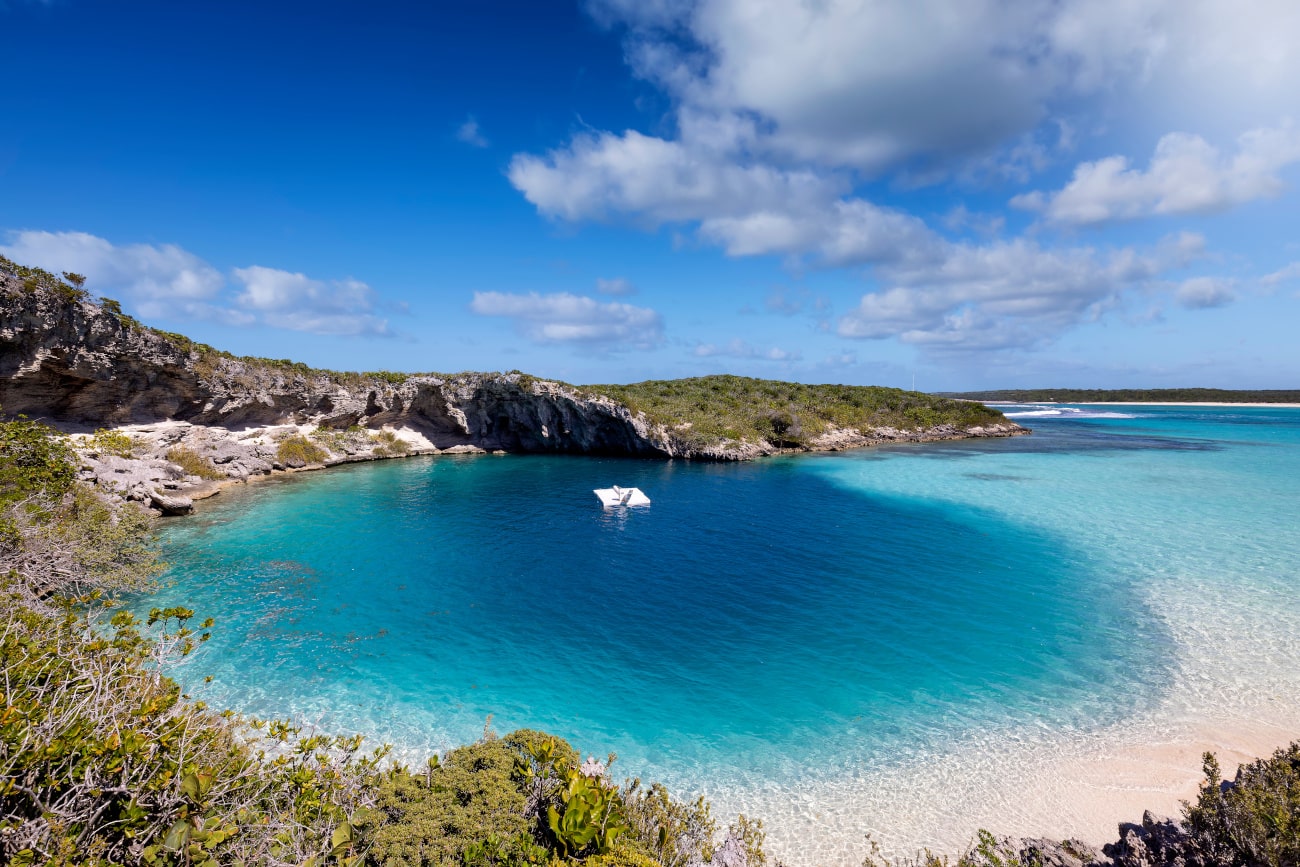
The Bahamas is an enduringly popular destination for superyachts and visitors are spoilt for choice for beaches to visit from the comfort of their private yacht. From pigs to paradise, here is our guide to the top five beaches in this exotic beauty spot.

The Bahamas has long been a haven for food lovers seeking fresh, vibrant flavours paired with breathtaking settings, and it truly lives up to that reputation. Scattered across this stunning archipelago, the dining scene thrives on a blend of local ingredients and global culinary influences. From casual waterfront spots to refined dining rooms tucked inside exclusive resorts, the top restaurants here combine world-class cuisine, attentive service, and that unmistakable island charm. Here are our top 10 restaurants in the Bahamas to discover by yacht:
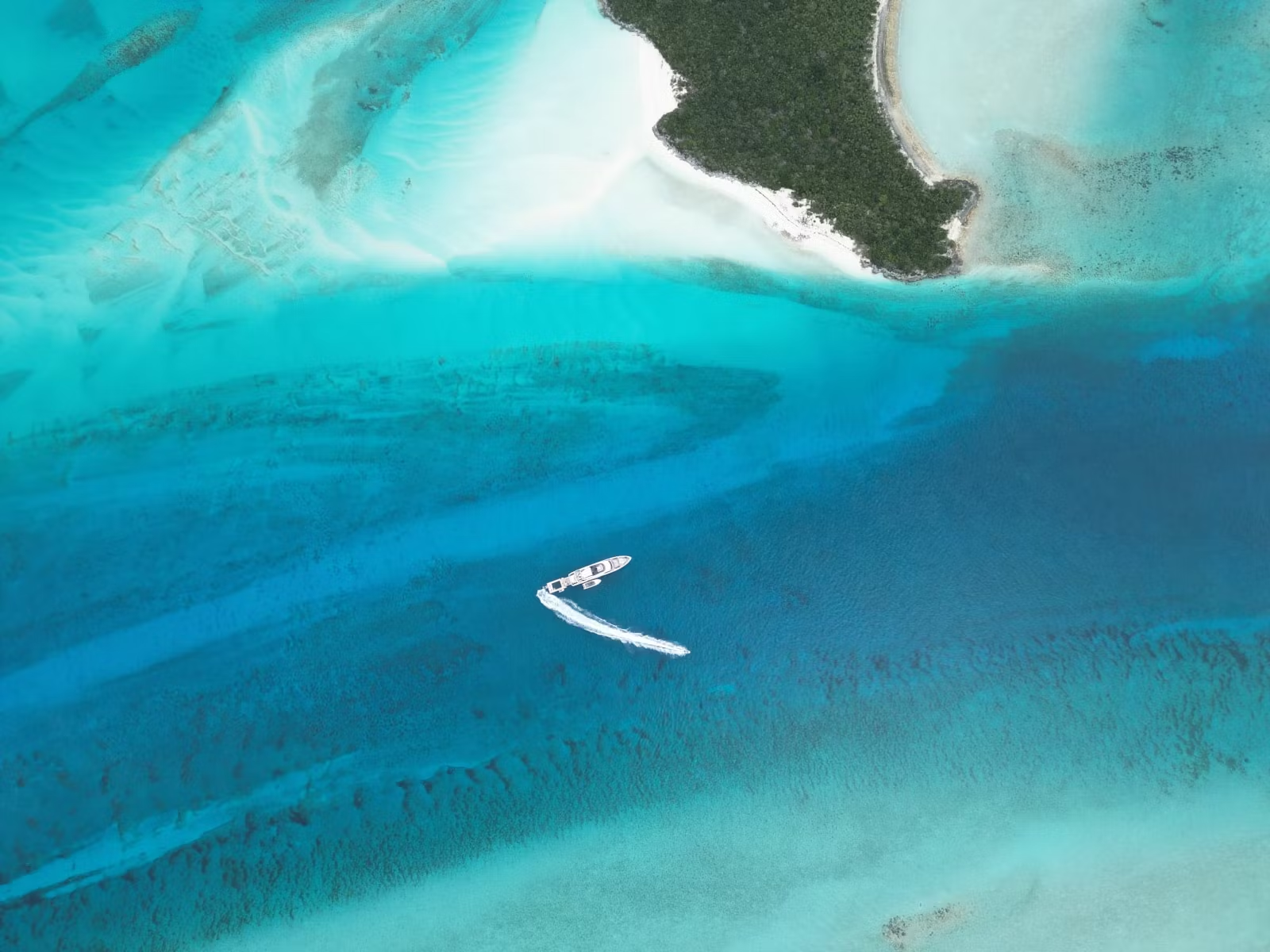
For those pursuing a sun-drenched and unparalleled beachside relaxation vacation, the Bahamas is the quintessential destination. This pristine Atalantic archipelago, located between Florida and the Caribbean, boasts over 3,000 islands and cays, many of which remain untouched and uninhabited. With its lush landscapes, vibrant coral reefs, and iconic beaches, The Bahamas offers a wealth of experiences, from exhilarating watersports to sophisticated beach bars. Here is a guide to the best spots, and activities, when visiting this island paradise:
FREQUENTLY ASKED QUESTIONS
The best time to charter a yacht in The Bahamas is from November through April, during the country’s dry season. This period offers consistent sunshine, warm temperatures, and low humidity, with daytime highs ranging from 75°F to 84°F (24°C to 29°C). Water temperatures remain inviting, often in the high 70s°F (25°C), ideal for swimming, snorkeling, and other watersports. This is considered the peak yachting season, particularly between mid December and March, when demand and rates are highest.
For those seeking more privacy and flexibility, the shoulder months of late April to early May and late October to early November offer excellent conditions without the winter crowds. The weather is typically calm and warm, marinas are quieter, and charter rates may be more favorable. These windows are often preferred by seasoned guests who value comfort and value in equal measure.
The summer months, from May through early June, can also provide a quiet and lush cruising experience, especially in the Out Islands. However, from June 1 to November 30, The Bahamas is officially in hurricane season. Storm risk increases notably in August, September, and October. While many charters still operate safely with up-to-date forecasts and flexible itineraries, it is a period that requires careful planning and consideration.
Whether you are drawn to the bustling marinas of Nassau and Paradise Island or the remote anchorages of the Exumas and Eleuthera, timing your charter around the dry season will give you the most reliable experience.
Yacht charter rates in The Bahamas vary depending on the yacht’s type, size, age, onboard features, and guest capacity. Weekly base rates for crewed luxury motor yachts generally start at around $25,000 for smaller yachts and can exceed $350,000 for premium superyachts with extensive amenities.
Seasonality plays an important role in pricing. The high season runs from December to April, aligning with the region’s warm, dry winter and peak visitor demand. Lower rates are typically available during the summer and fall months, outside of major holiday periods.
Charterers should also plan for expenses beyond the base charter fee. An Advance Provisioning Allowance (APA) of 25–40% of the charter cost is customarily required before embarkation to cover variable expenses such as fuel, food and drinks, dockage, and onshore services. The APA is reconciled at the end of the charter, with any unused funds refunded.
The tax structure on Bahamian yacht charters is currently set at a combined 14% charter tax, which applies to the total charter cost. This consolidated rate replaced the previous VAT-based system and is administered through the Port Department.
Crew gratuity is not included in the charter fee but is customary, generally 10–20% of the base rate, offered at the guest’s discretion based on service level.
To explore yachts available in The Bahamas and receive a tailored proposal, IYC’s expert consultants are here to assist you.
The Bahamas is one of the most yacht-friendly cruising grounds in the world, with a geography tailor-made for island-hopping. Spanning over 700 islands and cays, the archipelago offers a wide range of cruising styles, from relaxed beach days to lively marina nights. Most itineraries begin in Nassau or Paradise Island, which feature full-service marinas, upscale dining, and direct international flight access.
To the southeast, the Exumas form the heart of most Bahamian charters. This chain of low-lying islands is famed for its luminous waters, protected anchorages, and highlights such as the swimming pigs at Big Major Cay, the grotto at Staniel Cay, and the marine-rich Exuma Cays Land and Sea Park. The shallow depths make it ideal for yachts with low draft and guests seeking barefoot luxury in remote surroundings.
In the north, the Abacos offer a more traditional island experience. Colonial towns like Hope Town and Marsh Harbour provide colorful charm, while the Sea of Abaco offers calm waters ideal for families or first-time charterers.
Further afield, Eleuthera and Harbour Island deliver a refined pace with pink sand beaches, boutique resorts, and laid-back sophistication. For those craving true seclusion, the Berry Islands provide quiet anchorages, sportfishing, and untouched nature.
Most destinations are just a few hours apart, allowing for highly adaptable cruising. Whether you seek adventure, tranquility, or cultural immersion, The Bahamas can deliver.
For itinerary planning and yacht selection, IYC’s expert consultants would be happy to assist you.
The Bahamas offers a diverse fleet of charter yachts, ideal for cruising its shallow waters, reef-fringed cays, and powder-white anchorages. Motor yachts are the most popular choice, offering speed, comfort, and shallow drafts that allow for easy navigation between the Exumas, Abacos, and Out Islands. From sleek sport models to full-displacement superyachts with beach clubs and onboard Jacuzzis, these yachts are well suited for both short hops and longer-range itineraries.
Catamarans are also widely favored in The Bahamas, thanks to their wide beams, minimal draft, and expansive deck space. Especially popular with families and first-time charterers, they offer stable cruising and effortless access to anchorages that monohulls may not reach. For guests seeking a more traditional experience, luxury sailing yachts provide a graceful, wind-driven alternative, ideal for leisurely days at sea and sunset sailing along sheltered coasts.
Yachts within IYC’s fleet are fully crewed and typically accommodate up to 12 guests, offering a range of layouts and amenities tailored to different preferences and cruising styles. Whether you’re drawn to the simplicity of a catamaran or the indulgence of a 200-foot motor yacht, The Bahamas delivers a charter experience shaped by freedom, flexibility, and warm island hospitality.
The charter fee in The Bahamas includes the core elements of your yachting experience: the yacht itself, her full-time professional crew, insurance, and standard onboard amenities. This base rate provides for comfort and safety, while all operational expenses are handled separately.
Costs such as fuel, food and beverage provisioning, marina fees, port clearance, and onshore arrangements are covered through an Advance Provisioning Allowance, or APA. The APA is generally set at 25–40% of the base charter rate and is paid ahead of embarkation. Managed by the Captain throughout your cruise, the APA enables real-time provisioning tailored to your stated preferences. At the conclusion of the charter, a full accounting is provided and any remaining funds are returned.
Charters originating in The Bahamas are subject to a 10% VAT applied to the base fee, in line with current tax legislation. This is collected in advance and is distinct from the APA.
Crew gratuity is not included in the charter fee. A discretionary tip of 10–20% of the base rate is customary and offers a way to recognize outstanding service.
For a clear breakdown of what’s included, what’s not, and how pricing works across our Bahamas fleet, IYC’s expert consultants would be happy to assist you.
While seven-night charters are the typical format in The Bahamas, particularly for luxury crewed yachts during peak season, itineraries can vary. Weekly bookings remain the norm, with rates listed on a per-week basis and schedules planned accordingly. That said, shorter or extended trips may be possible depending on the yacht, time of year, and calendar availability. In such cases, fees are often calculated using a six-day divisor to account for fixed operational costs. All terms are confirmed directly between the client and the Central Agent.
Most charters start and finish at 12:00 pm, which is the standard across The Bahamas. Midday embarkation allows time for crew to prepare the yacht, complete provisioning, and finalize technical checks before guests come aboard. Disembarking at noon on the final day supports a smooth and consistent turnover.
For personalized itinerary planning, yacht selection, and a full breakdown of costs, IYC’s expert consultants would be happy to assist you.
The Bahamas currently offers an open, visitor-friendly travel environment for international arrivals. U.S., Canadian, and U.K. citizens can enter visa-free for up to 90 days, making it a seamless option for yacht charters. Key ports of entry include Nassau, Exuma, and North Eleuthera, all of which are served by direct flights from Miami, Atlanta, New York, and other major cities.
The Bahamian dollar is pegged to the U.S. dollar, which is accepted across the islands, eliminating the need for currency exchange. English is the official language, and the charter infrastructure is particularly well-developed in destinations like Nassau, Harbour Island, and the Exumas. Mobile networks offer good coverage in urbanized areas, and most crewed yachts provide onboard Wi-Fi, though service can be patchy in remote cays.
Health and safety standards are strong, with reputable hospitals on New Providence and Grand Bahama, and trained crew onboard most charter yachts. No vaccines are required for entry, but mosquito repellent is recommended during the summer months. While hurricane season officially runs from June to November, peak activity tends to occur between August and October, an important factor when planning late-summer itineraries.
The Bahamas experiences a warm, tropical climate throughout the year, with consistently mild air and sea temperatures. From mid-December to April, conditions are especially favorable for yachting, with daytime highs ranging from 77°F to 82°F (25°C to 28°C), gentle humidity, and dependable easterly trade winds. Precipitation is minimal during this dry season, and the surrounding waters remain calm and exceptionally clear. This creates ideal conditions for cruising, snorkeling, and enjoying time at anchor.
The rainy season begins in May and continues through November. During these months, temperatures rise to between 85°F and 90°F (29°C to 32°C), and humidity levels increase. Rain usually falls in short, tropical bursts and is often followed by bright skies. While the weather remains generally pleasant, routes may be refined to accommodate shifting conditions or localized squalls.
Hurricane season spans June through November, with peak storm activity occurring in August and September. Although significant storms are rare, charter operations are closely coordinated to ensure safe and seamless experiences. Key ports such as Nassau, Marsh Harbour, and Staniel Cay are equipped with customs facilities and offer protected marina infrastructure throughout the year.
Water temperatures remain consistently warm, ranging from 75°F to 86°F (24°C to 30°C), with excellent underwater visibility for swimming and diving. The prevailing trade winds, which are most reliable from winter into early summer, support smooth passages between the country’s most visited cruising areas including the Exumas, Abacos, and Eleuthera.
The official currency used throughout The Bahamas is the Bahamian dollar (BSD), which is pegged to the U.S. dollar (USD) at a 1:1 ratio. Whether you're provisioning in Nassau or exploring the Exumas by yacht, all transactions are conducted in Bahamian or U.S. dollars, and both are accepted interchangeably across the islands.
While credit and debit cards are commonly accepted in upscale marinas, resorts, and charter-ready ports such as Paradise Island, Albany, and Marsh Harbour, it’s advisable to carry a small amount of cash when visiting smaller out islands or local settlements where card access may be limited. ATMs are widely available in major hubs and typically dispense both BSD and USD, though availability may be reduced in remote areas, so it’s best to prepare in advance for crew gratuities or incidental purchases.
If guests wish to exchange other currencies, this can be done at commercial banks, currency exchange counters, or occasionally in larger marina complexes, though withdrawing directly from an ATM or using a credit card often provides more favorable rates.
The Bahamas uses a 120V / 60Hz electrical system with Type A and Type B plug sockets—the same standard found throughout the United States and Canada. For North American guests, this means no adapters or voltage converters are required. However, charterers arriving from Europe, the United Kingdom, Australia, or Asia should bring a compatible plug adapter, and in some cases, a voltage converter if traveling with single-voltage appliances.
Most charter yachts in The Bahamas are equipped for international clientele, often featuring universal power sockets or multi-plug outlets alongside USB charging ports in guest areas. While docked in marinas, yachts connect to shore power at 120V; when anchored, onboard generators ensure seamless energy supply for lighting, climate control, galley appliances, and electronics. For optimal convenience, consider packing a surge-protected universal adaptor, especially if you rely on sensitive gear like laptops or CPAP machines.
If you’re bringing high-draw or specialty devices, IYC’s expert consultants can help verify compatibility with your selected yacht. From power access to provisioning support, our team ensures every detail is handled in advance.
Mobile coverage in The Bahamas is strong around key charter hubs such as Nassau, Paradise Island, and the Exumas, with 4G LTE available via BTC and ALIV. Coverage can weaken when cruising more remote cays, so most charter yachts are equipped with onboard Wi-Fi powered by cellular routers or VSAT systems to maintain consistent service. Streaming and video calls are possible but may be limited by bandwidth in isolated areas. Guests from the U.S. often face roaming fees and may prefer a local SIM or eSIM, easily arranged on arrival or through crew.
Drone use is legal but regulated. Devices over 250 grams must be registered with the Bahamas Civil Aviation Authority, and all drones should be declared at customs. Flying near airports, national parks, or over crowds is prohibited without prior approval. Commercial use requires permits from both the BCAA and the Bahamas Film and Television Commission. To avoid issues, guests should inform the Captain in advance. Many crews can assist with permissions or advise on drone-friendly anchorages.
The Bahamas provides a safe, well-supported setting for yacht charters, with trained crews, reliable onboard medical equipment, and access to clinics and pharmacies in key hubs such as Nassau, Freeport, and Marsh Harbour. Remote anchorages are backed by telemedicine and established emergency protocols, with crews equipped to manage first-response situations confidently.
UV exposure is high during the main cruising season, particularly from spring through early autumn. Sun protection and regular hydration are essential during time on deck or in the water. Sea temperatures range from 75°F to 84°F (24°C to 29°C), offering warm, inviting conditions for swimming and watersports across sheltered anchorages.
Onboard hygiene and provisioning standards are carefully managed. Yacht chefs source fresh local ingredients through trusted suppliers and create menus that accommodate allergies, dietary restrictions, and wellness preferences. Purified or bottled water is standard across the charter fleet.
Mosquito repellent is advisable when anchored near mangroves or humid islets, particularly in summer. There are no vaccination requirements for entry, though routine immunizations are recommended. Guests should carry essential medications in original containers for ease of use.