Florida
Florida Yacht Charter Guide
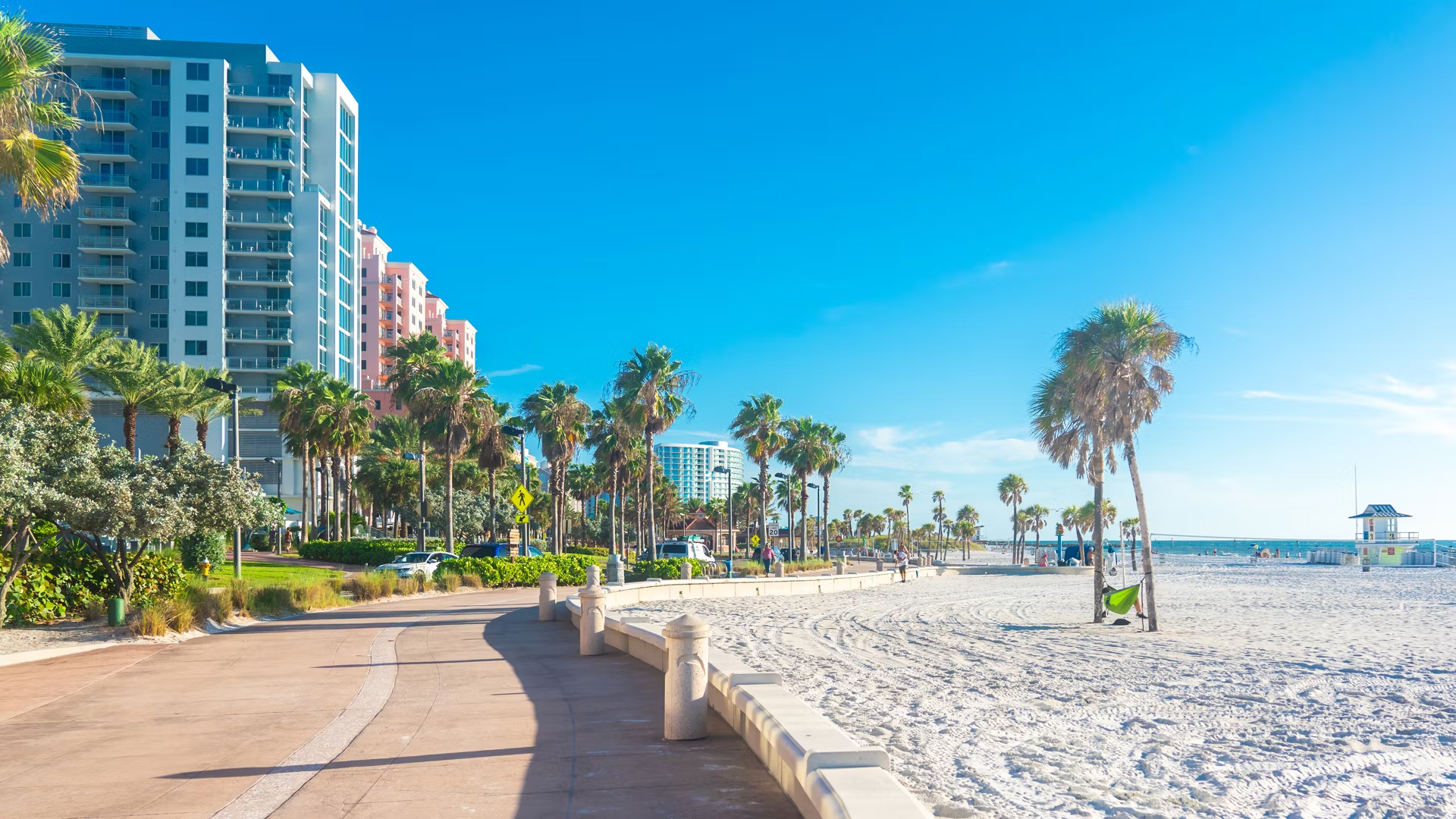
Surrounded by excellent and varied cruising areas, Florida is the perfect destination for a luxury yacht charter. Whether your dream is chasing big game fish, relaxing in turquoise waters and tropical island beaches, or spotting rare manatees and dolphins as you explore mangroves by kayak, you can find it in Florida. Private boat hire allows you to design your itinerary to explore tropical islands, chic cities, and barrier reefs in the utmost comfort, avoiding the touring crowd. Home of iconic Miami and yachting hub Fort Lauderdale, here you will be in good company as the stunning marinas host some of the finest superyachts who berth up to enjoy the high-end dining, golf, and top up on winter sun.
Best Time To Visit: Winter and spring are warm and avoid the potential rain of summer. November to May offer reliable weather.
Key Cruising Areas: The Intercoastal Waterway on the west provides sheltered sailing perfect for big game fishing. The Keys provide excellent sailing around barrier reefs, and the Everglades (southwest) is a wild, remote area great for bird and wildlife spotting.
Don’t Miss: The Florida Keys are the only living coral reef in the US. The string of tropical islands stretches for 150 km, well-known for great fishing, diving, and snorkeling. Spend a day sailing the turquoise waters of the island, then berth in Key West to sample the famous nightlife.
Best Spots for Wining and Dining: The makeover of downtown Miami has been accompanied by a wonderful evolution in the restaurant scene. Try the sautéed snapper at the Matador Room for perfect, simple food in an elegant setting.
Best Local Dish: Key Lime Pie is the official state pie of Florida. For an award-winning version of this dessert, sail to Captiva Island where you will find an island paradise of thatched bistros, a beautiful beach, and – of course – fantastic pie!
Local Culture: The fusion of influences led to the unique and edgy Miami Modern (“MiMo”) style. A walk around the art deco district of the city will reveal some interesting street art, or head to one of the museums or galleries – the Bass Museum is set in an impressive old library and hosts world-class exhibitions.
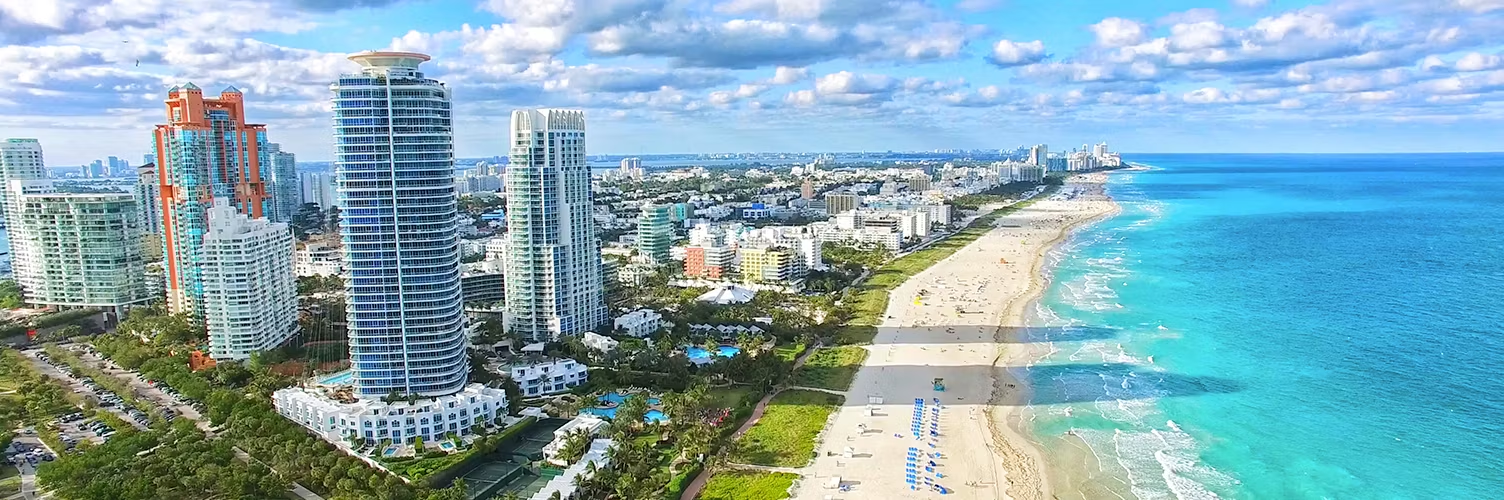
Best Beach: A trip to Florida wouldn’t be complete without visiting Miami’s South Beach, but for a quieter spot head to Bahia Honda in the Keys. Particularly known for its magnificent sunsets, ask your crew to take you a picnic ashore and enjoy the balmy evening while the sun dips in the sky.
IYC recommends: In the backwaters of the Everglades, Ten Thousand Islands are a winding maze of mangroves. The islands are wild and rugged, and a charter yacht is an ideal way to explore. Take one of the onboard kayaks and you may see endangered species such as Florida Manatees and turtles.
FREQUENTLY ASKED QUESTIONS
Yes, IYC manages a large fleet in Florida and also provides access to the full fleet of luxury yachts available for charter throughout the state and wider region. This includes motor yachts, sailing yachts, and luxury catamarans across a wide range of sizes and price points, cruising throughout Florida’s major yachting regions and coastline, from Miami and Fort Lauderdale to Palm Beach, the Florida Keys, and the Gulf Coast.
With offices in Fort Lauderdale and Palm Beach Gardens, alongside a global team of experienced Charter Consultants, IYC combines local market expertise with international reach. Clients benefit from tailored yacht recommendations, up-to-date market insight, and seamless charter planning throughout Florida.
The best time of year to charter a yacht in Florida is typically between December and April, when the state enjoys its most comfortable weather and peak cruising conditions. During these winter months, temperatures average between 68°F and 77°F (20°C to 25°C), humidity is low, and sea conditions are generally calm. This period aligns with Florida’s high season, attracting yachts from across the U.S. and the Caribbean and offering a vibrant atmosphere in ports such as Miami, Fort Lauderdale, and Palm Beach.
Florida’s appeal extends well beyond winter. The summer charter season, from May through September, brings warmer temperatures and a more relaxed pace on the water. While daytime highs often reach 90°F (32°C), this period offers excellent value, quieter marinas, and greater flexibility when securing preferred yachts. Experienced Captains plan itineraries with weather patterns in mind, particularly during hurricane season, which officially runs from June through November, with the highest activity typically in late summer and early fall.
Many seasoned charterers favor the shoulder months of May and November. These transitional periods balance warm water, lighter crowds, and improved availability, making them ideal for coastal cruising or combining a Florida yacht charter with crossings to The Bahamas. Water temperatures remain inviting year-round, averaging between 72°F and 82°F (22°C to 28°C), supporting swimming and watersports in every season.
With its year-round accessibility, world-class marinas, and proximity to the Bahamas, Florida supports flexible itineraries in any month. For tailored timing advice, current yacht availability, and itinerary planning across Florida yacht charters and beyond, IYC’s expert consultants would be happy to assist you.
The cost to charter a yacht in Florida depends on several key factors, including the yacht’s size, style, age, and level of onboard amenities, as well as the time of year and intended cruising area. As a general guide, weekly charter rates for fully crewed luxury motor yachts typically begin at around $25,000. Larger or newer superyachts with advanced stabilizers, expansive deck spaces, and higher crew-to-guest ratios can command rates above $350,000 per week.
Seasonality plays an important role in pricing. Florida’s peak charter season runs from December through April, when demand is highest due to warm winter weather, major events, and holiday travel. During this period, base rates are at their premium. Shoulder months, particularly late spring and early fall, often provide more flexibility in both pricing and availability, while still offering excellent cruising conditions.
In addition to the base charter fee, guests should budget for operating expenses through an Advance Provisioning Allowance, or APA. Typically calculated at 25–40% of the charter rate, the APA covers fuel, food and beverages, dockage, local port fees, and tailored onboard or onshore arrangements. Any unused funds are returned at the end of the charter, with full transparency provided by the Captain. Depending on the itinerary, Florida sales tax may also apply, particularly if cruising remains within state waters.
Florida yacht charters are generally subject to 6% sales tax, with some counties applying a small additional local surtax depending on the embarkation location.
Crew gratuity is not included in the charter fee or APA but is customary, generally ranging from 10–20% of the base rate, and reflects satisfaction with the crew’s service.
Chartering a yacht in Florida gives you access to a wide variety of cruising destinations, ranging from cosmopolitan coastal cities to tranquil island chains and nearby international waters. Many itineraries begin in Miami or Fort Lauderdale, where well-equipped marinas place you close to South Beach, Biscayne Bay, and the Intracoastal Waterway. This region is well suited to shorter charters that combine smooth cruising with waterfront restaurants, beach clubs, and a lively social scene.
Sailing south, the Florida Keys offer a more relaxed and scenic experience. From Key Largo to Key West, the Keys are known for clear waters, coral reefs, and an easygoing island atmosphere. Short distances between anchorages allow for flexible daily plans, whether that means snorkeling in protected marine areas or spending extended time at anchor. Key West adds cultural depth, with historic architecture, galleries, and a vibrant harbor that welcomes larger yachts.
Florida’s west coast presents a quieter alternative. Cruising areas such as Naples, Marco Island, and the Ten Thousand Islands emphasize nature, privacy, and calm Gulf waters. This region is ideal for guests who value wildlife encounters, mangrove-lined passages, and a slower pace on the water.
For those looking to expand their itinerary, The Bahamas are easily reached from Florida. A short crossing brings you to destinations such as Bimini or Grand Bahama, where shallow turquoise waters and white-sand beaches create a seamless extension to a Florida yacht charter. This flexibility allows guests to combine U.S. coastal cruising with iconic Bahamian island experiences.
For personalized itinerary planning and current yacht availability, IYC’s expert consultants would be happy to assist you.
Florida offers a wide variety of charter yachts, allowing guests to select a style that aligns closely with their cruising plans, group size, and onboard preferences. The most common option is a crewed motor yacht, which combines speed, comfort, and generous living spaces. These yachts are well suited to cruising between Miami, Palm Beach, Fort Lauderdale, and the Florida Keys, as well as for extended itineraries toward The Bahamas.
Open and sport-style motor yachts are particularly popular for day charters and short escapes. Their sleek profiles, open decks, and shallow draft make them ideal for coastal cruising, waterfront dining, and accessing sandbars or quiet anchorages. For guests planning longer charters or offshore passages, larger semi-displacement and full-displacement motor yachts provide increased range, enhanced stability, and more private guest accommodations.
Power catamarans are an increasingly sought-after option in Florida. Their wide beam creates expansive deck areas and bright interior spaces, while the shallow draft allows access to areas that monohull yachts cannot reach easily. This configuration is especially appealing for families or groups who prioritize space and stability at anchor.
Sailing yachts are available in more limited numbers but remain an attractive choice for guests drawn to a quieter, wind-powered experience. These charters focus on the journey itself, offering a traditional connection to the sea that contrasts with motor yacht cruising.
Yachts within IYC’s fleet are fully crewed and typically accommodate up to 12 guests, offering a range of layouts and amenities tailored to different preferences and cruising styles.
The charter fee on a yacht charter in Florida covers the core elements of your experience on the water. This includes the yacht itself, the services of a professional crew, standard onboard equipment, and the yacht’s insurance. From navigation systems to guest amenities, everything required for safe and comfortable cruising is included in the base rate.
Operational expenses are not part of the charter fee and are instead handled through an Advance Provisioning Allowance, commonly referred to as the APA. This allowance is typically calculated at 25% to 40% of the charter fee and is paid before embarkation. The APA covers variable costs such as fuel, food and beverage provisioning, dockage and marina fees, local port charges, and any special requests arranged during the charter. The Captain manages these funds throughout the trip and provides a full itemized statement at the end, with any unused balance returned to the client.
Florida yacht charters are also generally subject to 6% sales tax, with some counties applying a small additional local surtax depending on the embarkation location. The exact tax structure can vary based on the yacht’s cruising itinerary and charter compliance status, so these costs are always confirmed in advance as part of the booking process.
Crew gratuity is separate from both the charter fee and the APA. While not mandatory, it is customary in Florida to offer a gratuity of 10% to 20% of the base charter fee, depending on service levels and guest satisfaction.
Florida charter regulations can vary depending on the yacht, itinerary, and compliance status, particularly when it comes to tax treatment. This is why a detailed cost outline is always provided before booking, ensuring complete clarity from the outset.
The APA, or Advance Provisioning Allowance, is a key component of the yacht charter process. It is a fund paid in advance of your charter, typically equal to 25–40% of the base charter fee, and is used to cover all operational expenses incurred during your trip. This includes fuel, food and beverages, marina fees, port taxes, transfers, and any special arrangements made to tailor your experience.
The APA is held onboard and managed by the yacht’s Captain, who ensures all provisioning and logistics are carried out efficiently and in line with your preferences. Prior to boarding, guests complete a preference sheet, noting dietary requests, beverage selections, activity interests, and more, which guides how the APA is allocated. Every expenditure is documented, and at the end of the charter, a full accounting is provided. Any unspent funds are refunded, while any overages are settled directly with the client.
As an example: if your weekly charter fee is $100,000, an APA of approximately $25,000 to $40,000 would be requested in advance. These funds might be used for cruising fuel, provisioning of meals and drinks, berthing fees, and third-party services such as private transfers or curated onshore excursions.
This system allows for complete flexibility, ensuring that the charter experience can be adjusted in real time, whether you decide to cruise further than originally planned or make spontaneous arrangements along the way. APA funds must be received before embarkation, typically via bank transfer alongside the final balance payment.
Weekly charters are the standard format for yacht charters in Florida, with most professionally crewed yachts offered on a seven-day basis. Charter rates are typically quoted per week, and itineraries are planned around this structure, particularly for guests looking to explore South Florida or combine their cruise with The Bahamas.
That said, Florida does offer some flexibility. Shorter or extended charter durations may be considered depending on the yacht, season, and owner preferences. When approved, these bookings are usually priced on a pro-rata basis and may be calculated using a six-day divisor to reflect fixed operational and crew costs. All minimum stay requirements and pricing terms are confirmed individually between the client and Central Agent.
Charters in Florida generally follow a 12:00 pm embarkation and disembarkation schedule. This timing allows the crew to prepare the yacht thoroughly between charters and ensures a smooth turnaround for incoming guests.
Florida currently offers a stable, accessible, and traveler-friendly environment for yacht charter guests. There are no state-imposed travel restrictions, and entry into the United States follows standard federal requirements. Many international travelers, including those from the U.K., Europe, and Canada, can enter visa-free under the U.S. Visa Waiver Program with an approved ESTA, while others may require a visitor visa depending on nationality.
The state is well served by major international airports, with Miami and Fort Lauderdale providing seamless access to Florida’s primary yacht charter hubs. These cities support a mature yachting infrastructure, including full-service marinas, customs and immigration facilities, and efficient ground transfers. Once on board, guests benefit from straightforward logistics and minimal administrative friction.
There are no Florida-specific health or vaccination requirements for entry. Medical facilities across South Florida are modern and widely available, offering reassurance for international visitors. English is the primary language, and the U.S. dollar is used universally, simplifying onboard provisioning, marina fees, and shore-based expenses.
Florida enjoys a warm, sun-forward climate that supports yacht charters throughout the year. The state’s weather is generally divided into two main seasons. From November through April, the dry season brings mild temperatures, lower humidity, and clear skies. Daytime highs typically range from 68–77°F (20–25°C), making this period especially appealing for relaxed cruising, outdoor dining, and extended time on deck.
From May through October, Florida transitions into its warmer, wetter season. Temperatures rise to an average of 86–92°F (30–33°C), and humidity increases, particularly in South Florida. Rainfall during this time usually comes in the form of brief, localized afternoon showers rather than prolonged storms, with sunshine returning quickly. Sea temperatures peak during summer, reaching up to 86°F (30°C), ideal for swimming and watersports.
Hurricane season officially runs from June through November, with August to October representing the highest-risk months. That said, modern forecasting allows captains to plan itineraries carefully, and charters continue to operate successfully throughout the season. Coastal breezes along the Atlantic and in the Florida Keys help temper the heat, while sheltered cruising grounds offer flexibility during variable conditions.
Overall, Florida’s consistently warm climate, combined with year-round accessibility, makes it a reliable and versatile yacht charter destination. For tailored itineraries, seasonal planning, and current yacht availability, IYC’s expert consultants would be happy to assist you.
The currency used throughout Florida is the United States dollar ($), which is the standard legal tender for all transactions. From charter fees and marina services to dining ashore and retail purchases, payments are handled exclusively in U.S. dollars.
Credit and debit cards are widely accepted at marinas, restaurants, and provisioning suppliers, making day-to-day transactions straightforward. Carrying some cash can be useful for small purchases or local services where card facilities may be limited.
ATMs are easy to find across Florida, particularly in major charter gateways such as Miami, Fort Lauderdale, and Palm Beach. Currency exchange services are available at international airports and large financial institutions, though most international guests find card payments or ATM withdrawals to be the most convenient option.
Florida is one of the most connected cruising destinations in the United States. Mobile coverage is strong throughout the state, particularly along the east coast, west coast, and Intracoastal Waterway. Charter hubs such as Miami, Fort Lauderdale, Palm Beach, Naples, and Key West benefit from consistent 4G LTE service, with 5G increasingly available in urban and high-traffic coastal areas. Major carriers including AT&T, Verizon, and T-Mobile provide reliable coverage for calls and data in most nearshore cruising zones.
On board, many charter yachts operating in Florida offer Wi-Fi for guest use, typically supported by cellular systems. Connectivity is generally excellent while docked or cruising close to shore, though speeds may vary in more remote anchorages or when traveling offshore. Guests who require uninterrupted connectivity for business or streaming should discuss expectations in advance, as yacht systems and coverage capabilities vary. IYC’s expert consultants can help match you with a yacht that meets your connectivity needs.
Drone use in Florida follows U.S. Federal Aviation Administration regulations. Recreational drones weighing more than 250 grams must be registered, and pilots must adhere to altitude limits, visual line-of-sight requirements, and no-fly zone restrictions. Flights are prohibited near airports, military bases, cruise ship terminals, and over crowds, and are not permitted within national parks such as the Everglades or Dry Tortugas without explicit authorization.
Launching a drone from a yacht is allowed only if FAA rules are followed and local airspace permits it. The Captain’s approval is essential, as operational safety, guest privacy, and local restrictions must be considered at all times. For guests interested in aerial photography during a Florida yacht charter, advance planning is strongly recommended to avoid restricted areas and ensure compliance.
Florida uses a 120V / 60Hz electrical system, which is standard throughout the United States. Power outlets are Type A and Type B, featuring two flat prongs, with Type B including a grounding pin. Travelers arriving from Europe, the United Kingdom, Australia, or other regions that use 220–240V systems will need a plug adapter, and in some cases a voltage converter for devices that are not dual voltage.
Most modern personal electronics, including smartphones, laptops, tablets, and cameras, are designed to operate on dual voltage (typically 100–240V) and require only a simple adapter. It is always advisable to check the voltage rating printed on each device before travel. Single-voltage appliances such as hairdryers or styling tools may require a converter or are best left at home.
For guests staying in luxury hotels, marinas, or chartering a yacht in Florida, electrical compatibility is rarely an issue. Crewed yachts operate on U.S.-standard electrical systems and are typically equipped with multiple charging options, including USB outlets and, in many cases, international adapters. When docked, yachts draw shore power that matches U.S. voltage standards. At anchor, onboard generators provide stable and continuous power throughout the yacht.
Florida’s climate includes frequent summer thunderstorms, so using surge-protected adapters for sensitive electronics is recommended. Guests traveling with medical devices or specialized electrical equipment should confirm compatibility in advance to ensure uninterrupted use.