
Sardinia
Sardinia Yacht Charter Guide
Experience a Sardinia yacht charter and enjoy chic marinas coupled with idyllic beaches and some of Italy's best cuisine for the ultimate summer cruise.
The second-largest island in the Mediterranean, located off Italy's west coast, is Sardinia. A yacht charter in Sardinia combines the best of both worlds, blending a wild, craggy coastline with the chic, cosmopolitan glamour and exclusivity found in Porto Cervo and Porto Rotondo. Dotted with luxury resorts, shopping, and dining experiences, cruising down the iconic Costa Smeralda is a must. Head inland for the island's dramatic gorges and lush interior full of outdoor pursuit opportunities, while the coastline is home to various charming towns where you can sample the delicious Sardinian cuisine and sought-after island wines. Just a stone's throw from the island lies the La Maddalena archipelago, comprising over 60 uninhabited and pristine islands that are ideal for visiting by yacht, with their white sandy beaches, biodiverse turquoise waters, and isolated anchorages.

Best Time To Visit: The perfect time for cruising is during the Mediterranean summer, from May through to September.
Key Cruising Areas: Cruise to the famous Porto Cervo and Cala di Volpe for Sardinian glamour and iconic beach clubs, while the La Maddalena archipelago provides off-the-beaten-track adventures. Extend your itinerary and combine a visit to nearby Corsica.
Don't Miss: Anchor in Cala di Volpe Bay and head ashore to enjoy one of the island's most iconic luxury hotels. Sundowners are the perfect time to visit via tender, admiring the sunset views at the Cala Beach Beach Club.
Best Spots for Wining and Dining: The Costa Smeralda is home to some of the most exclusive restaurants in the world. In Porto Cervo, dine at the Michelin-starred ConFusion, known for its champagne list, or Il Pescatore for the saffron lobster.

Best Local Dish: There are hundreds of Sardinian breads; the most typical is pane carasau, a thin, crisp flatbread often served with olive oil and salt. Another must-try delicacy on the island is bottarga, dried, salted, and pressed roe from grey mullet.
Local Culture: Sardinia hosts numerous year-round vibrant festivals that celebrate its rich culture; one of the most important is Sant'Efisio, held in Cagliari, where you can witness colorful parades featuring traditional costumes.
Best Beach: Only accessible by sea, the Maddalena Islands are home to various beautiful beaches, including the isolated Cala Coticcio on Caprera Island.
IYC recommends: Cruise the beauty of the secluded beaches and crystal-clear waters of the UNESCO-protected Maddalena archipelago, enjoy a beach barbecue organized by your crew, and dive into the watersports while on anchor.
More To Explore
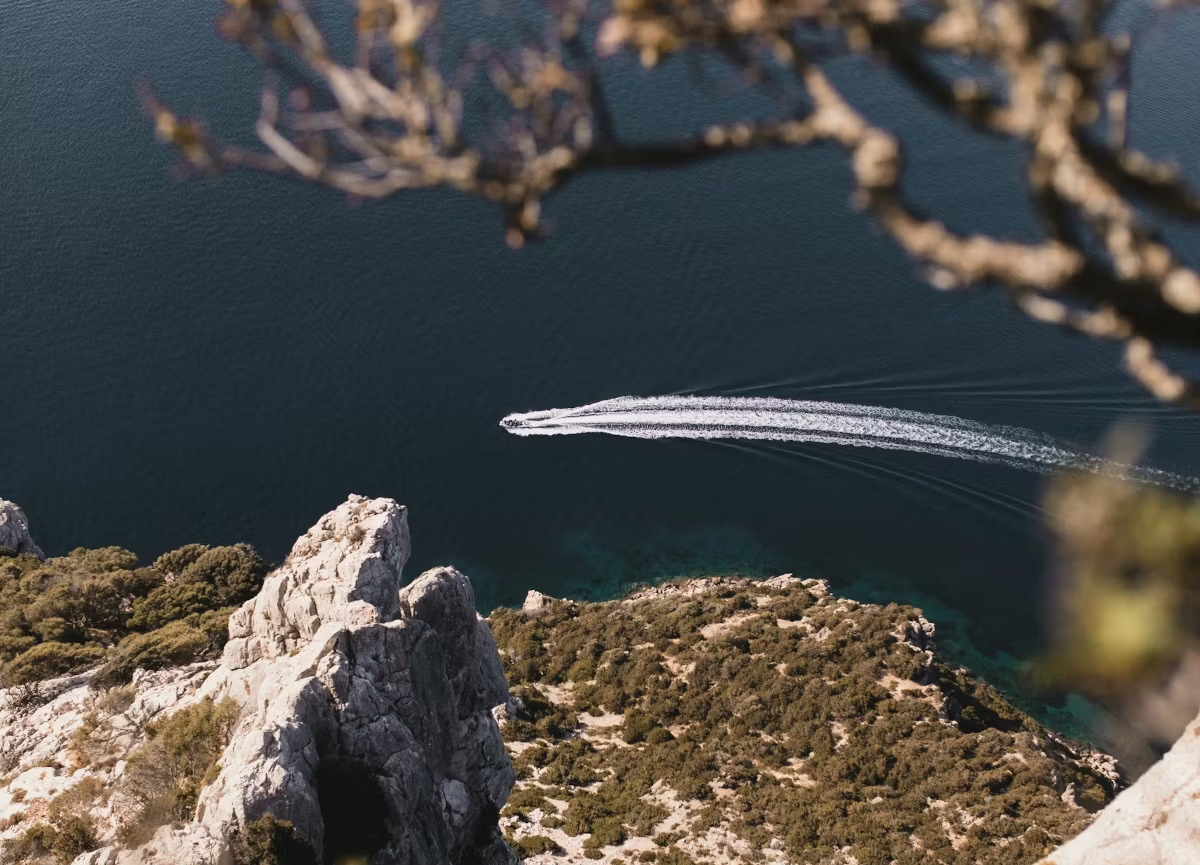
Sardinia is a hidden treasure waiting to be discovered, with over 2000 kilometers of breathtaking coastline and ancient ruins. Located near Corsica, this Italian island is as a must-visit destination, praised by top travel publications like Condé Nast Traveller. Boasting a wealth of history, traditional cuisine, and charming towns with vibrant architecture, Sardinia offers a unique and untouched experience. The famous Costa Smeralda invites visitors to indulge in luxury stays at world-class hotels or villas and mingle with the elite at chic beach clubs. In the summertime, the marinas are bustling with private yachts, adding to the island's lavish atmosphere. Experience the enchanting "La Maddalena Archipelago", a designated UNESCO World Heritage Site. Visit the captivating Budelli island, renowned for its unique "pink beach", as well as other alluring destinations such as Spargi. Be sure not to miss out on the picturesque riverside town of Bosa, famed for its vibrant houses, and the picturesque city of Alghero. These are just a sampling of the countless awe-inspiring sights that await you on your journey to Sardinia. Come with us to discover this extraordinary island, filled with deep history, lively local traditions, and astounding coastal vistas that will leave you speechless. The origins of Sardinia date back to ancient times, with a rich history influenced by diverse groups such as the Phoenicians, Romans, Byzantines, and others. Evidence of its rich history can be found throughout the island, with Su Nurax and other sites serving as ancient remnants of the mysterious Nuragic civilization. Despite ongoing research, many questions about these stone structures and their inhabitants remain unanswered. Today, Sardinia continues to reveal new archaeological sites, offering a diverse and intriguing past for those fascinated by history.
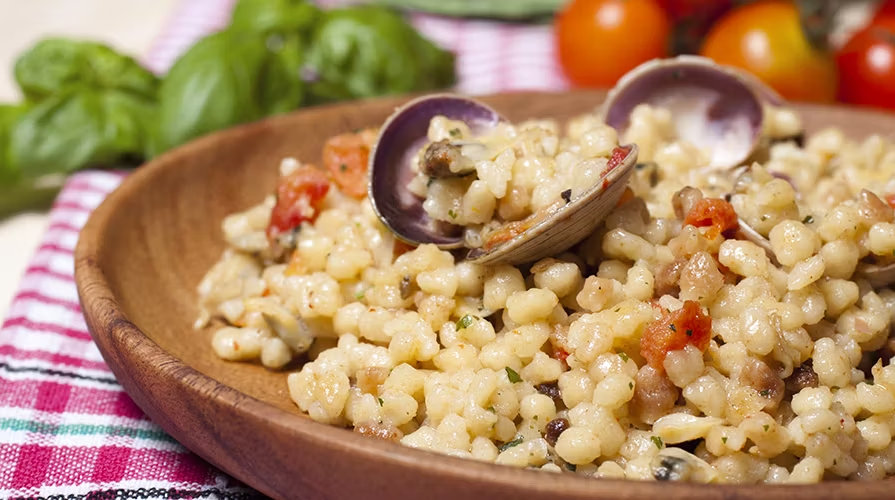
Sardinia’s cuisine is closely tied to the island itself, drawing on ingredients from both its coastline and rural interior. Fresh seafood, pecorino cheese, handmade pasta and local herbs feature prominently, with recipes and specialties that vary across the island.Exploring Sardinia by yacht offers plenty of opportunities to discover these local flavors, from restaurants in Porto Cervo and coastal towns to ingredients sourced along the way and prepared by your chef on board. Here are some of the Sardinian specialties worth trying during your charter.
Beyond its world-class anchorages and turquoise bays, Sardinia holds a captivating ancient past waiting to be explored. Home to thousands of prehistoric stone nuraghi, ancient Phoenician trading hubs, and sweeping Roman amphitheaters, the island offers a rich journey through thousands of years of Mediterranean history.A private yacht charter provides the ultimate way to experience these cultural treasures. Cruising along the rugged coastline allows you to seamlessly anchor near iconic historical landmarks, stepping ashore to discover ancient ruins just moments from the water. Here are the top archaeological sites in Sardinia to add into your next custom charter itinerary.

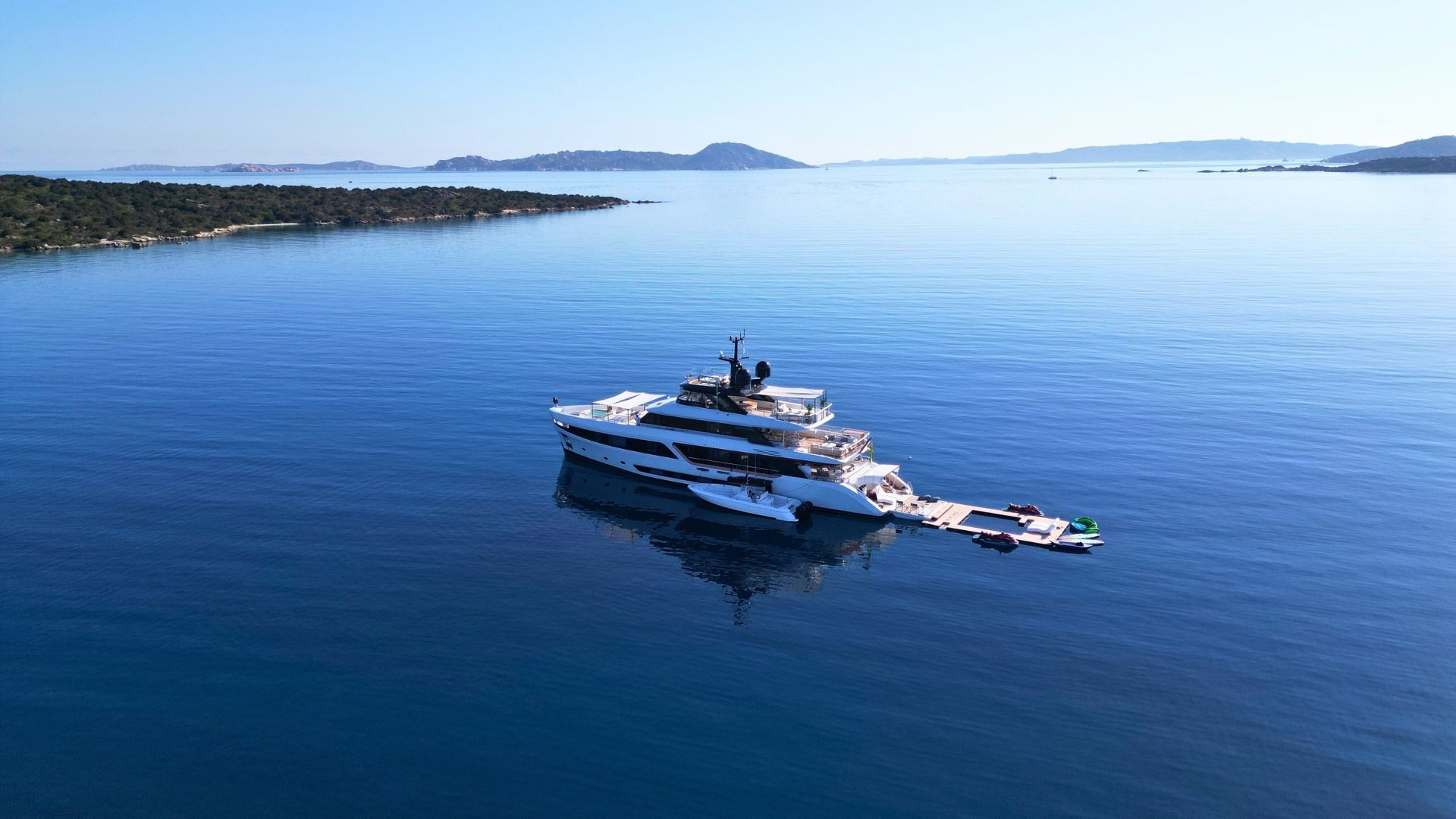
Spotlighting not only the best destinations to cruise but also on which yacht for charter to do it, this IYC Inspiration combines a multi-destination Mediterranean itinerary from Corsica to Sardinia onboard the Sanlorenzo 122’10 (37.44m) luxury yacht AWAY.This trip, taken last summer, was arranged for an active family of five with teenagers in tow for a week-long island-hopping adventure. Built for Mediterranean living, AWAY boasts vast deck spaces with a fully equipped toy box, including a sleek Axopar chase boat and a crew of passionate professionals. The yacht was the perfect platform for exploration, watersports, alfresco dining, family time, and moments of pure relaxation. Here is the story of their week-long summer luxury yacht charter in Corsica and Sardinia:
FREQUENTLY ASKED QUESTIONS
The best time to charter a yacht in Sardinia is from May to October, when the island’s Mediterranean climate creates ideal conditions for cruising. During this period, Sardinia offers long, sunlit days, warm sea temperatures, and excellent access to its most sought-after cruising grounds, from the Costa Smeralda to the La Maddalena Archipelago.
July and August mark the peak of the season, with temperatures often reaching 95°F (35°C) and sea temperatures around 79°F (26°C). This is when Sardinia is at its most vibrant. Porto Cervo and Porto Rotondo are in full swing, beach clubs are lively, and the northeast coastline becomes a focal point for superyacht activity. The sheltered waters around La Maddalena provide exceptional cruising, even during the height of summer.
For a more relaxed experience, May, June, and September are often preferred. These shoulder months offer warm weather, typically 72°F to 84°F (22°C to 29°C), along with calmer seas and easier access to marinas. Conditions are particularly pleasant for exploring both the northeast and the quieter southern coast, with fewer crowds and a more measured pace throughout the itinerary.
October can still be rewarding, especially for guests interested in a quieter charter. Sea temperatures remain comfortable, and while some seasonal venues begin to close, the island’s natural beauty and cruising flexibility remain very much intact.
Yacht charter rates in Sardinia reflect the island’s position as one of the Mediterranean’s most exclusive cruising grounds. Weekly base prices for crewed motor yachts typically begin around €25,000, while high-specification superyachts, particularly those operating along the Costa Smeralda, can exceed €350,000 per week. The final rate depends on factors such as yacht size, build year, guest capacity, and onboard features.
Seasonality plays a defining role in Sardinia. July and August represent the peak period, when demand is at its highest and berths in sought-after marinas like Porto Cervo are limited. This is when pricing reaches its upper range. For a more measured experience, the shoulder months of May, June, and September offer excellent value, with warm conditions, lighter traffic, and improved marina availability across the island and nearby cruising areas such as La Maddalena and southern Corsica.
Beyond the base charter fee, guests should plan for an Advance Provisioning Allowance (APA), typically set at 25–40% of the weekly rate. This fund is used to cover operational expenses including fuel, provisioning, marina fees, and any tailored experiences ashore. At the end of the charter, a full account is provided, and any unused balance is returned.
Charters embarking in Sardinia are subject to Italian VAT at 22%. However, depending on the itinerary, particularly those extending into international waters or nearby destinations like Corsica, certain adjustments may apply. Crew gratuity is not included and is usually offered at 10–20% of the base charter fee, reflecting the level of service received.
Sardinia offers one of the most refined and varied cruising grounds in the Mediterranean, where days are shaped by swimming in clear bays, dining ashore at waterfront restaurants, and exploring a mix of lively ports and quiet natural anchorages. From the northeast’s iconic Costa Smeralda to the rugged cliffs of the east, itineraries here combine elegant harbors, secluded beaches, and scenic cruising routes with easy access to onshore culture and nightlife.
The Costa Smeralda is the natural starting point for most yacht charters from Sardinia, with embarkation from Porto Cervo or Olbia. This stretch of coastline is known for its beach clubs, boutiques, and well-serviced marinas. From here, short cruising legs lead to Capriccioli, Cala di Volpe, and Liscia Ruja, where shallow bays and bright turquoise water create ideal daytime anchorages.
Just to the north, the La Maddalena Archipelago introduces a more protected and nature-driven setting. With over 60 islands and islets, this national park offers calm cruising conditions, secluded coves, and exceptional water clarity. Nearby, the Strait of Bonifacio opens the route to southern Corsica, where Bonifacio’s limestone cliffs and harbor provide a striking contrast and a seamless extension to your itinerary.
Along Sardinia’s east coast, the Gulf of Orosei delivers a different experience. Limestone cliffs rise above hidden beaches such as Cala Luna and Cala Goloritzé, accessible primarily by sea. These anchorages feel remote, yet remain within comfortable cruising distance. Further north, Tavolara and Molara islands offer quiet stops within a marine reserve, known for their clear waters and distinctive landscapes.
To the west, Alghero brings a cultural shift, with Catalan influences, a historic old town, and access to natural highlights like Neptune’s Grotto. This region suits guests looking to combine coastal cruising with onshore exploration, often with fewer crowds than the northeast.
Cruising distances across Sardinia are manageable, allowing a relaxed pace with frequent changes in scenery. Whether your itinerary leans toward vibrant marina life or secluded anchorages, the island supports a well-balanced charter experience.
Sardinia offers a refined selection of charter yachts, well suited to its mix of glamorous marinas, open-water cruising, and secluded island anchorages. Motor yachts are the most popular choice here, especially for itineraries along the Costa Smeralda, the La Maddalena Archipelago, and across to southern Corsica. They deliver the speed and range needed to move comfortably between destinations, while offering spacious decks and onboard amenities that complement Sardinia’s social and beach-oriented lifestyle.
Sailing yachts are also a strong option, particularly in northern Sardinia where steady summer winds create excellent conditions for a more traditional cruising experience. For guests who prefer a slower pace and a closer connection to the sea, these yachts are well suited to exploring quieter bays and less frequented anchorages.
Catamarans are widely available and especially practical around Sardinia’s protected island groups. Their shallow draft allows access to turquoise shallows and sandy coves that are difficult to reach with deeper yachts. With wide beam layouts and generous outdoor living space, they’re often a natural fit for families or relaxed, anchor-led itineraries.
Yachts within IYC’s fleet are fully crewed and typically accommodate up to 12 guests, with a range of configurations to suit different group sizes and preferences.
The charter fee in Sardinia covers the core elements of your yachting experience, including the yacht itself, a full-time professional crew, insurance, and all standard onboard equipment for navigation and guest use. Whether cruising the Costa Smeralda or anchoring off the La Maddalena Archipelago, these essentials ensure a seamless and well-supported journey. However, operational expenses are not included in the base rate.
These additional costs are managed through an Advance Provisioning Allowance (APA), typically set at 25–40% of the charter fee. Paid prior to embarkation, the APA is administered by the Captain and used throughout the itinerary to cover fuel, gourmet provisioning, marina fees, and any bespoke guest requests. In Sardinia, this may also include higher berthing costs in ports like Porto Cervo, as well as permits for protected cruising areas. A full account is provided at the end of the charter, with any remaining balance returned.
Charters departing from Sardinia are subject to Italian VAT, generally applied at 22%. Depending on your itinerary, particularly if it includes Corsica or time in international waters, adjusted rates may apply. IYC’s expert consultants provide guidance based on your planned route.
Crew gratuity is not included in either the charter fee or the APA. While discretionary, it is customary to offer 10–20% of the base rate in recognition of excellent service, particularly on itineraries where the crew manages complex logistics across multiple islands and exclusive marinas.
The APA, or Advance Provisioning Allowance, is a key component of the yacht charter process. It is a fund paid in advance of your charter, typically equal to 25–40% of the base charter fee, and is used to cover all operational expenses incurred during your trip. This includes fuel, food and beverages, marina fees, port taxes, transfers, and any special arrangements made to tailor your experience.
The APA is held onboard and managed by the yacht’s Captain, who ensures all provisioning and logistics are carried out efficiently and in line with your preferences. Prior to boarding, guests complete a preference sheet, noting dietary requests, beverage selections, activity interests, and more, which guides how the APA is allocated. Every expenditure is documented, and at the end of the charter, a full accounting is provided. Any unspent funds are refunded, while any overages are settled directly with the client.
As an example: if your weekly charter fee is $100,000, an APA of approximately $25,000 to $40,000 would be requested in advance. These funds might be used for cruising fuel, provisioning of meals and drinks, berthing fees, and third-party services such as private transfers or curated onshore excursions.
This system allows for complete flexibility, ensuring that the charter experience can be adjusted in real time, whether you decide to cruise further than originally planned or make spontaneous arrangements along the way. APA funds must be received before embarkation, typically via bank transfer alongside the final balance payment.
In Sardinia, the standard yacht charter duration follows the Mediterranean norm of seven days, particularly for crewed motor yachts operating under MYBA agreements. Weekly bookings are most common across key embarkation points such as Porto Cervo, Olbia, and Cagliari, where itineraries are structured to explore highlights like the Costa Smeralda, La Maddalena Archipelago, and even nearby Corsica.
Shorter or longer charter durations may be available depending on the yacht, the season, and overall availability. During quieter months such as May, June, and September, some yachts can accommodate more flexible scheduling. In these cases, pricing is typically calculated on a pro-rata basis using a six-day divisor, reflecting the fixed operational costs associated with running a fully crewed yacht. Final terms are always agreed between the client and Central Agent.
Most charters in Sardinia begin and end at 12:00 pm, in line with standard Mediterranean practice. This timing allows the crew to prepare the yacht to a high standard before embarkation, while ensuring a smooth transition between charters at the end of the week.
Sardinia offers a smooth and well-supported environment for international travel, with infrastructure tailored to high-end tourism and yacht charter guests. As part of Italy and the Schengen Area, entry requirements follow standard European regulations. Travelers from the U.S., U.K., and Canada may visit visa-free for up to 90 days within a 180-day period, provided the stay is for tourism or leisure.
The island is easily accessible via international airports in Olbia, Cagliari, and Alghero, with Olbia serving as the primary arrival point for guests embarking on yacht charters from the Costa Smeralda. From here, leading marinas such as Porto Cervo, Portisco, and Poltu Quatu are within close reach, allowing for efficient transfers from air to yacht. The euro is the official currency, ensuring consistency for those cruising across the Mediterranean.
English is widely spoken across Sardinia’s main yachting hubs, particularly in marinas, restaurants, and luxury resorts. The island maintains a high standard of healthcare, with well-equipped hospitals in key cities and accessible medical services along the coast. There are currently no health-related entry restrictions or Covid-specific requirements in place, and overall hygiene standards remain strong throughout the hospitality and yachting sectors.
Sardinia enjoys a classic Mediterranean climate that supports a long and rewarding yachting season. From May through early October, the island benefits from consistent sunshine, warm air temperatures, and clear, swimmable waters, creating ideal conditions for cruising. During the peak summer months of July and August, daytime highs typically range from 82°F to 95°F (28°C to 35°C), while sea temperatures reach a comfortable 77°F to 79°F (25°C to 26°C). Rainfall is limited, and long days allow ample time for anchoring in turquoise bays, enjoying watersports, or dining on deck along the Costa Smeralda.
Spring and early autumn, particularly May, June, and September, are widely regarded as some of the most balanced periods for a yacht charter in Sardinia. These months offer warm but more moderate temperatures, generally between 70°F and 82°F (21°C to 28°C), along with fewer crowds both at sea and ashore. The sea remains inviting, and the overall pace of cruising feels more relaxed, especially around areas such as La Maddalena and the island’s quieter anchorages.
October can still be an appealing option, particularly for guests seeking a more peaceful experience, although conditions begin to shift with cooler evenings and a gradual increase in wind and rainfall. In northern cruising grounds, especially near the Strait of Bonifacio, wind patterns such as the Mistral can influence route planning at any time of year, though these are carefully managed by experienced crews.
From November to March, Sardinia enters its off-season. While the climate remains relatively mild compared to mainland Europe, charter activity is limited, and itineraries tend to focus more on cultural exploration than swimming or extended time at anchor. For most guests, the period between late spring and early autumn offers the best combination of weather, sea conditions, and overall charter experience.
Sardinia uses the euro (€) as its official currency, in line with Italy’s adoption of the eurozone standard in 2002. This ensures consistency across Mediterranean cruising destinations and simplifies financial planning for international yacht charter guests.
For yacht charters in Sardinia, all expenses, including marina berths, fuel, provisioning, and shore-based services, are denominated in euros. Major credit cards are widely accepted in established marinas, restaurants, and boutiques, particularly in key yachting hubs such as Porto Cervo, Porto Rotondo, and along the Costa Smeralda. Still, it is advisable to carry some cash when visiting smaller ports, local markets, or more traditional coastal villages where card payments may not always be available.
ATMs are widely accessible in main entry points and yachting centers such as Olbia, Porto Cervo, and Alghero. However, access can be more limited in quieter anchorages, remote bays, or within the La Maddalena archipelago, so planning ahead for incidental expenses is recommended.
Sardinia operates on Italy’s standard 230V / 50Hz electrical system and uses Type C and Type F plug sockets, consistent with most of continental Europe. Guests arriving from the U.S., U.K., Canada, or other non-EU regions should bring a compatible plug adapter, and a voltage converter only if traveling with devices that do not support dual voltage. In most cases, modern electronics such as phones, laptops, and cameras will function with just an adapter.
For those embarking on yacht charters from Sardinia, electrical compatibility is rarely a concern. Professionally crewed yachts are set up for international use, typically offering universal plug sockets, USB charging points, and onboard inverter systems. While docked in leading marinas such as Porto Cervo, Olbia, or Cagliari, yachts connect to reliable shore power, usually ranging between 220 and 240 volts. At anchor, which is common when cruising Sardinia’s protected bays and archipelagos, onboard generators maintain full electrical capacity without interruption.
It is still worth bringing a universal adapter with built-in surge protection, especially during peak summer when marina demand is at its highest. For guests traveling with specialized equipment or medical devices, IYC’s expert consultants can confirm the exact onboard specifications of your selected yacht and ensure everything is prepared in advance.
Sardinia offers strong mobile connectivity, making it easy to stay connected while cruising its northern coast and the Costa Smeralda. The island benefits from extensive 4G coverage, with 5G service now active in key yachting hubs such as Olbia, Porto Cervo, and Cagliari. For guests arriving for yacht charters from Sardinia, Olbia Costa Smeralda Airport provides a smooth and well-connected entry point, with direct access to the island’s primary embarkation areas. If you're traveling from an EU or EEA country, you can use your home mobile plan in Italy under the “Roam Like at Home” regulation. For guests from outside the EU, including the U.S., U.K., or Canada, arranging a local SIM or eSIM is the most reliable option, with providers such as TIM, Vodafone, and WindTre offering strong regional coverage.
On board, most charter yachts in Sardinia are equipped with Wi-Fi via 4G or 5G routers, with some also supporting satellite connections for offshore access. Coverage is typically reliable near marinas and developed coastal areas, particularly around Porto Cervo and along the Costa Smeralda. However, it may weaken in more remote anchorages, including parts of the La Maddalena Archipelago or quieter stretches of coastline. For guests requiring continuous, high-speed connectivity, IYC’s expert consultants can match you with a yacht equipped for enhanced onboard performance.
Recreational drone use is permitted in Sardinia but governed by EU-wide EASA rules and enforced locally by ENAC. Drones weighing over 250 grams or fitted with a camera must be registered, and operators are typically required to complete online training and certification. Italy also requires use of the d-flight platform to verify airspace permissions before flying. Flying over protected areas, including the La Maddalena Archipelago National Park, is restricted without prior authorization. Similarly, operations near airports, marinas, beaches, or populated areas require careful compliance.
Sardinia offers a safe and well-supported environment for yacht charters, with reliable healthcare services across its main coastal regions. Emergency assistance is accessible via 112, and English-speaking support is common in established marinas and resort areas such as Costa Smeralda. Cities including Olbia and Cagliari are equipped with modern hospitals and clinics, while more remote anchorages are supported by helicopter transfer services when needed. Pharmacies are easy to find in port towns and remain well-stocked throughout the summer season.
Sun exposure is a key consideration when cruising Sardinia, particularly from June through August when skies are clear and UV levels are high. Time spent on deck or in open anchorages calls for protective clothing, high-SPF sunscreen, and consistent hydration. Sea conditions are inviting during this period, with water temperatures ranging from 73°F to 79°F (23°C to 26°C), ideal for swimming, paddleboarding, and other low-impact activities that support a balanced onboard routine.
Food quality is another highlight of the Sardinian charter experience. Both ashore and onboard, hygiene standards are high, and yacht chefs work with fresh, locally sourced ingredients to create tailored menus that accommodate dietary preferences and nutritional needs. From light Mediterranean dishes to allergy-conscious options, onboard dining can be adapted to support individual wellness goals.
No special vaccinations are required to visit Sardinia, and health protocols across the yachting sector remain thorough and consistent. While conditions are generally calm, seasonal winds such as the Maestrale can influence cruising comfort, particularly along the northern coast. Captains monitor these patterns closely and adjust itineraries to ensure a smooth and enjoyable experience.