
Maldives
Maldives Yacht Charter Guide
Scattered over the Indian Ocean, the Maldives are a collection of 1,190 islands across 26 atolls. Barely visible on a world map, this pristine, low-lying archipelago offers a luxury yacht charter experience unlike any other. Its crystal clear waters are teeming with life, home to some of the world’s best diving sites and a kaleidoscope of marine life, with over 700 species of Indian Ocean fish and 200 species of coral.
With only a handful of the islands inhabited, a yacht charter itinerary in the Maldives presents endless opportunities to enjoy secluded, powder-white sand beaches fringed by crystal clear and sheltered lagoons. Hailed as the ultimate honeymoon destination, the postcard-perfect backdrops are the ultimate setting for a romantic yacht charter.
For a more adventurous itinerary, in addition to warm-water diving, the Maldives also benefits from some of the best breaks for surfing.

Best Time To Visit: December to April is the best time to cruise here when the weather is mild and dry.
Key Cruising Areas: Cruising from one secluded paradise to another, there are endless options to create an unforgettable Maldives yacht charter itinerary. Explore Male Atoll, South Ari Atoll, and Baa Atoll, including islands such as the uninhabited Diffushi and the inhabited Goidhoo.
Don’t Miss: Full of world-class dives, one not to miss is diving the nutrient-rich Hukurudhoo Uthuru Kandu Channel in the South Ari Atoll. Drift dive and marvel at the vibrant coral reef, barracuda, rays, reef fish, and sharks.
Best Spots for Wining and Dining: Renowned for its iconic dining setups, one of these is the world’s largest all-glass undersea restaurant. The Hurawalhi Maldives resort has a fine-dining restaurant 5.8 meters below sea level, which serves a multi-course tasting menu with a view of the underwater world.

Best Local Dish: Surrounded by the Indian Ocean, fresh tuna is always in the spotlight on menus here. Enjoy it within the country’s most popular salad: masi huni, a classic breakfast dish of smoked tuna, fresh coconut, lemon, and chili.
Local Culture: Explore the colorful capital of Male and its historic buildings, such as the Friday Mosque. Wander the fish market and get a glimpse into Maldivian heritage during a traditional music and dance show.
Best Beach: Wherever you go in the Maldives, there will be a stunning beach. A particular favorite is Bikini Beach on the island of Dhiffushi. Walk the pristine, soft white sands and swim in shallow, warm waters.
IYC recommends: Embrace your own castaway experience, anchored off the idyllic South Male atoll, enjoy a day relaxing in the sunshine and snorkeling, followed by sundowners and a beach barbecue set up by your crew on a deserted beach.
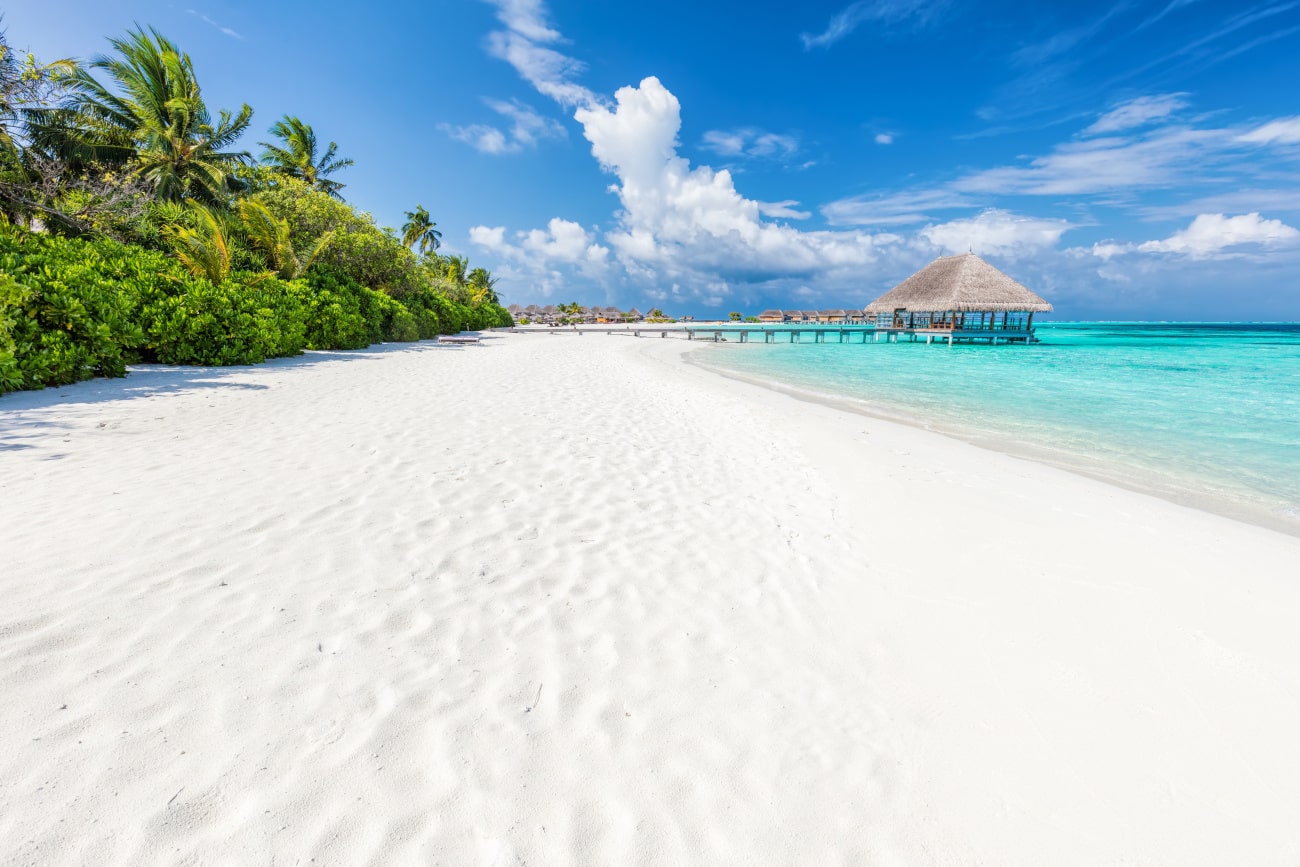
The Maldives conjures up a postcard-perfect vision of swaying palms, powder-white sands, and turquoise lagoons. This Indian Ocean archipelago truly is a tropical paradise. However, it isn't just a destination to spend days on the beach; there is plenty more on offer within the islands. Comprising over 1,200 captivating coral islands and sandbanks, this island nation offers various activities to indulge in. From world-class snorkeling and diving amidst vibrant reefs teeming with marine life to private dining under the star-studded sky, there are endless things to enjoy. Whether you seek the height of romance or the thrill of uncharted adventure, The Maldives can host your perfect vacation. Here are some of the best things to do when traveling the Maldives:

The Maldives is often hailed as one of the most romantic destinations with overwater villas and sun-drenched landscapes. But these 26 atolls floating in the Indian Ocean are also a perfect destination for families, especially when explored by a luxury yacht.A family yacht charter opens up a world of possibilities, waking up on a different island every day, diving into gin-clear waters easily, and experiencing the Maldives at a pace that suits every family member.Thanks to the warmth and hospitality of local communities, vibrant marine life, and an abundance of engaging activities, the Maldives is a playground for children of all ages. Whether your little ones are splashing about in the shallow lagoons, teens are diving into underwater adventures, or the family is exploring local culture together, here are some of the best activities in the Maldives to experience on a family yacht charter:

The Maldives isn't just a destination full of pristine beaches and gin-clear turquoise waters; the islands are also home to a lively culinary scene that reflects centuries of tradition. Maldivian cuisine blends influences from India, Sri Lanka, and the Arab world, with fresh seafood and coconut taking the spotlight. Here are our top ten must-try dishes to indulge in during your luxury Maldivian vacation:
FREQUENTLY ASKED QUESTIONS
The best time to charter a yacht in the Maldives is between November and April, when the northeast monsoon brings dry, stable conditions across the archipelago. During these months, you can expect warm temperatures averaging 82–88°F (28–31°C), low humidity, and calm seas, creating ideal conditions for cruising, swimming, and watersports. Visibility is also at its peak, making this period particularly well suited for snorkeling and diving across the region’s coral-rich atolls.
From December through March, conditions are at their most consistent, with minimal rainfall and gentle breezes allowing for smooth passages between islands. This is the high season for yacht charters in the Maldives, and it aligns well with the festive period and winter travel demand from Europe and the United States.
The period from May to October marks the southwest monsoon, bringing increased rainfall and more variable sea conditions. While this season can still offer rewarding cruising, particularly with flexible itineraries, it is better suited to experienced charterers or those with a specific interest in surfing. Swell conditions are at their best during these months, especially in well-known surf regions such as the North and Central Atolls.
Given the Maldives’ vast geography, spanning 26 atolls across approximately 500 miles (800km), itineraries can often be adapted to take advantage of localized weather patterns throughout the year. This flexibility allows for a tailored experience, whether you are seeking calm anchorages, world-class dive sites, or seasonal surf breaks.
For tailored itineraries, seasonal guidance, and access to our fleet of luxury yachts in the Maldives, IYC’s expert consultants would be happy to assist you.
The cost of chartering a yacht in the Maldives varies depending on the yacht’s size, type, guest capacity, and onboard amenities. Weekly base rates for crewed luxury motor yachts typically start at around €25,000 for smaller yachts and can exceed €350,000 for large luxury superyachts in the region. This range reflects the diversity of options available, from compact explorer yachts to fully equipped long-range motor yachts designed for extended atoll cruising.
Seasonality plays a role in pricing, although the Maldives benefits from a relatively stable year-round charter climate. The peak period from December through April, known for its dry weather and calm seas, commands the highest rates. More competitive pricing can often be found during the transitional months of May and November, when conditions remain favorable but demand is slightly lower.
In addition to the base charter fee, guests should budget for operational expenses through an Advance Provisioning Allowance (APA), typically set at 25–40% of the charter fee. This fund is used to cover fuel, food and beverages, anchorage fees, and any personalized services requested on board. At the end of the charter, a full accounting is provided, and any unused balance is refunded.
Taxes also apply in the Maldives. A Tourism Goods and Services Tax (TGST) of 17% is added to the charter fee, along with a green tax of $12 per person, per night. Crew gratuity is not included and is usually offered at the guest’s discretion, typically between 10–20% of the base rate.
The Maldives offers a distinctly fluid style of yacht chartering, shaped by its geography of 26 atolls and more than 1,000 islands scattered across the Indian Ocean. Rather than following a linear route, itineraries are typically designed within a cluster of atolls, allowing for a seamless blend of exploration, relaxation, and water-based experiences.
Most charters begin in North Malé Atoll, home to the international gateway at Malé, and extend into nearby South Malé Atoll. These areas provide a balanced introduction, combining well-established resorts, vibrant coral reefs, and sheltered lagoons ideal for anchoring. From here, many itineraries continue to Ari Atoll, widely regarded as one of the Maldives’ premier cruising grounds. Known for its exceptional marine life, this region offers regular encounters with whale sharks and manta rays, along with clear, warm waters suited to diving and snorkeling.
For those seeking a more nature-focused experience, Baa Atoll stands out as a UNESCO Biosphere Reserve. Its protected waters, particularly around Hanifaru Bay, attract large seasonal gatherings of manta rays, creating one of the most unique wildlife experiences in the region. Further south, Vaavu Atoll offers a quieter, less developed setting, where remote anchorages and thriving reefs provide a sense of complete seclusion.
Emerging charter areas such as Lhaviyani and Noonu Atolls introduce a more contemporary dimension, combining pristine cruising grounds with some of the Maldives’ most exclusive resort islands. These regions are ideal for guests looking to pair time on board with curated onshore experiences, from private beach dining to spa retreats.
The Maldives offers a distinct yacht charter landscape, shaped by its geography of widely dispersed atolls and open-ocean cruising conditions. Motor yachts are the most common choice, valued for their range, speed, and onboard comfort. These yachts are particularly well suited to Maldives yacht charters, where distances between islands and dive sites can be significant, and efficient cruising allows for more time spent exploring.
Expedition yachts are also a strong presence in the region, reflecting the Maldives’ appeal for discovery-led itineraries. With enhanced fuel capacity, advanced navigation systems, and robust build quality, these yachts are ideal for reaching remote atolls such as Haa Alif or Laamu. Many are fully equipped for diving, often featuring onboard dive centers, compressors, and professional instructors, making them a practical choice for guests focused on marine exploration.
While less prevalent than in the Mediterranean, catamarans are available and offer excellent stability and generous outdoor living space. They are particularly suited to cruising within calmer inner atolls, where shorter distances and protected lagoons allow for a more relaxed pace.
A unique aspect of chartering in the Maldives is the integration of traditional dhonis. These locally built wooden boats often accompany larger yachts as support tenders, used for diving excursions, fishing trips, or accessing shallow reef areas that larger yachts cannot reach.
Across IYC’s fleet of yachts, all charters are fully crewed, with a professional Captain and crew managing every aspect of the journey, from navigation to personalized service on board. Most accommodate up to 12 guests and feature tailored layouts designed for different cruising styles, whether focused on exploration, diving, or relaxed time at anchor.
The charter fee in the Maldives covers the main elements of your time on board, including the yacht itself, a full-time professional Captain and crew, insurance, and standard onboard equipment for navigation and guest comfort. These core inclusions ensure that the yacht is fully operated and serviced throughout your itinerary, allowing you to focus entirely on the experience.
Operational expenses are not included in this base fee and are instead managed through an Advance Provisioning Allowance (APA). Typically set at 25–40% of the charter fee, the APA is paid prior to embarkation and is used to cover food and beverages, fuel, anchorage costs, and any personalized arrangements made during the charter. The Captain oversees all spending, with a detailed account provided at the end of the trip and any unused funds returned.
Local taxes apply to all charters in the Maldives. A 17% Tourism Goods and Services Tax (TGST) is charged on the charter fee, along with a Green Tax of $12 per person, per night for guests staying on board.
Crew gratuity is not included in either the charter fee or the APA. While entirely discretionary, it is customary to offer a gratuity of 10–20% of the base charter fee in recognition of the crew’s service.
The APA, or Advance Provisioning Allowance, is a key component of the yacht charter process. It is a fund paid in advance of your charter, typically equal to 25–40% of the base charter fee, and is used to cover all operational expenses incurred during your trip. This includes fuel, food and beverages, marina fees, port taxes, transfers, and any special arrangements made to tailor your experience.
The APA is held onboard and managed by the yacht’s Captain, who ensures all provisioning and logistics are carried out efficiently and in line with your preferences. Prior to boarding, guests complete a preference sheet, noting dietary requests, beverage selections, activity interests, and more, which guides how the APA is allocated. Every expenditure is documented, and at the end of the charter, a full accounting is provided. Any unspent funds are refunded, while any overages are settled directly with the client.
As an example: if your weekly charter fee is $100,000, an APA of approximately $25,000 to $40,000 would be requested in advance. These funds might be used for cruising fuel, provisioning of meals and drinks, berthing fees, and third-party services such as private transfers or curated onshore excursions.
This system allows for complete flexibility, ensuring that the charter experience can be adjusted in real time, whether you decide to cruise further than originally planned or make spontaneous arrangements along the way. APA funds must be received before embarkation, typically via bank transfer alongside the final balance payment.
The minimum duration for a yacht charter in the Maldives is typically seven days, which reflects the standard structure used across most luxury charters worldwide. This timeframe allows for a well-paced itinerary, particularly important in a destination as geographically spread as the Maldives, where over 1,000 islands are grouped across 26 atolls.
Given the distances between key cruising grounds such as North Malé Atoll, South Malé, and Ari Atoll, a full week provides the flexibility to experience a meaningful range of anchorages, reefs, and island stops without rushing. It also allows time for activities that define the region, including diving, snorkeling, and visiting remote sandbanks.
Shorter charters of three to five days can occasionally be arranged, depending on yacht availability and seasonal demand. In these cases, rates are typically adjusted on a pro-rata basis, often calculated using a six-day divisor. However, shorter durations tend to limit the scope of the itinerary, usually focusing on areas close to Malé.
For guests looking to explore further afield, longer charters of ten days or more are often preferred. This allows access to more remote and less frequented atolls, where the experience becomes notably more private and immersive.
Most charters follow a standard schedule, with embarkation and disembarkation typically set around 12:00 pm. This timing allows the crew to prepare the yacht to the highest standard and ensures a smooth transition between charters.
The Maldives currently offers a smooth and well-organized travel experience, with clear entry requirements and strong infrastructure tailored to international visitors. Most travelers can obtain a free visa on arrival for stays of up to 30 days, provided they hold a valid passport, a confirmed itinerary such as a yacht charter booking, and proof of onward travel. A digital Traveler Declaration must be completed within 96 hours prior to arrival and departure, streamlining the entry process at Velana International Airport in Malé, the country’s primary gateway.
Once in the Maldives, onward travel across the archipelago is typically arranged via seaplane or private speedboat transfers, depending on your itinerary. For those embarking on yacht charters in the Maldives, these logistics are often seamlessly coordinated as part of the experience, allowing direct access to remote atolls and cruising grounds without unnecessary delays.
The Maldives operates with the local rufiyaa, though U.S. dollars are widely accepted throughout the tourism and yachting sectors, simplifying onboard and onshore transactions. English is spoken fluently across the industry, from airport services to marina staff and yacht crews, ensuring clear communication throughout your stay.
There are currently no mandatory vaccination requirements for entry, and health standards remain high across resorts and charter yachts.
The Maldives enjoys a tropical climate defined by consistently warm temperatures, high humidity, and year-round sunshine. Daytime highs typically range from 77°F to 88°F (25°C to 31°C), with very little variation between seasons due to the country’s equatorial location. Sea temperatures remain equally inviting throughout the year, averaging between 81°F and 86°F (27°C to 30°C), making swimming and watersports possible at any time.
Weather patterns are shaped by two distinct monsoon seasons. The dry northeast monsoon, from December through April, brings calm seas, clear skies, and lower humidity. This is widely considered the most favorable period for yacht charters in the Maldives, particularly for guests seeking smooth cruising conditions and uninterrupted time on the water. Visibility for snorkeling and diving is also at its best during these months.
From May through November, the southwest monsoon introduces a more tropical dynamic. Conditions become slightly more humid, with increased cloud cover and occasional rainfall. Showers are typically short-lived and localized, often followed by sunshine, though June to September can see more frequent rain and moderate winds. These shifting conditions can influence daily cruising plans, but experienced Captains adjust itineraries to ensure comfort and access to sheltered atolls.
Thanks to its geography, the Maldives benefits from approximately 12 hours of daylight year-round, allowing for full, unhurried days on board.
The official currency of the Maldives is the Maldivian rufiyaa (MVR). In practice, however, U.S. dollars are widely used throughout the country, particularly within the tourism and yachting sectors. For guests chartering a yacht in the Maldives, most expenses, including provisioning, fuel, marina services, and onboard incidentals, are typically quoted and settled in dollars, making financial planning straightforward.
Credit cards are accepted at resorts, international hotels, and in Malé, though their use may be more limited on smaller, local islands. ATMs are primarily located in Malé and a handful of populated atolls, so access to cash can be less consistent when cruising through more remote regions. It is therefore advisable to carry a modest amount of U.S. dollars for incidental purchases, gratuities, or time spent ashore.
While the Maldivian rufiyaa is used for local transactions, particularly among residents, charter guests rarely need to rely on it during their itinerary. The widespread acceptance of dollars across the archipelago simplifies financial planning, especially when combined with the structured approach of onboard expense management through systems like the Advance Provisioning Allowance.
The Maldives operates on a 230V / 50Hz electrical system, similar to the U.K. and much of Europe, and primarily uses Type G plug sockets. Travelers arriving from regions such as the United States or parts of Asia will need a suitable plug adapter, and in some cases a voltage converter if their devices are not compatible with higher voltage systems. Most modern electronics, including smartphones, laptops, and cameras, are dual voltage, so an adapter is usually sufficient.
When chartering a yacht in the Maldives, electrical compatibility is rarely a concern. Across IYC’s fleet of motor yachts and sailing yachts, systems are designed for international use, with many yachts offering universal outlets, USB charging points, and onboard adaptors as standard. While in port, yachts connect to shore power that aligns with local voltage, and when at anchor, onboard generators ensure a steady and reliable power supply throughout the day and night.
On land, high-end resorts and private island properties are equally well equipped, often providing international plug options within suites. That said, a universal travel adapter with built-in surge protection is a practical addition, particularly for guests traveling with multiple devices or sensitive equipment. For those bringing specialized or medical devices, it is advisable to confirm compatibility in advance.
Mobile connectivity in the Maldives is reliable across most charter cruising areas, particularly around inhabited islands and key atolls. The country is served by two primary providers, Dhiraagu and Ooredoo Maldives, both offering strong 4G coverage and expanding 5G networks in central hubs such as Malé. For visitors, prepaid SIM cards and eSIM options are widely available and tend to be more cost-effective than international roaming, especially for longer stays.
While signal strength remains consistent throughout much of the archipelago, it can vary slightly in more remote atolls or when cruising further offshore. Across IYC’s fleet of yachts, most are equipped with onboard Wi-Fi, typically supported by a combination of local cellular networks and satellite systems, allowing guests to stay connected throughout their itinerary when needed.
Drone usage in the Maldives is more tightly controlled and requires careful planning. All drone operations must be approved in advance by the Maldives Civil Aviation Authority, with permits generally issued on a case-by-case basis depending on location. Restrictions apply near airports, over populated areas, and around private resorts, many of which enforce their own privacy policies regarding aerial devices. In practice, this means that spontaneous drone use is rarely permitted without prior clearance.
The Maldives offers a well-supported and comfortable environment for yacht charters, with experienced crews and established safety practices ensuring a high standard of onboard care. In key areas such as Malé, guests have access to modern hospitals and private clinics, and Captains are well-versed in coordinating medical assistance if required.
The tropical climate is an important consideration throughout the year. Temperatures typically range from 82 to 88°F (28 to 31°C), with high humidity and strong equatorial sun. Sunscreen, light clothing, and regular hydration are essential, particularly during extended time on deck or while enjoying watersports. The surrounding waters across the Maldives’ atolls are warm, clear, and generally calm, making swimming directly from the yacht both safe and highly enjoyable.
Food quality and hygiene standards on board are consistently high. Across IYC’s fleet of yachts, experienced chefs prepare meals using fresh, high-quality ingredients, often combining locally sourced seafood with imported produce. Menus can be fully tailored to suit dietary preferences, with careful attention to allergies and specific requirements.
In more natural settings, particularly when visiting islands or anchoring close to vegetation, mosquitoes can occasionally be present, most noticeably around sunset. Simple precautions such as repellent are usually sufficient.