Corfu
Corfu Yacht Charter Guide
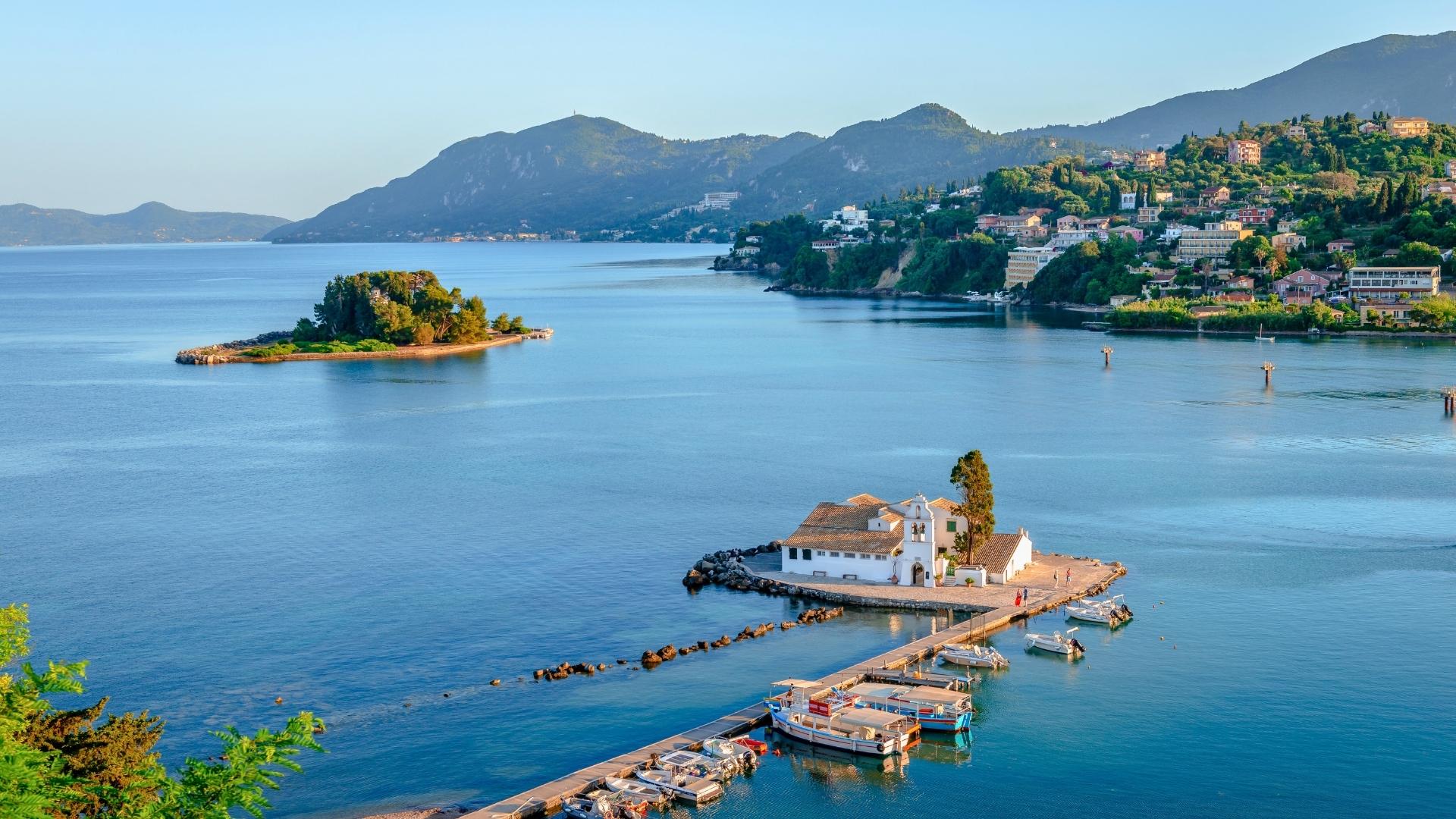
Coated with olive groves the lush island of Corfu is the second biggest of the Ionian Islands and is surrounded by a rugged coastline, with many fine sand beaches. Previous Italian, French and British rules have led to a rich culture, as well as fantastic food and wine which is not to be missed by any discerning traveler! The eventful history of the island has left its mark, with remnants of ancient times dotted throughout the towns creating heaven for those with an interest in architecture and history. A private yacht charter in Corfu is the ideal way to make the most of the crystal clear waters, with boat rental the perfect option for those wishing to partake in watersports and swimming, or simply relaxing on board.
Best Time To Visit: The Mediterranean is pleasant all year round, though from April to November is ideal, with hot summer months. Spring draws fewer tourists.
Key Cruising Areas: Beach hopping along the east coast and mainland Greece offers sheltered sailing with good afternoon breezes. Nearby islands Paxos and Anti-Paxos are great to explore.
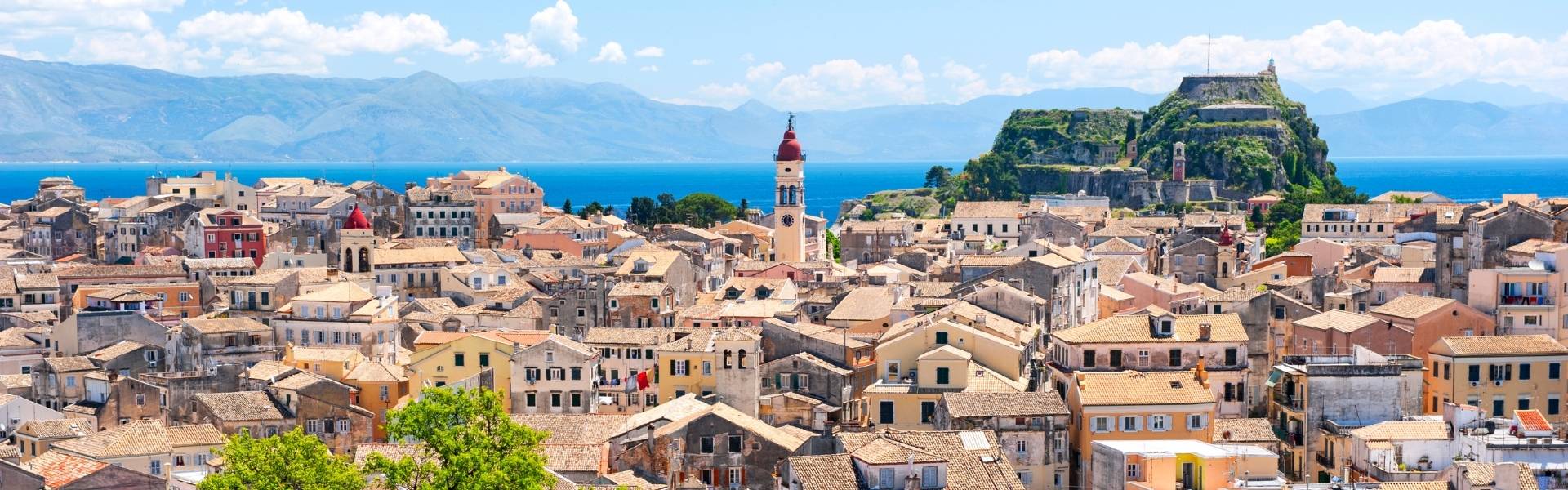
Don’t Miss: Esplanade Square is the largest and most impressive square in Greece. Filled with statues, cloisters and at the foot of the bridge to the fortress, this is a must-see for anyone who appreciates interesting architecture. Grab a coffee in one of the cafes and wander through the beautiful gardens.
Best Spots for Wining and Dining: The east coast has a cluster of trendy establishments, and Taverna Agni is certainly a highlight. Try the famous stuffed sardines complemented by crispy fried courgettes and Corfiot wine which never has chemical additives. A dry Kakotrigis is perfect on a hot day.
Best Local Dish: Specialities are based on local produce of honey, olive oil, and sheep’s milk yoghurt. Try a traditional Sicomada – a cake made from figs, almonds, pepper, cinnamon, and wine with a bitter Greek coffee.
Local Culture: Corfu’s diverse history has led to a rich culture, blended from French, Italian and English influences. Visit the 400-year-old Mortiotissa Monastery sitting amongst olive groves, or the magnificent neoclassical Achilleon Palace. The Easter Festival is a wonderful example of Greek festivities.
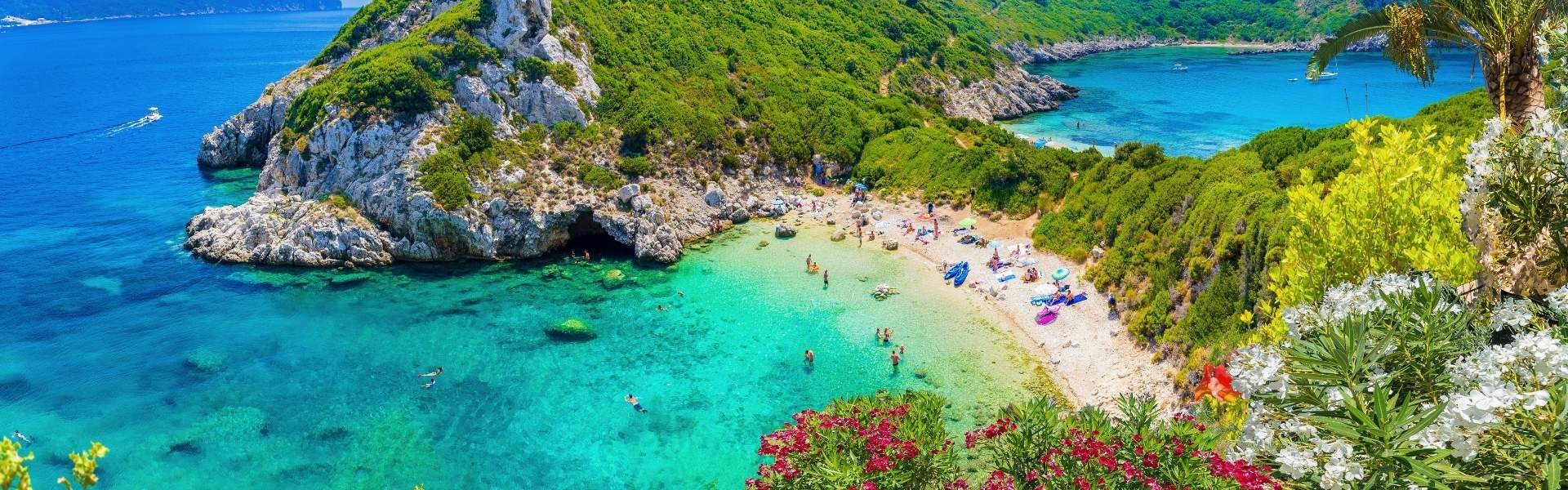
Best Beach: On the southern end of Paleokastritsa, you will find the stunning and unspoiled beach of Rovinia. Crystal clear water and white sands shaded by concave rock formations make this secret spot a perfect choice for a peaceful afternoon.
IYC recommends: For an amazing dining experience, eat at the restaurant situated inside the Venetian fortress. Enjoy the historical splendour with views of Garitsa Bay over a plate of meze.
More To Explore
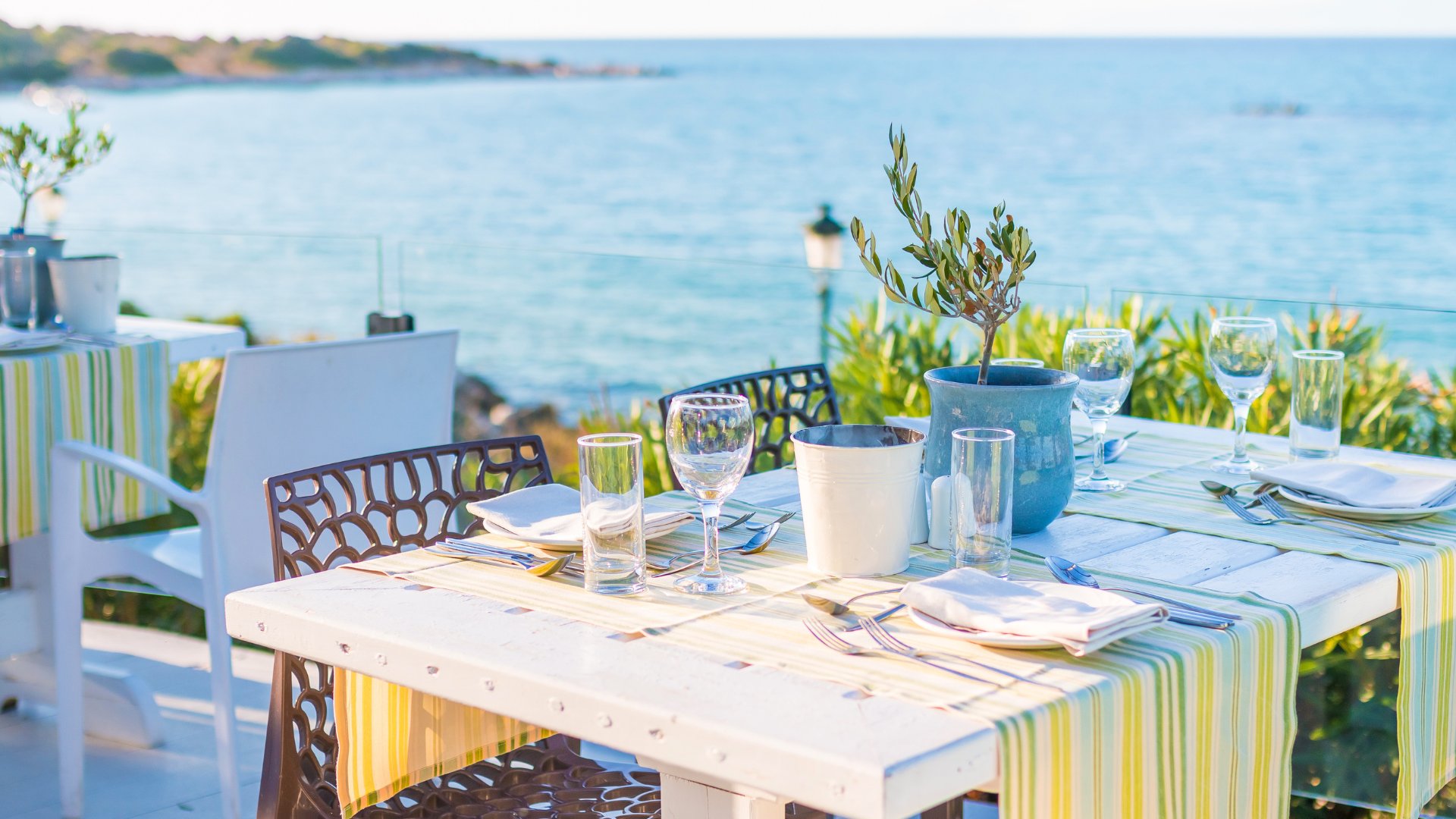
Corfu isn’t just a yacht charter destination to explore for its rich culture, history, rolling green hill interior, and quiet bays; this Ionian island off Greece’s northwest coast is also full of delicious cuisine to savor while doing so. Located at the crossroads of Greek and Italian influence, the Greek island's food is defined by slow-cooked meats, fresh Ionian seafood, aromatic spices, and some of the finest olive oil in the Mediterranean.On a yacht charter itinerary in Corfu, you can experience what the locals eat, enjoy fresh produce from the markets, and indulge in dishes that you can’t find on the other islands. Here are the top ten specialties from Corfu that we recommend you try when exploring the Ionian islands this summer:

Corfu is one of Greece’s most intriguing islands to visit by superyacht. And, when you arrive by luxury yacht charter, the adventure begins before you and your family even step ashore. With sheltered bays, crystal-clear waters, and rich layers of history and culture, Corfu is the ultimate family-friendly yachting destination.Here is a guide to some of the best ways to enjoy Corfu with kids on a private family yacht charter this summer:

When exploring the Ionian Islands in Greece by superyacht, Corfu is a regular highlight, and for good reason. It has lured in visitors for years. According to legend, it was here that Homer's hero Odysseus finally found rest on his long journey home - and when you drop anchor off its postcard-perfect coastline, you'll understand why he lingered.While the island's more famous beaches are easily reached by road, Corfu's most extraordinary beach spots remain exclusive to those who arrive by water. Whether wandering ashore, stretching out on the sand, diving into the water, or experiencing a crew beach setup, here are some of Corfu’s best beaches to include on your yacht charter itinerary:

The Ionian Islands lure charter yachts thanks to the turquoise waters, vine-covered hillsides, and idyllic harbors. But beyond the picturesque island escapes is a landscape full of mythology and history, where ancient Greek legends combine with centuries of Venetian rule.While anchorages may offer endless scenery, watersport fun, and ultimate relaxation, they also provide a glimpse into the past. Here we have put together the Ionian Islands' most intriguing cultural heritage sites - the museums, fortresses, and ruins that add depth to a yacht charter itinerary:
FREQUENTLY ASKED QUESTIONS
The best time to charter a yacht in Corfu is between April and October, when the Ionian Sea offers a long, reliable cruising season. During these months, the weather is warm, settled, and ideal for exploring the island’s coastline and nearby destinations. Peak summer, from June through August, sees temperatures range from 77°F to 88°F (25°C to 31°C), with sea temperatures reaching up to 79°F (26°C), creating excellent conditions for swimming, watersports, and relaxed days at anchor.
Unlike the Cyclades, Corfu benefits from more sheltered cruising conditions. The strong Meltemi winds are rarely felt in the Ionian, replaced instead by lighter northwesterly breezes that build gently in the afternoon. This makes the region particularly appealing for guests seeking smooth passages and flexible itineraries, whether cruising south toward Paxos and Antipaxos or along the mainland coast.
Many experienced charterers favor the shoulder months of May, June, and September. These periods offer warm temperatures, typically between 70°F and 84°F (21°C to 29°C), along with quieter marinas and anchorages. The island remains vibrant, yet more relaxed, allowing for a more personal experience both on the water and ashore in Corfu Town or smaller coastal villages.
October is also a viable option for those interested in a slower-paced itinerary. The weather remains mild, and the Ionian retains its calm character, though some seasonal venues may begin to close. With its combination of steady weather, sheltered seas, and accessible cruising grounds, Corfu supports a well-balanced charter season suited to a range of preferences and travel styles.
Yacht charter rates in Corfu follow the broader Greek market, with pricing influenced by the yacht’s type, size, age, guest capacity, and onboard amenities. Weekly base rates for crewed luxury motor yachts typically begin at around €25,000 for smaller yachts and can exceed €350,000 for larger, high-spec superyachts. The Ionian fleet is well-balanced, often offering strong value compared to more exposed Aegean cruising grounds.
Seasonality plays a key role in pricing. Peak summer rates apply during July and August, when demand across the Ionian Islands is at its highest. More competitive rates are often available in May, June, September, and early October. These shoulder months are particularly appealing in Corfu, where cruising conditions remain warm and settled, often with fewer crowds and a more relaxed pace on the water.
In addition to the base charter fee, guests should plan for operational expenses. These are covered by an Advance Provisioning Allowance (APA), typically set at 25–40% of the charter fee. The APA is paid before embarkation and used to cover fuel, food, beverages, marina fees, and personalized services. Corfu’s sheltered cruising grounds can help moderate fuel consumption, depending on your itinerary. Any unused balance is returned at the end of the charter.
Greek VAT applies to charters beginning in Corfu, generally ranging from 5.2% to 13% depending on the yacht and itinerary structure. Crew gratuity is not included and is offered at the guest’s discretion, with 10–20% of the base rate considered standard for excellent service.
Corfu offers a compelling starting point for exploring the Ionian Sea, where cruising is defined by short distances, calm conditions, and a distinctly lush landscape. Before setting out, guests can enjoy Corfu’s own highlights, from the UNESCO-listed Old Town and Venetian fortresses to beachside escapes such as Paleokastritsa. From here, itineraries unfold सहजly, with a balance of cultural stops and relaxed coastal cruising.
Just south of Corfu, Paxos and Antipaxos are among the most sought-after destinations in the region. These islands are known for their turquoise waters, sea caves, and standout anchorages like Voutoumi Beach. On the mainland, Sivota offers a different perspective, with sheltered bays and quiet harbors that are ideal for swimming and overnight stays.
For longer itineraries, the Ionian Islands extend further south to include Lefkada, Kefalonia, and Ithaca. Each brings its own character, from dramatic cliffs and white-sand beaches to traditional villages and historic ports shaped by Venetian influence. These routes are particularly well suited to guests who prefer a slower pace, with minimal distances between stops and consistently calm seas.
Most destinations in this region are just a few hours apart, allowing for flexible daily cruising plans. Yacht charters from Corfu combine natural beauty, cultural depth, and easy navigation, creating an itinerary that feels both varied and effortlessly paced across the Ionian coastline.
Corfu offers a broad selection of yacht charters, well suited to the relaxed cruising style of the Ionian Islands. Motor yachts remain a popular choice, valued for their speed, stability, and generous onboard space. From sleek performance cruisers to full-displacement superyachts, they allow you to explore Corfu’s coastline and extend your itinerary to nearby destinations such as Paxos, Lefkada, and Kefalonia with ease.
Sailing yachts are particularly well suited to this region. The Ionian’s lighter winds and calmer seas create comfortable conditions for a more traditional, wind-powered experience. It’s a style of cruising that feels unhurried, especially when moving between Corfu’s historic harbors and the smaller islands to the south.
Catamarans are also widely favored around Corfu. Their wide beam and shallow draft make them ideal for anchoring in secluded bays, especially along the east coast and around Antipaxos. They offer excellent stability and space, which works especially well for families or guests who prefer a more relaxed pace on board.
Yachts within IYC’s fleet typically accommodate up to 12 guests and are fully crewed, with a variety of layouts and onboard features to suit different preferences. Whether you are drawn to the efficiency of a motor yacht or the quieter rhythm of sailing, IYC’s expert consultants can help you select the right option for your Ionian itinerary.
The charter fee for a yacht charter in Corfu includes the core elements required for a seamless experience on the water. This covers the yacht itself, a full-time professional crew, yacht insurance, and all standard onboard equipment for navigation and guest comfort. Whether departing from Gouvia Marina or another Ionian base, guests can expect a fully prepared yacht ready for cruising through Corfu and the surrounding islands.
Operational expenses are not included in the base rate. These are covered through an Advance Provisioning Allowance (APA), typically calculated at 25–40% of the charter fee. The APA is paid prior to embarkation and managed by the Captain throughout the charter, covering fuel, food and beverage provisioning, marina fees, and local port charges. In the Ionian, where cruising distances are often shorter and anchorages more accessible, these costs can be more predictable. A full account is provided at the end of the charter, with any unused funds returned.
Greek VAT applies to all charters starting in Corfu, generally ranging from 5.2% to 13% depending on the yacht’s licensing and cruising itinerary. This is applied to the base charter fee in line with current regulations.
Crew gratuity is not included in either the charter fee or the APA. While discretionary, it is customary to offer 10–20% of the base charter fee in recognition of excellent service.
The APA, or Advance Provisioning Allowance, is a key component of the yacht charter process. It is a fund paid in advance of your charter, typically equal to 25–40% of the base charter fee, and is used to cover all operational expenses incurred during your trip. This includes fuel, food and beverages, marina fees, port taxes, transfers, and any special arrangements made to tailor your experience.
The APA is held onboard and managed by the yacht’s Captain, who ensures all provisioning and logistics are carried out efficiently and in line with your preferences. Prior to boarding, guests complete a preference sheet, noting dietary requests, beverage selections, activity interests, and more, which guides how the APA is allocated. Every expenditure is documented, and at the end of the charter, a full accounting is provided. Any unspent funds are refunded, while any overages are settled directly with the client.
As an example: if your weekly charter fee is $100,000, an APA of approximately $25,000 to $40,000 would be requested in advance. These funds might be used for cruising fuel, provisioning of meals and drinks, berthing fees, and third-party services such as private transfers or curated onshore excursions.
This system allows for complete flexibility, ensuring that the charter experience can be adjusted in real time, whether you decide to cruise further than originally planned or make spontaneous arrangements along the way. APA funds must be received before embarkation, typically via bank transfer alongside the final balance payment.
While seven-day charters remain the standard in Corfu, especially for crewed motor yachts operating under MYBA agreements, itineraries can be more flexible in this region. Weekly bookings are still the most common, with rates structured on a per-week basis and routes planned accordingly.
Shorter or extended charters may be possible depending on the yacht, season, and overall booking schedule. In the Ionian Islands, where cruising distances between destinations like Paxos, Antipaxos, and Lefkada are relatively short, it’s often easier to accommodate reduced durations without compromising the experience. When this applies, pricing is typically calculated on a pro-rata basis using a six-day divisor to reflect fixed operational costs. All terms are agreed individually with the Central Agent.
Most charters in Corfu begin and end at 12:00 pm, in line with Mediterranean standards. This timing allows the crew to prepare the yacht fully ahead of embarkation, including provisioning and technical checks, while ensuring a smooth turnaround between bookings.
Corfu offers a stable, well-connected, and highly accessible entry point for yacht charters in Greece. As part of the Schengen Area, Greece provides streamlined entry for international travelers, with visa-free access for U.S., U.K., and Canadian passport holders for stays of up to 90 days within a 180-day period under standard regulations.
The euro (€) is used throughout Corfu, ensuring consistency for provisioning, marina fees, and onshore expenses across the wider Mediterranean. English is widely spoken, particularly in charter hubs such as Gouvia Marina and Corfu Town, where infrastructure is well developed and tailored to international visitors. The island benefits from strong air connectivity via Corfu International Airport, with efficient transfers to key embarkation points.
There are currently no health-related travel restrictions in place. Medical services on the island are reliable, supported by modern clinics and trained yacht crews equipped to manage onboard safety. Hygiene standards remain high across both hospitality and yachting environments, offering reassurance throughout your time on board and ashore.
Corfu benefits from a Mediterranean climate with a softer, greener character than much of Greece, shaped by its position in the Ionian Sea. From April through October, conditions are well suited to yachting, with warm temperatures, steady sunshine, and relatively gentle winds. During the peak summer months of June, July, and August, daytime temperatures typically range from 77°F to 88°F (25°C to 31°C), while sea temperatures reach up to 79°F (26°C), creating ideal conditions for swimming and time on the water.
September continues to feel like summer in Corfu, often with warm seas and a more relaxed pace across the island and surrounding anchorages. This period is particularly appealing for guests looking to enjoy the Ionian’s natural beauty without the height of seasonal traffic. October brings a gradual shift into autumn, with temperatures easing to between 68°F and 75°F (20°C to 24°C), while still offering pleasant cruising conditions earlier in the month.
Winter in Corfu runs from December through February and is wetter than other Greek regions, with increased rainfall and cooler temperatures. Yachting activity slows during this period, although the landscape remains notably green. March marks the beginning of spring, with improving weather, blooming scenery, and the gradual return of charter activity, though sea temperatures remain cooler.
Unlike the Aegean, Corfu is not affected by the Meltemi winds. Instead, the Ionian Sea experiences lighter, more predictable breezes, making it particularly well suited to relaxed cruising and flexible itineraries. Combined with long summer days and over 250 sunny days annually, Corfu offers one of the most comfortable and accessible yacht charter climates in Greece.
The currency used throughout Corfu is the euro (€), which has been Greece’s official legal tender since joining the Eurozone in 2001. Whether you are exploring Corfu Town, anchoring along the northeast coast, or cruising onward to nearby Ionian islands such as Paxos, all transactions are conducted in euros.
Credit and debit cards are widely accepted across the island, particularly in established areas such as Gouvia Marina, Corfu Town, and upscale waterfront venues. That said, carrying a small amount of cash is recommended when visiting quieter villages, local markets, or traditional tavernas, where card facilities may be less consistent.
ATMs are easily accessible in main hubs, including Corfu Town and key marina areas, though they become less frequent in more remote anchorages. For guests planning provisioning or crew gratuities, it is advisable to withdraw cash in advance. Currency exchange services are available at banks and exchange bureaus, although using a card or withdrawing directly from an ATM typically offers more favorable rates.
Mobile connectivity in Corfu is reliable and well-suited to yacht charter travel, particularly across the Ionian Islands. The island benefits from strong 4G coverage, with 5G increasingly available in Corfu Town and surrounding urban areas. In key embarkation points such as Gouvia Marina, guests can expect stable connections for both personal use and onboard operations. The wider Ionian cruising region, including nearby Paxos and Antipaxos, maintains consistent signal strength, though coverage may soften slightly in more secluded bays.
For EU and EEA travelers, the “Roam Like at Home” policy applies, allowing seamless use of domestic plans without additional charges. Guests arriving from the U.S., U.K., or other non-EU regions may find it more practical to arrange a local SIM or eSIM, with providers such as Cosmote and Vodafone Greece offering flexible, high-coverage packages. On board, most yachts available for charter in Corfu are equipped with Wi-Fi systems powered by cellular networks, with higher-spec yachts often including satellite support for extended connectivity.
Drone use is permitted in Corfu but subject to national aviation regulations. Any drone over 250g or fitted with a camera must be registered with the Hellenic Civil Aviation Authority. Particular care should be taken around Corfu International Airport, as well as within the UNESCO-listed Old Town, where flights are restricted without formal authorization. Operating drones over busy beaches, marinas, or anchored yachts may also require prior approval, especially during peak season when coastal traffic is high.
For guests planning to capture aerial footage during their charter, it is advisable to coordinate with the Captain in advance to ensure compliance with local regulations and identify suitable flying areas.
Corfu follows Greece’s standard electrical system, operating on 230V / 50Hz with Type C and Type F plug sockets. This is consistent with most of continental Europe. Travelers arriving from the U.S., U.K., Canada, or other non-EU regions will need a plug adapter, and in some cases, a voltage converter for devices that are not dual voltage. Most modern electronics, including phones, laptops, and cameras, are compatible with dual voltage and require only an adapter.
For those embarking on yacht charters from Corfu, electrical compatibility is typically seamless. Crewed yachts based in or operating through Gouvia Marina are well-prepared for international guests, with universal plug adaptors, USB charging points, and onboard power systems designed to support a range of devices. While docked, yachts connect to stable shore power at 220–240V. When cruising the Ionian Islands or anchored in bays such as Paxos or Antipaxos, onboard generators ensure a continuous and reliable power supply.
A universal travel adapter with surge protection is recommended, particularly for sensitive electronics. If you are traveling with specialized equipment or medical devices, it is advisable to confirm compatibility in advance. IYC’s expert consultants can assist with yacht-specific configurations and ensure everything is aligned prior to embarkation.
Corfu offers a safe and well-supported setting for yacht charters, combining reliable healthcare access with experienced crews trained in onboard safety protocols. Emergency services are efficient, with 112 and 166 providing assistance across the island, often in English. In Corfu Town, medical facilities are comprehensive, while smaller ports and nearby islands are supported by first-response services and coordinated transfers managed by your Captain. Pharmacies are widely available and well-stocked, offering both essential supplies and practical advice.
Time on the water is central to the Corfu experience. The Ionian Sea is known for its calm conditions and clarity, creating an ideal environment for swimming directly from the yacht. Summer sea temperatures typically range from 73°F to 77°F (23°C to 25°C), offering a refreshing contrast to the warmer air temperatures. Sheltered anchorages around Corfu, Paxos, and Antipaxos provide particularly comfortable conditions, whether you are swimming, paddleboarding, or simply relaxing on deck.
Sun exposure remains an important factor, especially from June through September. While Corfu’s greenery and coastal breezes can soften the heat, UV levels are still high. Consistent sun protection and hydration are essential, particularly during extended time outdoors.
Food quality and hygiene standards are consistently high across the island. Corfu’s culinary identity blends Greek and Venetian influences, with an emphasis on fresh seafood, local produce, and olive oil. On board, yacht chefs tailor menus to individual preferences, easily accommodating dietary requirements while maintaining a balanced and health-conscious approach.
There are no unusual health risks to consider, although mosquito repellent is recommended, particularly when anchoring near inland bays or vegetated areas. Crews maintain strong hygiene practices on board, contributing to a comfortable and well-managed environment throughout your charter.
One of Corfu’s key advantages is its sheltered cruising grounds. Without the strong summer winds found in other parts of Greece, itineraries here tend to be smoother and more predictable, supporting a relaxed pace and an overall sense of ease on board.