Greece: Dodecanese Islands
Dodecanese Islands Yacht Charter Guide
When it comes to selecting a destination for your luxury private yacht charter, Greece is the top choice for many discerning travelers looking for a memorable blend of culture, stunning scenery, and incredible food. The Dodecanese (which translates as ‘twelve islands’) belong to Greece, but many of these isles lie but a short cruise away from the southwestern coast of Turkey – most notably the islands Kos and Rhodes. In fact, the western coast of Asia is only one hundred miles from this scattering of islands, so here you will find lands fought over for centuries by the Crusaders and the Ottomans - each island revealing the footprints of its previous settlers in the flavours of their cuisine and the style of their architecture.
The Dodecanese islands seem unchanged since the times of Odysseus, immersing you in the feel of ancient Greece. The marks of those that have travelled through the region are found, from the Romans and ancient Greeks, through to medieval knights; the rich heritage is also infused with hints of the Byzantine and more recent Italian occupation.The striking island of Rhodes is perhaps the largest and most well-known of the Dodecanese islands.
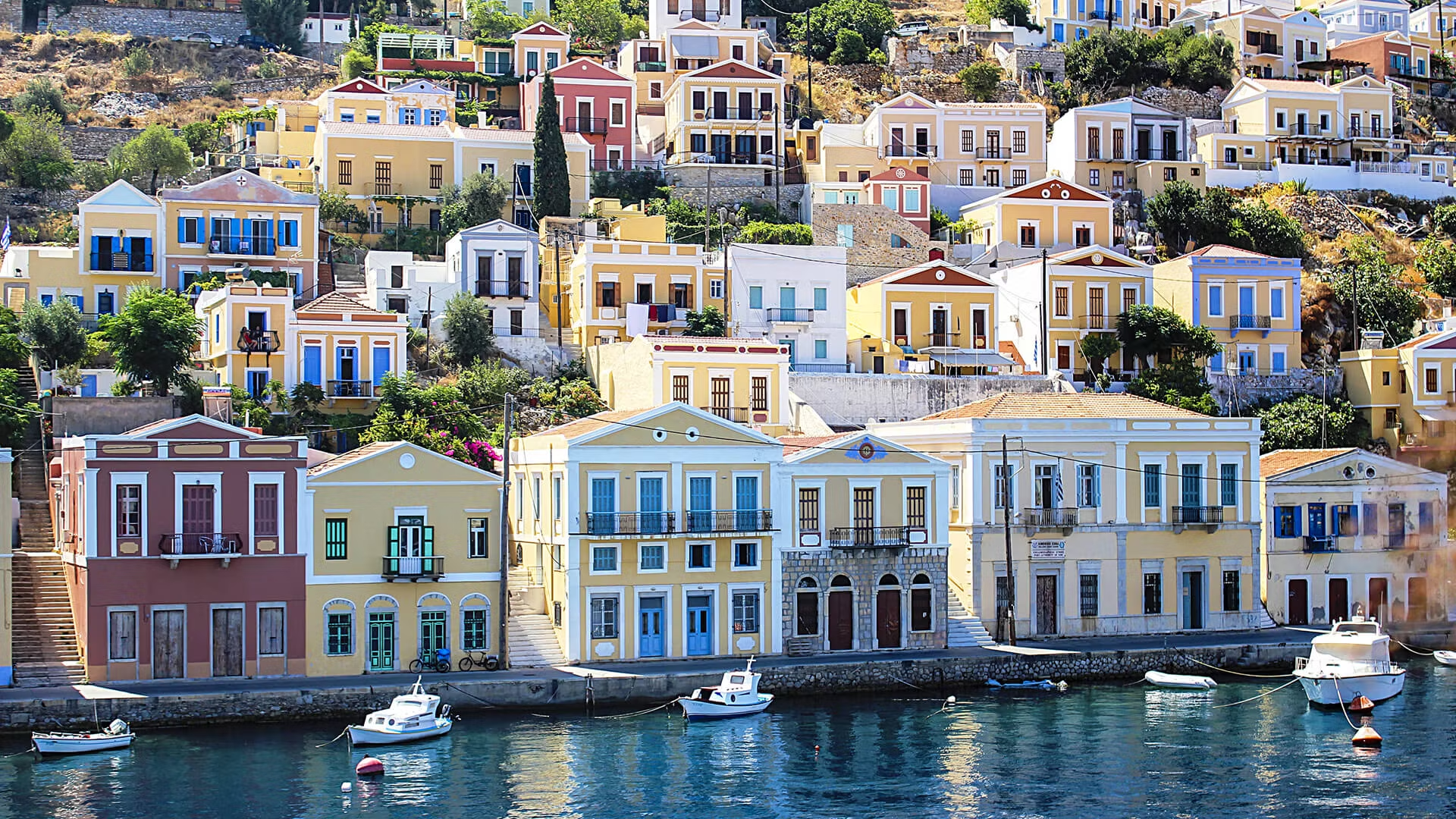
Some of the prettiest and most unspoiled islands can be found if you venture along the archipelago and explore the smaller islands from your luxury yacht. With limestone cliffs to climb in Kalymnos, beautiful mansions and a picturesque harbor to admire in Symi, and numerous beaches and historical sites, there really is something for every taste. Nisyros is something a little different – built on an active volcano with suitably dramatic landscapes best viewed from the sea. Leros and Tilos are small and charming, and historical Patmos is where St. John wrote his Book of Revelation.
A Greek yacht charter holiday would not be complete without a swim in the crystal blue sea. On your luxury vacation, you will find yourself surrounded by stunning blue water at every turn, contrasting against the white rocks to create the most magical views. The winds can be spectacular for those who dream of sailing the Greek islands, with the Meltemi winds providing an exhilarating ride across the Mediterranean Sea.
More To Explore
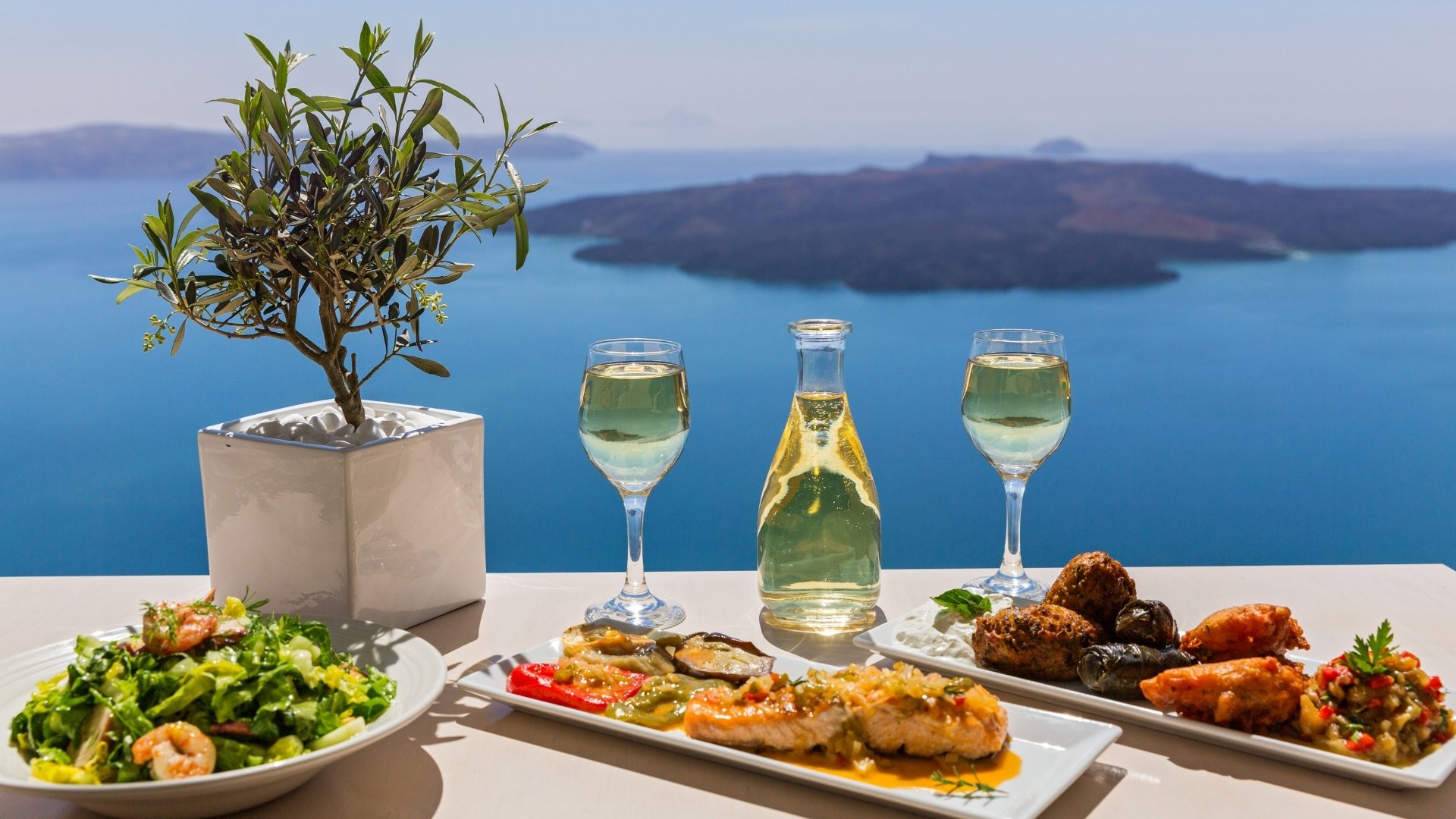
The Dodecanese may be quieter than the iconic Cyclades or popular Ionian islands, but its food scene has become one of the Mediterranean’s most impressive. Stretching across 150 islands from Patmos in the northwest to Rhodes in the southeast, this archipelago carries centuries of Greek, Turkish, Italian, and Middle Eastern influence, all of which come alive through its dishes and menus.The local produce gains an intensity that can make even a simple salad of tomato, oregano, and olive oil unforgettable. And throughout the islands, eating seasonally isn’t a trend, it’s the way of life here. As you cruise between the islands on your next yacht charter, here is our ultimate guide to what to eat:

Scattered across the southeastern Aegean between mainland Greece and the Turkish coast, the Dodecanese Islands offer that unique sense of discovery. Comprising twelve main islands and over 160 in total, this archipelago is ideal for those who want to venture beyond the usual Mediterranean Greek circuits.Here, medieval ports meet volcanic landscapes, hilltop villages overlook turquoise bays, and entire stretches of coastline remain accessible only by sea, ideal for a yacht-led itinerary defined by freedom and variety. Here is our yacht charter guide to these Aegean islands:
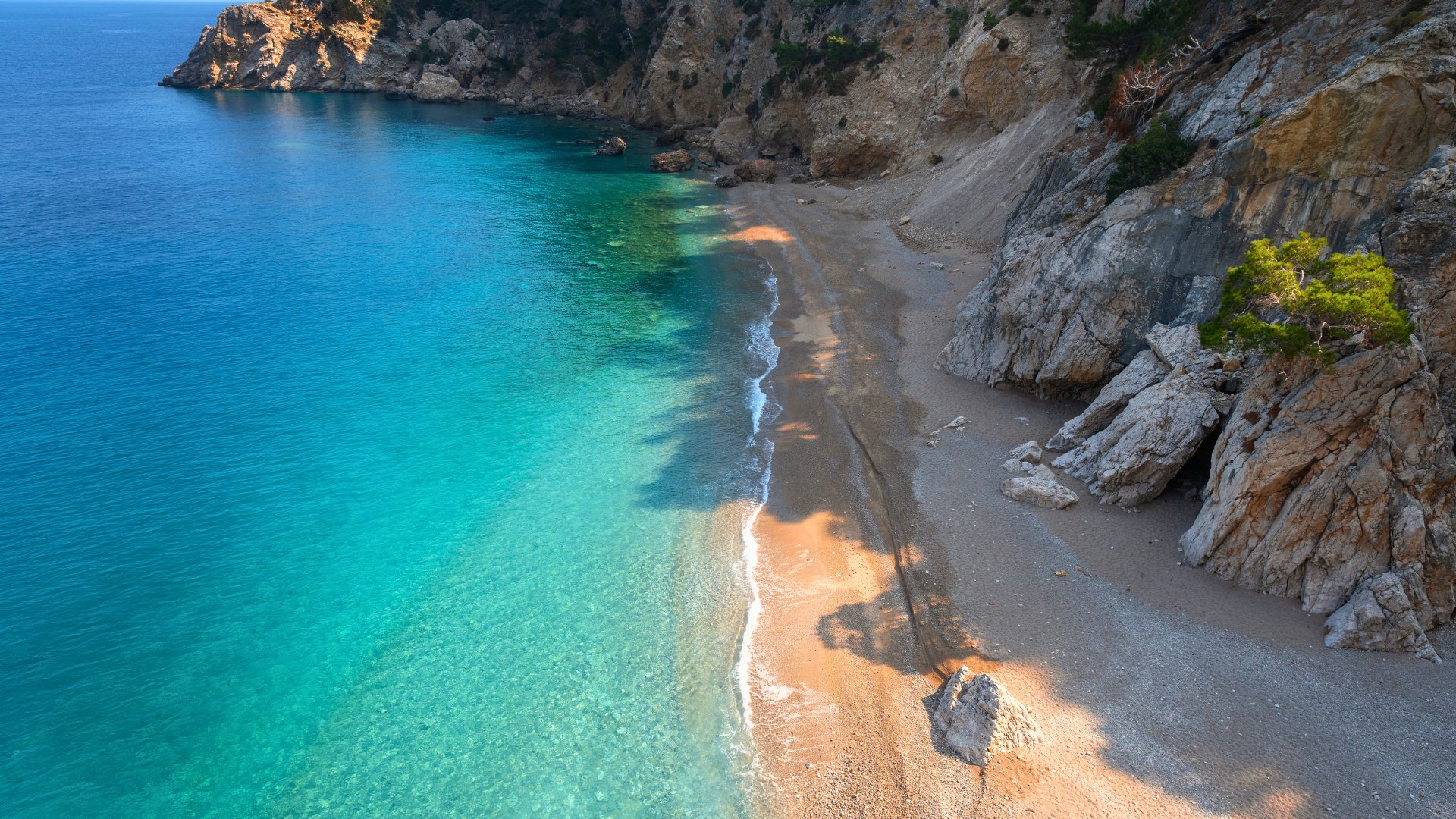
The Dodecanese islands stretch across the southeastern Aegean, each with its own character, history, and coastline largely untouched by mass tourism. And within the islands, the best beaches can be easily reached from the water, by tender, or by dropping anchor. From hidden coves that don’t make the map, volcanic spots that are too remote for crowds, and intriguing sea caves inviting exploration from the beach. Here is a guide to the best secret beaches accessed via yacht charter to explore in the Dodecanese Islands:
FREQUENTLY ASKED QUESTIONS
The best time to charter a yacht in the Dodecanese Islands is between April and October, when this southeastern corner of Greece benefits from a long and particularly stable Mediterranean cruising season. During these months, the weather is warm, dry, and consistently sunny, with peak summer temperatures from June through August reaching up to 95°F (35°C). Sea temperatures also peak during this period, averaging 77°F to 79°F (25°C to 26°C), creating ideal conditions for swimming and extended time at anchor.
Unlike more exposed regions of the Aegean, the Dodecanese experience a more moderated version of the Meltemi wind. While these northerly breezes are still present in July and August, they are typically less intense than in the Cyclades, allowing for smoother cruising and more flexible itineraries between islands such as Rhodes, Kos, and Symi.
Many experienced charterers favor the shoulder months of May, June, and September. These periods offer excellent conditions, with temperatures ranging from 72°F to 84°F (22°C to 29°C), warm seas, and a more relaxed atmosphere across marinas and anchorages. It’s an ideal time to explore historic sites like Rhodes Old Town or enjoy quieter evenings in traditional harbors.
October remains a strong option for late-season charters in the Dodecanese, particularly due to the region’s warmer sea temperatures and extended sunshine compared to other Greek island groups. While some seasonal venues begin to close, the main ports and cruising routes remain active, offering a more peaceful and culturally focused experience.
Yacht charter costs in the Dodecanese Islands depend on a range of factors, including the yacht’s type, size, age, guest capacity, and onboard amenities. Weekly base rates for crewed luxury motor yachts generally begin at around €25,000 for smaller yachts and can exceed €350,000 for high-end superyachts.
Seasonality also plays an important role in pricing. Peak summer rates apply during July and August, when demand across the Greek islands is at its highest. More favorable pricing is typically available in May, June, September, and October, which still offer warm weather and excellent cruising conditions in the Dodecanese.
In addition to the base charter fee, guests should plan for running expenses. These are covered through an Advance Provisioning Allowance (APA), usually set at 25% to 40% of the charter fee. The APA is paid in advance and used to cover fuel, food and beverages, port fees, and other personalized costs during the charter. Any remaining balance is returned at the end of the trip. Depending on the yacht’s starting location, delivery or repositioning fees may also be included in the overall budget.
Greek VAT on yacht charters typically ranges from 5.2% to 13% for yachts operating under a Greek charter license. The exact rate depends on the itinerary and whether any portion qualifies for reduced VAT due to time spent in international waters, which can be a factor when cruising near the eastern Aegean.
Crew gratuity is not included in the charter fee and is offered at the guest’s discretion. A tip of 10% to 20% of the base rate is standard, depending on the level of service provided.
The Dodecanese Islands offer one of the most distinctive yacht charter experiences in Greece, combining cultural depth with a relaxed cruising rhythm. Located along the southeastern edge of the Aegean, this island group allows for itineraries that balance historic ports, quiet anchorages, and refined seaside towns, all within close cruising distance.
Charters in the region typically begin in Rhodes, one of the best-connected embarkation points in Greece. From here, guests can explore a sequence of islands that each bring a different character. Symi is a standout for its elegant harbor and pastel architecture, while Patmos offers a more spiritual atmosphere, centered around its UNESCO-listed monastery and hillside villages. Kos provides a lively contrast, blending beach clubs, archaeological landmarks, and a vibrant marina scene.
Further afield, smaller islands such as Halki, Lipsi, and Leros introduce a quieter pace, with clear waters, traditional tavernas, and uncrowded bays that are ideal for extended time at anchor. Nisyros adds a geological highlight, where guests can visit its active volcanic crater, creating a rare inland excursion during a coastal itinerary.
Cruising distances between the islands are relatively short, which allows for a flexible and unhurried schedule. Depending on weather conditions, particularly the Meltemi winds in July and August, routes can be adjusted to favor more sheltered passages, ensuring comfort throughout the journey.
Yacht charters in the Dodecanese invite a curated mix of heritage, cuisine, and natural beauty, with the added advantage of fewer crowds than more central Aegean routes. For those seeking variety without compromising on ease of navigation, this region delivers a well-balanced and highly rewarding itinerary.
The Dodecanese Islands offer a diverse selection of charter yachts, well suited to the region’s expansive cruising grounds and varied island landscape. Motor yachts are a popular choice, particularly for guests looking to cover greater distances between islands such as Rhodes, Kos, and Patmos with ease. Their speed, stability, and spacious layouts make them ideal for combining multiple destinations within a single itinerary, while still enjoying a high level of onboard comfort.
Sailing yachts are equally well matched to the Dodecanese, where steady summer winds and open sea passages create rewarding sailing conditions. This style of yacht appeals to those who prefer a more traditional, wind-driven experience, with routes shaped by the natural rhythm of the Aegean. Catamarans are also widely selected, offering wide beams, shallow drafts, and generous outdoor living space, which is especially practical for anchoring in quieter bays and smaller island harbors.
Yachts within IYC’s fleet typically accommodate up to 12 guests and are fully crewed, ensuring a seamless and personalized experience on board. Whether you are drawn to the efficiency of a motor yacht or the relaxed pace of sailing, IYC’s charter fleet in the Dodecanese Islands offers a range of options to suit your itinerary, preferences, and cruising style.
The charter fee in the Dodecanese Islands includes the essential components of your yacht charter experience: the yacht itself, a full-time professional crew, yacht insurance, and standard onboard equipment for navigation, safety, and guest comfort. This ensures a seamless and well-supported journey from the moment you step on board. However, day-to-day operational expenses are not included in the base rate.
Additional running costs, including fuel, food and beverages, marina fees, port taxes, and any cross-border charges between Greece and nearby Turkey, are covered through an Advance Provisioning Allowance (APA). Typically set at 25–40% of the charter fee, the APA is paid prior to embarkation and managed by the Captain throughout the itinerary. In the Dodecanese, where cruising distances can be greater between islands, fuel usage may vary depending on your chosen route. A detailed account of all expenses is presented at the end of the charter, with any remaining balance returned to the client.
Greek VAT applies to all charters beginning in the Dodecanese, generally ranging from 5.2% to 13% for yachts operating under a Greek charter license. The final rate depends on the structure of the itinerary, particularly if it includes time in international waters or neighboring regions.
Crew gratuity is not included in either the charter fee or the APA. While entirely at your discretion, it is customary to offer 10–20% of the base charter fee in recognition of exceptional service.
The APA, or Advance Provisioning Allowance, is a key component of the yacht charter process. It is a fund paid in advance of your charter, typically equal to 25–40% of the base charter fee, and is used to cover all operational expenses incurred during your trip. This includes fuel, food and beverages, marina fees, port taxes, transfers, and any special arrangements made to tailor your experience.
The APA is held onboard and managed by the yacht’s Captain, who ensures all provisioning and logistics are carried out efficiently and in line with your preferences. Prior to boarding, guests complete a preference sheet, noting dietary requests, beverage selections, activity interests, and more, which guides how the APA is allocated. Every expenditure is documented, and at the end of the charter, a full accounting is provided. Any unspent funds are refunded, while any overages are settled directly with the client.
As an example: if your weekly charter fee is $100,000, an APA of approximately $25,000 to $40,000 would be requested in advance. These funds might be used for cruising fuel, provisioning of meals and drinks, berthing fees, and third-party services such as private transfers or curated onshore excursions.
This system allows for complete flexibility, ensuring that the charter experience can be adjusted in real time, whether you decide to cruise further than originally planned or make spontaneous arrangements along the way. APA funds must be received before embarkation, typically via bank transfer alongside the final balance payment.
While seven-day charters are the standard format across the Dodecanese Islands, particularly for crewed motor yachts operating under MYBA agreements, itineraries can offer a degree of flexibility. Weekly bookings remain the norm, with rates typically structured on a per-week basis and routes designed to reflect the region’s wider cruising distances between islands such as Rhodes, Kos, and Patmos.
That said, shorter or extended charters may be possible depending on the yacht’s availability, the season, and the overall booking schedule. This is more commonly seen during the shoulder months, when demand is slightly lower and itineraries can be adjusted more easily. In these cases, pricing is generally calculated on a pro-rata basis, often using a six-day divisor to reflect the fixed operational costs associated with running a fully crewed yacht. All terms are agreed individually between the client and Central Agent.
Most charters in the Dodecanese begin and end at 12:00 pm, in line with standard Mediterranean practice. This schedule allows the crew sufficient time to complete cleaning, provisioning, and technical preparations before embarkation. A midday disembarkation on the final day ensures a smooth and efficient turnaround for incoming guests.
The Dodecanese Islands offer a smooth and well-supported travel environment for international yacht charter guests, operating under Greece’s broader Schengen framework. Visitors from the EU benefit from passport-free movement, while U.S., U.K., and Canadian nationals may enter visa-free for up to 90 days within a 180-day period, in line with standard European travel regulations.
The euro (€) is used throughout the region, simplifying transactions for marina services, provisioning, and onshore experiences. Key entry points such as Rhodes and Kos are well connected by international and domestic flights, making embarkation straightforward. English is widely spoken across major charter hubs, including Rhodes Town and Kos Marina, where infrastructure is designed to accommodate high-end tourism and yachting needs.
There are currently no health-related travel restrictions in place. Standard vaccinations are recommended but not required, and hygiene standards remain consistently high across hospitality venues and marinas. Larger islands such as Rhodes and Kos provide access to modern healthcare facilities, while onboard crews are equipped to manage routine medical needs during your charter.
The Dodecanese islands enjoy a classic Mediterranean climate, shaped by long, dry summers and mild winters, with conditions that are particularly well-suited to yacht charters. From April through October, the region offers consistently warm weather, clear skies, and minimal rainfall, creating an extended and reliable cruising season across the southeastern Aegean.
During the peak summer months of June, July, and August, temperatures typically range from 82°F to 95°F (28°C to 35°C), often slightly warmer than other Greek island groups. Sea temperatures rise steadily throughout the season, reaching around 79°F (26°C) by late August, which is ideal for swimming, watersports, and time spent at anchor.
September is especially appealing in the Dodecanese. It retains the warmth of summer, both in the air and sea, while offering a more relaxed atmosphere across popular islands such as Rhodes and Kos. October brings a gradual shift into autumn, with temperatures easing to 68°F to 77°F (20°C to 25°C) and the first signs of occasional rainfall, although cruising conditions often remain favorable.
Winter, from December through February, is mild but marks the off-season for yachting, with cooler temperatures and reduced activity across marinas. By March, spring begins to emerge, bringing brighter days and rising temperatures, though sea conditions are still cooler and many yachts remain in maintenance.
The Meltemi wind, a defining feature of Aegean sailing, is present in the Dodecanese but tends to be less intense than in the Cyclades. This results in more stable cruising conditions and allows for smoother passages between islands. Combined with over 300 days of sunshine each year, the region offers one of the most dependable weather profiles in the Mediterranean for a yacht charter.
The currency used throughout the Dodecanese Islands is the euro (€), Greece’s official legal tender since joining the Eurozone in 2001. Whether you’re embarking from Rhodes, cruising through Kos, or anchoring off smaller islands like Symi or Patmos, all transactions are conducted in euros.
Credit and debit cards are widely accepted in established charter hubs such as Rhodes and Kos, particularly in marinas, upscale restaurants, and hospitality venues. That said, it’s advisable to carry a small amount of cash when visiting more remote islands or traditional tavernas, where card facilities may be less consistent.
ATMs are readily available in major ports and towns across the Dodecanese, including Rhodes Town and Kos Marina. However, access can be more limited in smaller anchorages or less developed islands, so it’s worth planning ahead when provisioning or arranging gratuities for crew.
For those arriving internationally, currency exchange services are available at regional airports and in key port areas, although withdrawing euros locally or using a card often provides more favorable rates.
Greece operates on a 230V / 50Hz electrical system and uses Type C and Type F plug sockets, which are standard across the Dodecanese Islands and much of continental Europe. Travelers arriving from the U.S., U.K., Canada, or other non-EU countries will require a compatible plug adapter, and in some cases, a voltage converter for devices that are not dual voltage. Most modern electronics, including laptops, smartphones, and cameras, are designed for dual voltage and will function with only an adapter.
For those embarking on a yacht charter in the Dodecanese Islands, electrical compatibility is rarely a concern. Crewed yachts operating from key ports such as Rhodes and Kos are well-prepared for international guests, typically offering universal sockets, USB charging points, and onboard power converters. Whether cruising between larger islands or anchoring off more remote locations like Symi or Patmos, yachts maintain consistent power through onboard generators.
While docked in established marinas, yachts connect to shore power, generally within the 220–240V range. In smaller harbors or during peak summer periods, shore supply may be more limited, though this has little impact on onboard comfort due to the yacht’s independent systems.
A universal travel adapter with built-in surge protection is a sensible addition, particularly for sensitive electronics. If you are traveling with specialized equipment or medical devices, IYC’s expert consultants can assist in confirming compatibility with your selected yacht and itinerary.
Mobile connectivity across the Dodecanese Islands is generally strong, with reliable 4G coverage and steadily expanding 5G networks, particularly around key islands such as Rhodes and Kos. If you are traveling from within the EU or EEA, you will benefit from the Roam Like at Home policy, allowing you to use your domestic mobile plan without additional roaming charges. Non-EU travelers, including those from the U.S. or U.K., should consider arranging a local SIM or eSIM. Major providers such as Cosmote, Vodafone Greece, and Nova offer flexible data packages with dependable coverage throughout the region.
On board, most charter yachts in the Dodecanese are typically equipped with onboard Wi-Fi, powered by cellular routers. While marinas and main towns such as Rhodes and Kos offer consistent connectivity, signal strength may vary when cruising through more remote bays or smaller islands. If uninterrupted connectivity is important for your itinerary, IYC can help ensure your yacht is suitably equipped for those requirements.
Drones are permitted in Greece but are regulated. Devices weighing more than 250 grams or equipped with a camera must be registered with the Hellenic Civil Aviation Authority. Flights near airports, over crowds, or around archaeological sites require advance permission
The Dodecanese islands offer a safe and well-supported environment for yacht charters, combining modern healthcare access with experienced crews and reliable emergency infrastructure. Medical facilities in Rhodes and Kos are well equipped, while smaller islands provide dependable first-response care, supported by coordinated transfer services if needed. Emergency assistance is accessible via 112 or 166, with English-speaking operators commonly available. Pharmacies are easy to find across the region and are typically staffed by knowledgeable professionals who can provide over-the-counter treatments and guidance.
Sun exposure is a key consideration during the summer months, particularly from June through August, when temperatures range from 86°F to 95°F (30°C to 35°C). Time on deck is part of the experience, so consistent hydration and high-quality sun protection are essential. The surrounding Aegean waters are exceptionally clear and inviting, with summer sea temperatures between 73°F and 79°F (23°C to 26°C). Swimming directly from the yacht is both safe and enjoyable, with many anchorages offering calm conditions suitable for all levels.
Food quality and hygiene standards throughout the Dodecanese are consistently high. Local cuisine is based on fresh, seasonal ingredients, and onboard chefs are well versed in accommodating a range of dietary preferences, including allergy-sensitive and wellness-focused menus. Provisioning in key ports such as Rhodes ensures access to high-quality produce throughout your charter.
While Greece no longer enforces Covid-related restrictions, professional crews continue to maintain strong hygiene practices onboard. In certain anchorages, particularly near wetlands or sheltered bays, mosquitoes may be present during the warmer months, so light precautions such as repellent are recommended.
When cruising the Dodecanese during July and August, itineraries are carefully planned around seasonal wind patterns. Although the Meltemi is generally less intense here than in the central Aegean, experienced captains will adjust routes to maintain comfort and safety throughout the journey.